
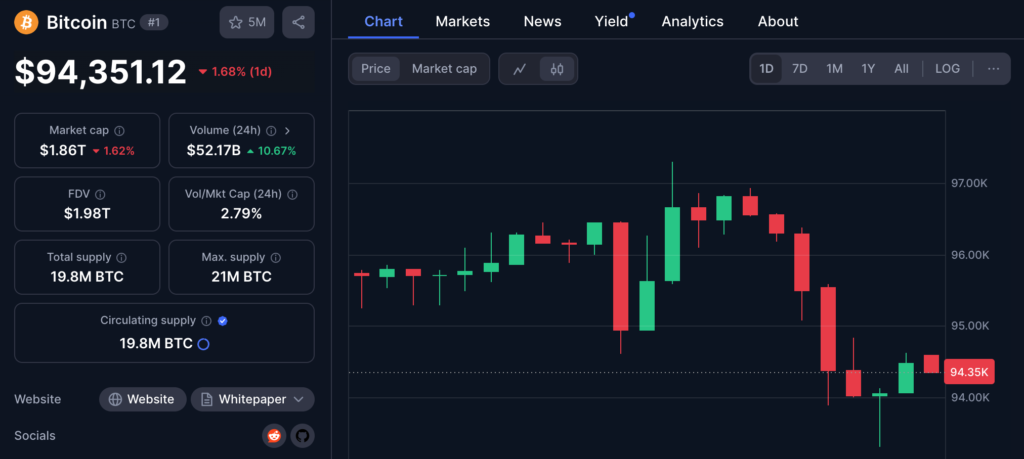
Bitcoin, the world’s largest cryptocurrency, experienced a 2.18% decline on December 27, 2024, leaving investors and analysts questioning the market’s direction as the year draws to a close. The drop, which saw Bitcoin trading at a lower threshold, highlights continued volatility in the digital asset space.
Why Did Bitcoin Drop?
Several factors are believed to contribute to the dip, including broader macroeconomic pressures and a temporary pause in bullish momentum. Experts suggest that the absence of major market-moving events and concerns about global regulatory policies may have dampened investor sentiment.
Institutional Adoption Gains Momentum
Despite the decline, Bitcoin’s fundamentals remain strong. Institutional interest continues to rise, as evidenced by recent ETF filings that underscore growing demand from major investors. According to market analysts, these developments could serve as a foundation for future price recovery, with some predicting an uptick in early 2025 as institutional adoption accelerates.
The Trump Effect: Can Politics Influence Prices?
Adding another layer of intrigue is the political factor. Former U.S. President Donald Trump has recently commented on economic issues, including digital currencies, fueling speculation about whether his influence could sway Bitcoin’s price trajectory. Historically, his statements have impacted market sentiment, making this a potential wildcard for short-term movements.
Will Bitcoin Recover Soon?
As the cryptocurrency market eyes the final days of 2024, investors are closely watching regulatory updates, macroeconomic trends, and institutional activity. While the immediate outlook remains uncertain, many experts remain optimistic about Bitcoin’s long-term growth potential, citing its increasing acceptance among institutional players and retail investors alike.
Stay tuned as Bitcoin navigates this critical period, and the market continues to evolve in the face of economic and political developments.