
🌟📌 Article Summary
The idea of a Bitcoin “super cycle” is drawing increased attention across digital asset markets as institutional participation, long-term capital allocation, and structural supply constraints reshape Bitcoin’s historical trading behavior. While the theory remains debated, proponents argue that Bitcoin may be transitioning away from its traditional four-year halving-driven boom-and-bust cycle toward a more sustained growth phase.
🚀🪙 Defining the Bitcoin Super Cycle
A Bitcoin super cycle refers to a prolonged period of price appreciation driven by persistent structural demand rather than short-term speculative excess. Under this thesis, Bitcoin’s market performance becomes less dependent on retail-driven momentum and more influenced by long-term investors who accumulate across market conditions.
🏦📈 Institutional Capital Alters Market Dynamics
Unlike previous cycles dominated by retail participation, the current market is increasingly shaped by institutional actors. Spot Bitcoin exchange-traded funds (ETFs), asset managers, hedge funds, and corporate treasuries are deploying capital through regulated channels. These participants typically operate with longer investment horizons, absorbing volatility and providing consistent demand during price pullbacks, which may reduce the severity of historical drawdowns.
🔐⛓️ Supply Constraints Strengthen Long-Term Pressure
Bitcoin’s fixed supply cap of 21 million coins remains a core component of the super cycle narrative. Ongoing halving events continue to reduce new issuance, while on-chain data indicates a growing share of Bitcoin held by long-term investors and removed from exchanges. This combination limits available supply and may amplify the impact of sustained demand over time.
🌍💰 Macro Conditions Support the Narrative
Supporters of the super cycle thesis also point to broader macroeconomic trends, including rising global debt levels, concerns around currency debasement, and shifting confidence in traditional monetary systems. Within this context, Bitcoin is increasingly positioned as a digital store of value rather than a purely speculative asset.
⚠️📉 Risks and Ongoing Debate
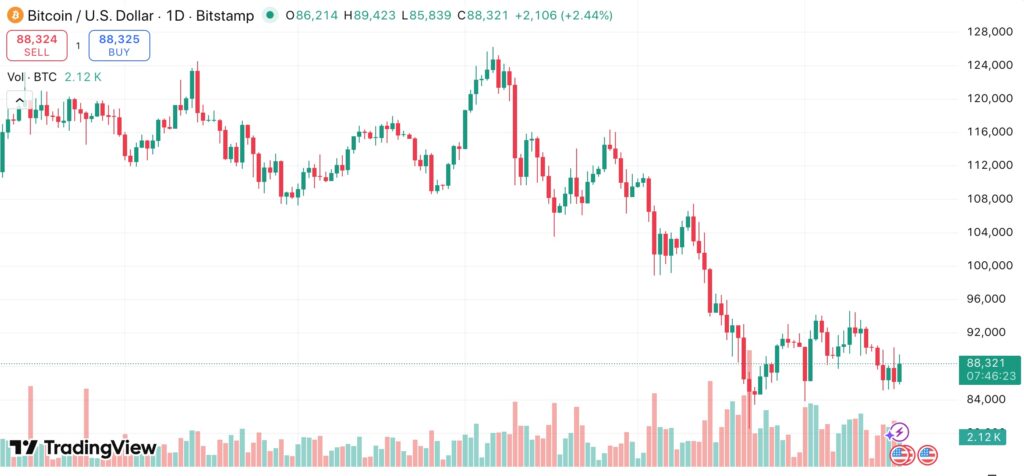
Despite structural changes, analysts caution that Bitcoin remains sensitive to liquidity conditions, leverage, and regulatory developments. Volatility remains a defining feature of the asset class, and a super cycle does not eliminate the risk of sharp corrections.
🧠📊 Market Takeaway
While not yet confirmed, the Bitcoin super cycle thesis reflects a potential maturation of the asset. Institutional adoption, constrained supply, and macroeconomic uncertainty continue to fuel debate over whether Bitcoin is entering a new phase of long-term market behavior.
Disclaimer
This article is for informational purposes only and does not constitute financial or investment advice. Digital assets are volatile, and readers should conduct independent research before making financial decisions.