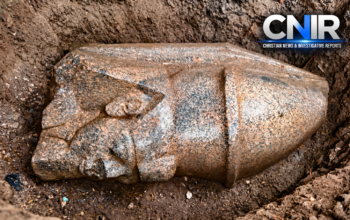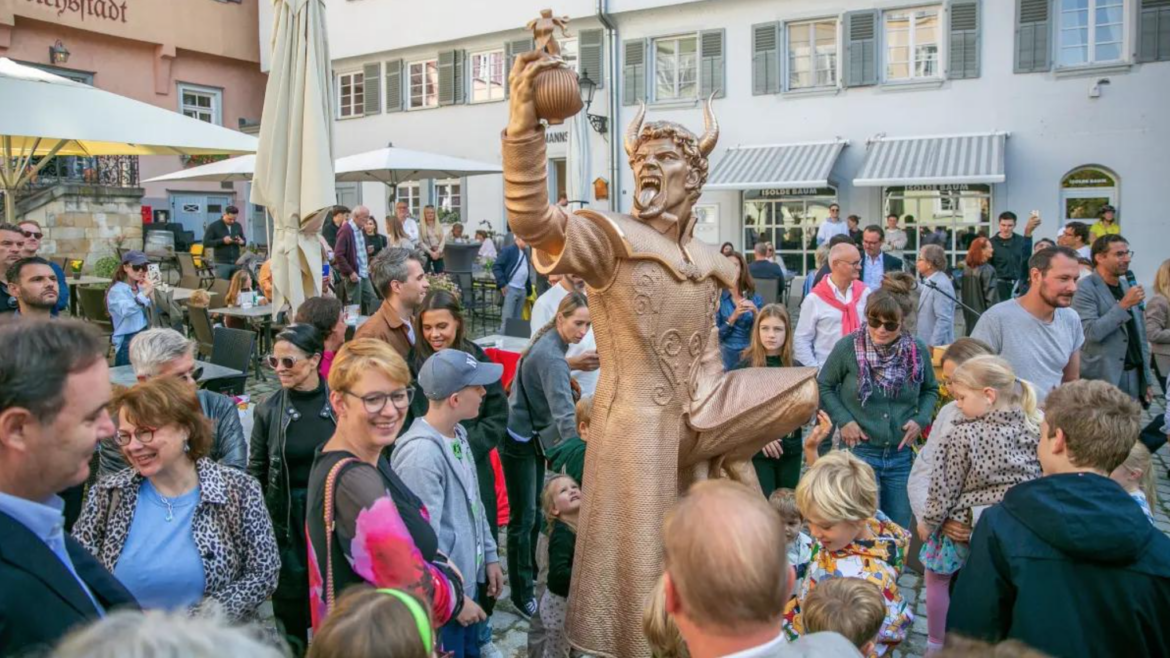

A towering bronze figure in a German city square has sparked protests, Christian concerns, and a growing debate over religious symbolism.
A Devil Statue Sparks Controversy in Germany
ESSLINGEN, GERMANY — A newly unveiled statue depicting the Devil has ignited controversy in the German city of Esslingen am Neckar, raising questions about religious symbolism, artistic expression, and Christianity’s place in public life.
The bronze sculpture, unveiled October 4, 2026, stands approximately eight feet tall in the city’s historic Rathausplatz. Created by German artist Tim Bengel, the figure features horns, a long tongue, and an onion held in its hand.
But while some Christians see a troubling public image, city officials insist the artwork tells a very different story.
The Surprising History Behind the Statue
Known as Zwieblinger Teufel, the sculpture draws inspiration from a local legend in which a clever market woman tricks the Devil into biting an onion instead of an apple.
According to the artist, the sculpture portrays the Devil humiliated and defeated rather than honored.
The statue was donated to the city as a gift connected to the 200th anniversary of Kessler, a local sparkling-wine producer.
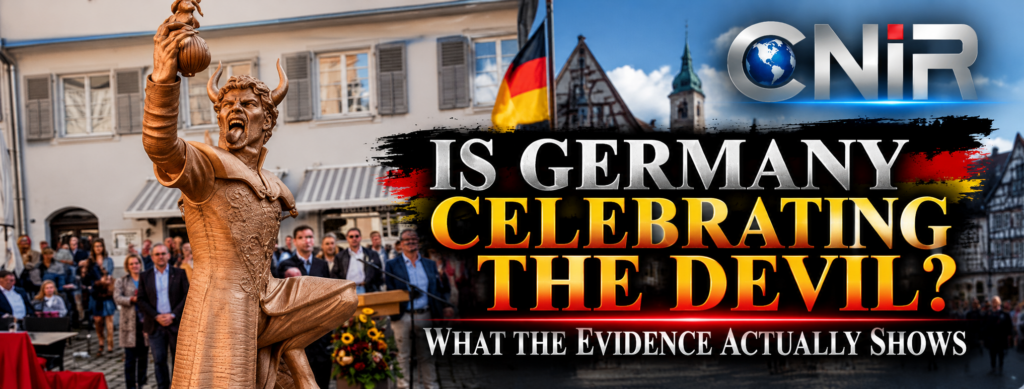
Thousands Demand Its Removal
Opposition has intensified. An online petition demanding the statue’s removal has attracted more than 5,000 signatures.
Critics question why the Devil, rather than the courageous market woman, was chosen as the central figure.
The controversy has also escalated beyond peaceful disagreement. Authorities reported that the sculpture was vandalized with black paint, while city officials condemned threats and calls for violence.
Christian Leaders Respond
Representatives of the Evangelical Church in Württemberg have defended the artwork’s historical meaning.
Church theologians argue that the sculpture depicts evil being outsmarted and does not promote Satanism or threaten Christian belief.
Nevertheless, some Christians remain concerned that prominently displaying a figure associated with Satan sends an inappropriate message in a public setting.
What Does the Statue Really Represent?
The controversy raises a question that extends beyond Germany: Can a public artwork intended to ridicule evil nevertheless appear to celebrate it?
CNIR’s investigation found no evidence that the statue was erected as an official tribute to Lucifer or as an act of Satanic worship. Its documented purpose is to illustrate a local legend.
Still, the debate demonstrates how differently religious imagery can be understood.
For Christians, the biblical warning remains familiar:
“Abstain from all appearance of evil.” — 1 Thessalonians 5:22 (KJV)
Whether the statue represents harmless folklore or an objectionable public symbol remains a matter of disagreement.
Verified sources
Evangelical Church in Württemberg — Theological response
City of Esslingen — Official unveiling and explanation
Tagesschau / SWR — October 15 reporting
Disclaimer:
The information presented in this article is for informational and educational purposes only. Readers are advised to conduct thorough research before making any decisions. Source: Christian News & Investigative Reports (CNIR) — cnirbc.com Reporting the headline. Investigating the facts