Circle Halts IPO, Considers $5B Sale
Circle Internet Financial, the issuer of the widely-used stablecoin USDC, has put its long-anticipated initial public offering (IPO) on hold. Instead, the firm is now entertaining acquisition offers, seeking a valuation of approximately $5 billion, according to individuals familiar with the discussions.
The strategic pivot comes amid heightened regulatory scrutiny, geopolitical uncertainty, and structural shifts in stablecoin regulation—prompting questions about whether Circle sees long-term headwinds in the market it helped pioneer.
Ripple’s XRP-Based Bid Rejected
One notable offer reportedly came from Ripple Labs, which proposed a $5 billion buyout—but included partial payment in XRP tokens. The bid was immediately rejected, insiders say, as Circle’s leadership seeks full cash settlement. Circle’s concern reportedly stems from the impracticality and volatility of redeeming large quantities of XRP on the open market without triggering a price crash.
Ripple would likely need to liquidate XRP reserves to meet the cash requirement, which could strain its native token’s price unless bolstered by speculative demand. Observers note this tactic could potentially backfire, weakening Ripple’s negotiating position.
Coinbase Steps In
Coinbase Global, a U.S.-based crypto exchange and Circle’s close strategic ally, has also entered the acquisition discussion. Coinbase co-founded the Centre Consortium with Circle to govern USDC issuance, and already integrates USDC across its platforms for trading and payments.
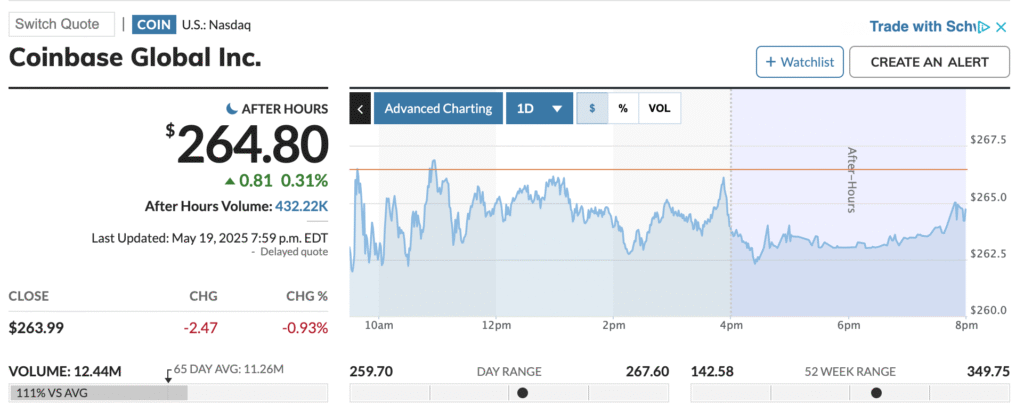
Given their shared infrastructure and regulatory alignment, Coinbase is viewed by many in the industry as the more natural suitor.
Who’s More Likely to Acquire Circle?
While neither deal is finalized, Coinbase appears to be the more probable acquirer due to its longstanding partnership with Circle, joint governance of USDC through the Centre Consortium, and shared infrastructure. Coinbase also has regulatory maturity as a publicly listed U.S. company.
However, Ripple remains a serious contender, armed with deep capital reserves and a strategic interest in diversifying beyond XRP. If Ripple secures the deal, it could mark a significant pivot into U.S.-regulated stablecoins. If neither bid materializes, Circle may still proceed with its IPO.
Why Sell Now? Strategic or Defensive?
The timing of the sale raises eyebrows. Why would Circle consider selling ahead of a potentially lucrative IPO? Some speculate that rising geopolitical tensions, particularly trade negotiations with China, may temper future global demand for U.S. dollar-denominated stablecoins like USDC.
Others point to the imminent GENIUS Act, a sweeping piece of legislation that would fundamentally reshape the stablecoin industry by banning long-term Treasuries as reserve assets and requiring only short-term U.S. Treasury backing. This regulatory shift could flood the market with competitors and squeeze Circle’s margins.
GENIUS Act Could Trigger Stablecoin Surge—And Volatility
The GENIUS Act may temporarily boost demand for short-term Treasuries and stimulate growth in U.S.-regulated stablecoins, but critics warn it’s a short-term solution to a long-term debt problem. Stablecoins backed by short-term Treasuries could become highly vulnerable to interest rate shocks—a dynamic already observed in past de-pegging events.
As longer-term U.S. debt matures, it may be increasingly converted to short-term debt, adding stress to an already fragile system. In this environment, stablecoin issuers like Circle could face growing financial risk.
China’s Treasury Exit Signals Broader Shift
Adding to the macroeconomic backdrop, reports indicate that China is reducing its holdings of long-term U.S. Treasury bonds, likely anticipating increased volatility and currency diversification across global markets. This adds pressure on the U.S. to maintain foreign interest in its debt—perhaps one reason policymakers are now embracing dollar-backed stablecoins as a tool to extend short-term Treasury demand.
The Dollar’s Crossroads
The U.S. faces a difficult decision: accelerate the adoption of USD-backed stablecoins to support short-term debt markets or risk ceding financial dominance as BRICS nations shift toward alternative currencies. While a sale of Circle could further entrench USDC as a critical digital asset in the short run, it also reveals the fragile balance underpinning the broader crypto-fiat landscape.
This article was created with AI assistance and curated by DNIR Staff for accuracy and editorial standards.