In a series of posts on Truth Social this past Sunday, President Donald Trump revealed that a U.S. digital asset reserve is being developed as part of his executive order on digital assets issued in January. The reserve is set to include five major cryptocurrencies—Bitcoin, Ethereum, XRP, Solana, and Cardano. This announcement has sparked discussions about Ripple’s XRP and its potential role in the future of global finance. Could XRP be the strongest real-world use case in cryptocurrency?
XRP’s Role in Cross-Border Payments
Ripple’s XRP has long been recognized for its primary use case—enabling fast, low-cost cross-border transactions. Unlike traditional banking methods that rely on slow and expensive intermediaries, XRP facilitates nearly instant currency conversion between financial institutions. RippleNet’s On-Demand Liquidity (ODL) solution provides seamless transactions, making it an attractive option for banks and payment providers.
As the financial industry continues moving toward digital solutions, XRP stands out as a bridge currency that could significantly reduce transaction fees and processing times. Many experts believe this positions XRP as a strong alternative to outdated systems like SWIFT.
Regulatory Challenges and the SEC Battle
Despite its advantages, XRP has faced significant regulatory challenges, particularly from the U.S. Securities and Exchange Commission (SEC). The SEC lawsuit against Ripple, alleging that XRP is an unregistered security, has cast uncertainty over the cryptocurrency’s future in the U.S. market. However, Ripple has continued to expand internationally, securing partnerships with financial institutions worldwide.
If regulatory clarity is achieved, XRP could see greater institutional adoption, further solidifying its position as a leader in global digital transactions.
Could XRP Support the U.S. Dollar’s Dominance?
Some analysts speculate that XRP was designed to play a key role in maintaining the dominance of the U.S. dollar as the world’s reserve currency. With increasing global economic uncertainty, digital assets may become a critical tool in supporting financial stability. If XRP is integrated into the financial infrastructure as part of the U.S. digital asset reserve, it could influence how digital currencies are used on a national and global scale.
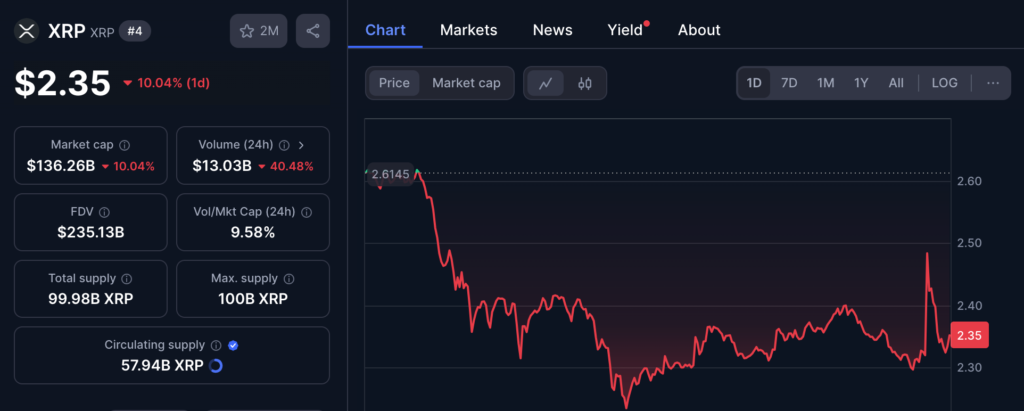
While the U.S. dollar remains the primary reserve currency, ongoing discussions about monetary policy and economic resilience leave open questions about how cryptocurrencies like XRP will fit into the evolving system. Could Ripple’s technology be part of a broader strategy to restructure the financial model of the future?
Conclusion: What’s Next for XRP?
Trump’s inclusion of XRP in the planned U.S. digital asset reserve adds weight to its credibility in the financial sector. While the cryptocurrency has already proven its utility in cross-border payments, the path ahead depends on regulatory clarity and adoption by financial institutions.
What do you think about XRP’s role in the future of digital finance? Will it become a cornerstone of the U.S. digital economy, or will regulatory challenges slow its progress? Share your thoughts in the comments below!