Could One of 2026’s Most Overlooked Religious Events Become One of Its Most Significant?
Wars continue across multiple regions. Artificial intelligence is advancing at an unprecedented pace. Nations are debating the future of global cooperation. Yet, away from the world’s political headlines, another event is quietly unfolding in Jerusalem that has captured the attention of Christians who closely study Bible prophecy.
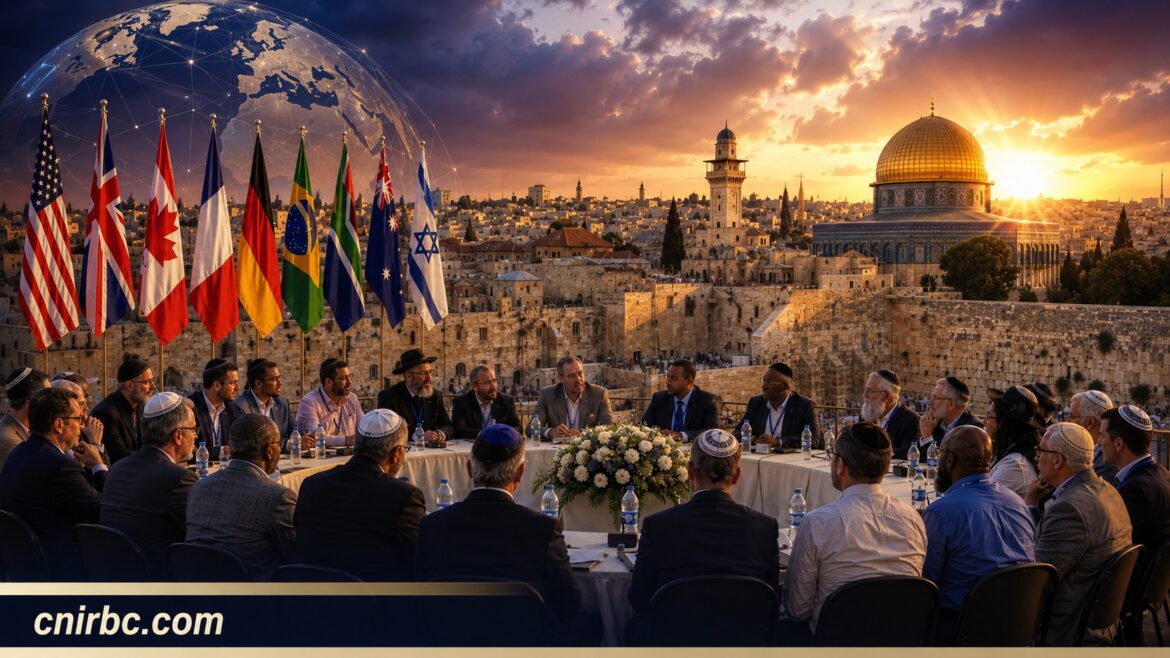
The First International Congress of Noahides, scheduled for November 2–6, 2026, will gather Noahide representatives from six continents in Jerusalem. According to the event’s organizers, the congress aims to establish an international framework for the Noahide movement by adopting a founding charter, creating a unified educational curriculum, organizing regional leadership, and establishing an international rabbinic court known as a Beit Din.
For many observers, this is simply an international religious conference.
For others, it represents a noteworthy development involving Jerusalem, biblical law, and the nations—subjects that have long occupied an important place in Christian discussions of biblical eschatology.
What Is the Noahide Movement?
The Noahide movement is based on the Jewish teaching that all humanity descends from Noah and is therefore called to observe the Seven Noahide Laws. Unlike the Mosaic Covenant, which traditional Judaism teaches was given specifically to Israel, these seven principles are understood within Jewish tradition to apply universally to all people.
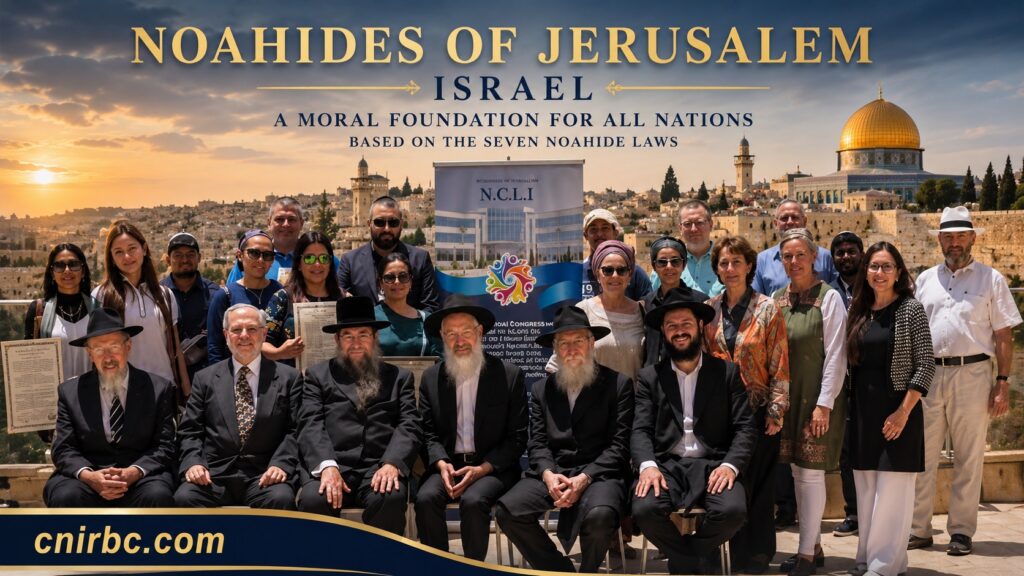
The movement encourages non-Jews to worship the God of Israel while observing these foundational moral laws without converting to Judaism. Over the past several decades, Noahide communities have emerged in countries throughout North America, South America, Europe, Africa, Asia, and Australia.
The First International Congress seeks to bring many of these communities together under a more unified international structure.
What Are the Seven Noahide Laws?
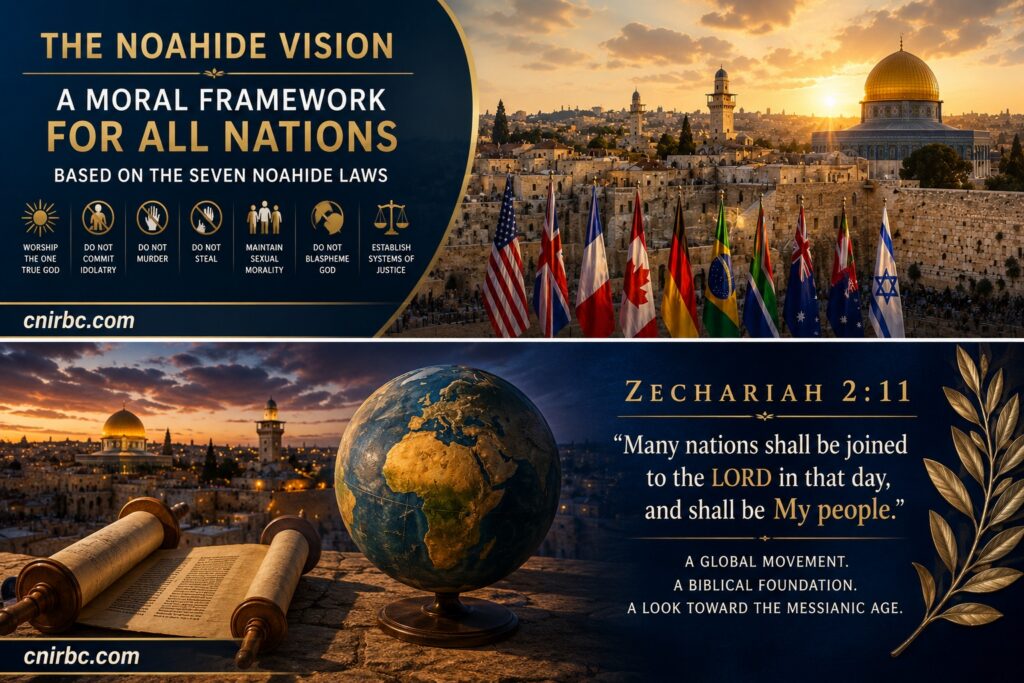
According to traditional Jewish teaching, the Seven Noahide Laws include:
- Worship the one true God.
- Do not commit idolatry.
- Do not murder.
- Do not steal.
- Maintain sexual morality.
- Do not blaspheme God.
- Establish systems of justice.
Within Judaism, these laws are viewed as God’s universal moral standard for humanity. Christians may recognize similarities between these principles and biblical moral teaching while differing significantly regarding salvation, the New Covenant, and the identity of the Messiah.
Why Is Jerusalem at the Center?
One of the most striking aspects of the congress is its location. The organizers openly cite passages such as Zechariah 2:11, where many nations are described as joining themselves to the Lord. Their vision is to encourage a worldwide acknowledgment of the God of Israel while strengthening Jerusalem’s role as the spiritual center of the international Noahide movement.
According to published information about the event, delegates are expected to discuss:
- A worldwide Noahide charter.
- A standardized educational curriculum.
- International cooperation among Noahide communities.
- Establishment of an international Beit Din.
- Greater recognition of the ger toshav (“resident alien” or “righteous gentile”) concept within Jewish legal tradition.
These objectives explain why the congress has attracted attention far beyond Jewish communities.
Why Are Bible Prophecy Watchers Paying Attention?
For Christians who study Bible prophecy, Jerusalem has always occupied a unique place in God’s redemptive plan. The Old and New Testaments repeatedly describe Jerusalem as central to future prophetic events involving the nations, the Messiah, and God’s Kingdom. Because of this, any international movement intentionally centered on Jerusalem naturally invites biblical comparison. Some Christians see the congress as another reminder that Jerusalem continues to occupy the center stage of world history. Others urge greater caution, noting that history contains many events once believed to fulfill prophecy that later proved to be only partial or unrelated developments. Both perspectives agree on one important principle: Jerusalem matters.
Does the Bible Predict a Global Religious System?
The Bible contains numerous passages describing worldwide religious, political, and spiritual developments during the last days. Books such as Daniel, Zechariah, Matthew, 2 Thessalonians, and Revelation have been interpreted by many Christians as describing increasing international cooperation, global deception, and ultimately the return of Jesus Christ. Exactly how those prophecies should be understood remains one of the most debated areas of Christian theology. Faithful Bible-believing Christians have reached different conclusions regarding prophetic timelines while agreeing that Christ will ultimately establish His Kingdom. For that reason, responsible Christian journalism should distinguish between verified events and theological interpretation.
The verified event is straightforward: the First International Congress of Noahides is a planned international gathering with publicly stated objectives related to the Noahide movement. Whether that event carries prophetic significance is a matter of biblical interpretation rather than established historical fact.
Why Prophetic Interpretation Requires Spiritual Discernment
Few areas of theology are more challenging than biblical eschatology. The Apostle Paul wrote that “the things of the Spirit of God… are spiritually discerned” (1 Corinthians 2:14). Likewise, Luke 24:45 records that Jesus opened the understanding of His disciples so they could comprehend the Scriptures. For many Christians, these passages emphasize that understanding prophecy requires more than following current events—it requires careful study, prayer, humility, and dependence upon the Holy Spirit.
This helps explain why sincere Christians sometimes disagree on the interpretation of prophetic passages while remaining united in their faith in Jesus Christ. Rather than forcing modern headlines into predetermined prophetic conclusions, believers are called to compare every development with the whole counsel of Scripture.
Should Christians Follow the Noahide Laws?
This question has become increasingly common as awareness of the Noahide movement grows. Historic Christianity teaches that salvation comes through faith in Jesus Christ alone and that believers live under the New Covenant established through His death and resurrection.
Although many of the Noahide Laws reflect moral principles also found in the Bible, Christians generally do not view them as a replacement for the Gospel or as the basis of salvation. The central message of Christianity remains unchanged: redemption is found through Jesus Christ, not through adherence to any legal code.
Watching Without Speculating
Jesus instructed His followers to remain watchful and spiritually prepared. Watching, however, is different from speculation. Christians should neither ignore significant developments involving Jerusalem nor rush to declare every international event a direct fulfillment of biblical prophecy. Instead, believers should evaluate current events carefully, compare every claim with Scripture, and exercise spiritual discernment.
The First International Congress of Noahides deserves thoughtful attention because it reflects a growing international movement focused on Jerusalem and universal moral law. Whether history remembers it as a significant prophetic milestone or simply another chapter in modern religious history remains to be seen.
For Christians committed to understanding God’s Word, the wisest response is neither fear nor sensationalism—but faithful vigilance grounded in Scripture.
Key Takeaways
- The First International Congress of Noahides is scheduled for November 2–6, 2026, in Jerusalem.
- Organizers plan to strengthen the global Noahide movement through a founding charter, educational curriculum, international leadership, and a Beit Din.
- Christians view the event through different prophetic frameworks, making spiritual discernment and careful biblical study essential.
- The congress is a verified event; its prophetic significance remains a matter of theological interpretation.
Sources
- Brit Olam / Noahide World Center – Official information regarding the First International Congress of Noahides.
- Chabad.org – Overview of the Seven Noahide Laws.
- JLaw.com – Discussion of the ger toshav and Noahide legal tradition.
Related Reading
Jerusalem and the Nations in Biblical Prophecy
Why Is Jerusalem Central to Bible Prophecy?
What Does the Bible Say About the Last Days?
Understanding Christian Eschatology
The Seven Noahide Laws Explained