By CNIRBC News Analysis
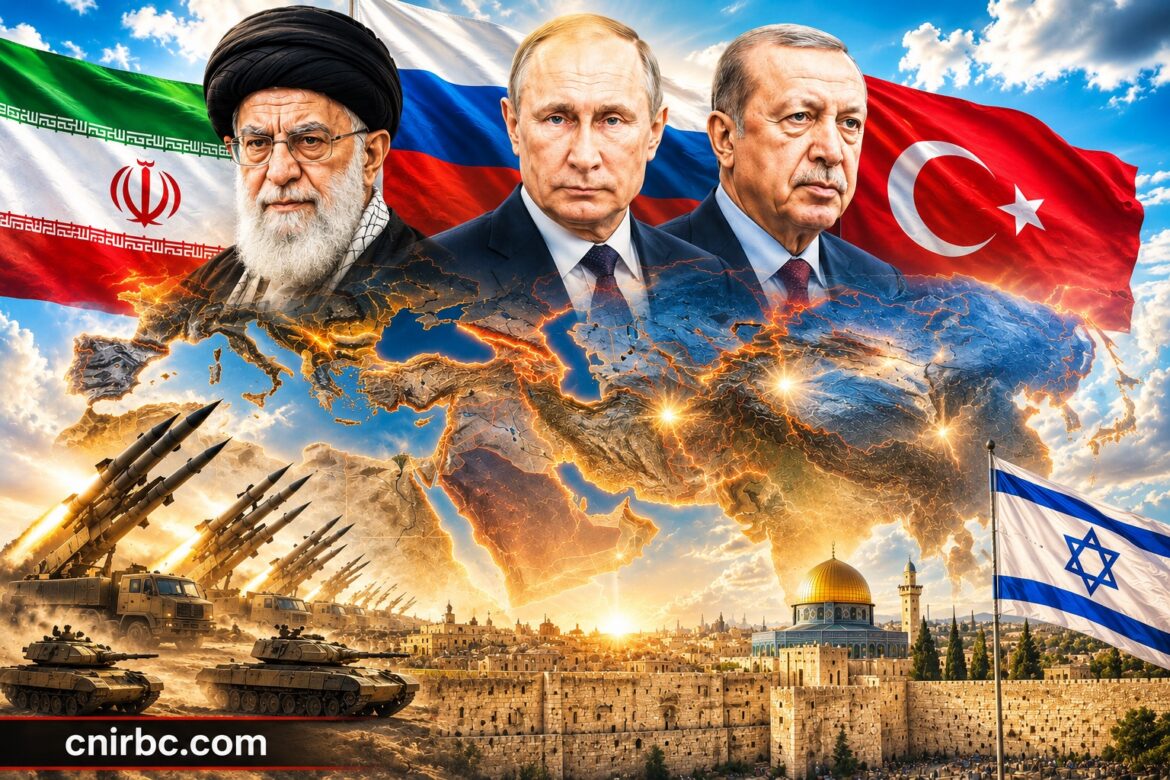
Recent events in the Middle East have reignited discussion among students of biblical prophecy as Iran, Russia, and Turkey continue to strengthen strategic relationships while tensions with Israel and the West remain high.
Following the recent regional conflict, Iran’s leadership has shown little indication of moderating its long-standing ideological positions. Instead, public funeral ceremonies honoring the late Supreme Leader Ayatollah Ali Khamenei featured large crowds chanting “Death to America” and “Death to Israel,” reflecting the Islamic Republic’s continued revolutionary rhetoric. At the same time, analysts have suggested Iran’s postwar leadership could emerge even more security-focused and ideologically committed than before.
For many observers, the developments reinforce an important geopolitical reality: military setbacks do not necessarily produce political moderation.
History demonstrates that governments built around revolutionary ideology often respond to external pressure by consolidating power internally while strengthening relationships with sympathetic allies.
Although Iran has suffered military losses, economic sanctions, and years of diplomatic isolation, its cooperation with Russia has continued to expand through defense coordination, drone technology, and broader strategic partnerships. Meanwhile, Turkey has pursued an increasingly independent foreign policy while expanding its military and diplomatic influence throughout the Middle East, North Africa, and the eastern Mediterranean.
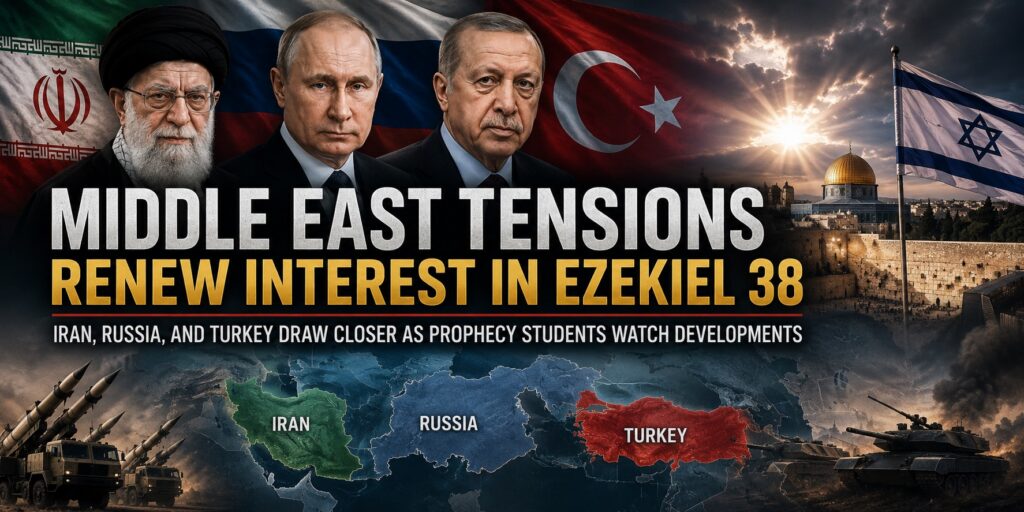
These geopolitical developments have drawn renewed attention from many Christians who study Bible prophecy.
Why Ezekiel 38 Is Receiving Renewed Attention
More than 2,600 years ago, the prophet Ezekiel described a future coalition of nations that would unite against Israel.
Among the nations specifically listed is Persia, a name widely understood by biblical scholars to refer to the region of modern Iran. The prophecy also names Meshech, Tubal, Gomer, and Beth Togarmah—territories that many conservative scholars associate with areas of present-day Turkey. The identity of Gog, the coalition’s leader, remains debated, although many evangelical prophecy teachers have historically associated the “far north” with Russia or lands under its influence. Other scholars interpret these geographical references differently.
While these identifications are not universally accepted, many prophecy teachers have long noted the growing strategic alignment between Iran, Russia, and Turkey.
Over the past decade, all three nations have expanded diplomatic, military, or economic cooperation while each has experienced increasing tension with Israel and, to varying degrees, with Western governments.
Different Motivations, Shared Interests
Although the three nations pursue different national objectives, their interests increasingly intersect.
Iran continues to portray itself as the leader of the “Axis of Resistance” while maintaining a confrontational posture toward Israel and the United States.
Russia’s prolonged confrontation with NATO following the war in Ukraine has deepened its partnerships with countries willing to challenge Western influence.
Turkey, under President Recep Tayyip Erdoğan, has sought greater regional leadership through expanded military operations, growing defense capabilities, and a more assertive foreign policy that many analysts describe as reflecting neo-Ottoman ambitions.
These developments do not establish that Ezekiel 38 is being fulfilled today.
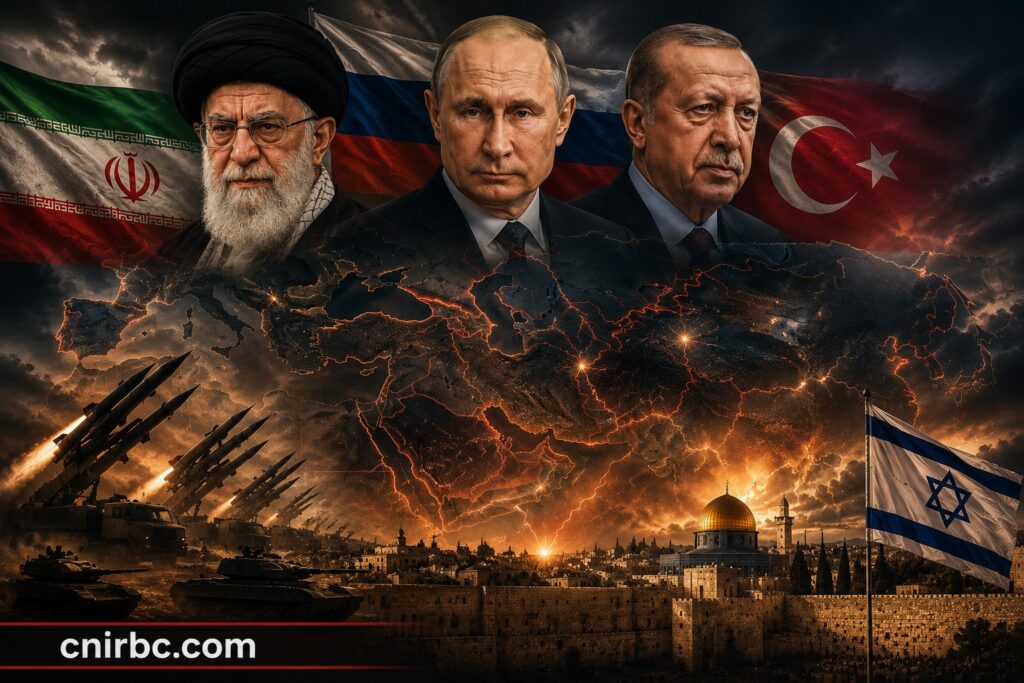
Rather, they demonstrate why many students of prophecy believe today’s geopolitical landscape bears a closer resemblance to the coalition described by Ezekiel than it did only a generation ago.
A Prophetic Perspective—Not a Prophetic Prediction
Responsible biblical interpretation requires humility.
The Scripture does not provide a timetable for Ezekiel’s prophecy, nor does it instruct believers to identify every international crisis as its immediate fulfillment. Instead, Jesus repeatedly encouraged His followers to remain spiritually watchful while recognizing the broader signs of the times. Current events should therefore be viewed as developments worthy of observation—not definitive proof that Ezekiel 38 is unfolding before our eyes. Whether today’s alliances ultimately become the coalition Ezekiel described remains unknown.
What is clear is that Iran continues to project defiance, Russia remains increasingly estranged from the West, and Turkey continues expanding its regional influence.
For many Christians, those realities make Ezekiel’s ancient prophecy more understandable than ever before—not because prophecy has been conclusively fulfilled, but because the geopolitical conditions it describes appear increasingly conceivable.
Top 3 Key Takeaways
1. Iran Remains Defiant After War
Despite significant military and economic pressure, Iran’s leadership continues to embrace revolutionary rhetoric and appears committed to maintaining its confrontation with Israel and the United States.
2. Russia, Turkey, and Iran Are Increasing Strategic Cooperation
Although motivated by different national interests, the three nations continue expanding diplomatic, military, and economic relationships that have attracted the attention of geopolitical analysts and Bible prophecy students alike.
3. Current Events Resemble—but Do Not Prove—Ezekiel 38
Many Christians believe today’s geopolitical alignments resemble aspects of Ezekiel’s prophecy. However, Scripture does not provide a prophetic timetable, making it important to distinguish observation from certainty.
Sources & Further Reading
Prophecy News Watch – The Road to Ezekiel 38: Russia’s Anger, Turkey’s Ambition, Iran’s Revenge, offering a biblical prophecy perspective on current geopolitical trends.
Reuters – Reporting on Iran’s postwar leadership, Khamenei’s funeral, and regional developments.
The Washington Post – Analysis of Iran’s leadership following recent military setbacks.