TRENTON, N.J. — A new New Jersey abortion clinic law is raising questions among Christians and pro-life advocates about where the state will draw the line between protecting access to reproductive healthcare and protecting First Amendment religious freedom.
Gov. Mikie Sherrill signed S2260/A2218 on August 20, 2026. The legislation creates a criminal offense for certain conduct interfering with reproductive healthcare services, including physical obstruction, threats, intimidation, bodily injury and property damage.
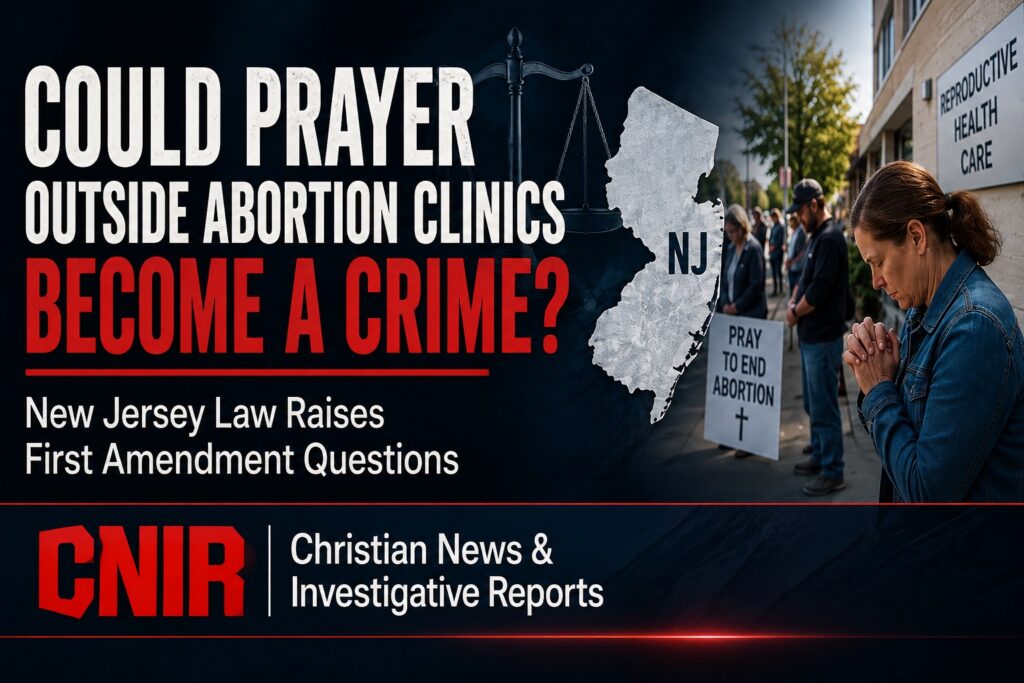
But does that mean prayer outside abortion clinics could become a crime?
The answer, based on the language of the law, is not simply yes.
New Jersey Has Not Outlawed Prayer
The legislation does not explicitly prohibit Christian prayer, preaching or peaceful pro-life demonstrations outside abortion clinics.
Instead, the law targets specific conduct. It prohibits purposely or knowingly physically obstructing access to reproductive healthcare services, causing or attempting bodily injury, damaging property, or using force or the threat of force to intimidate, threaten or coerce certain people associated with reproductive healthcare.
That distinction is critical.
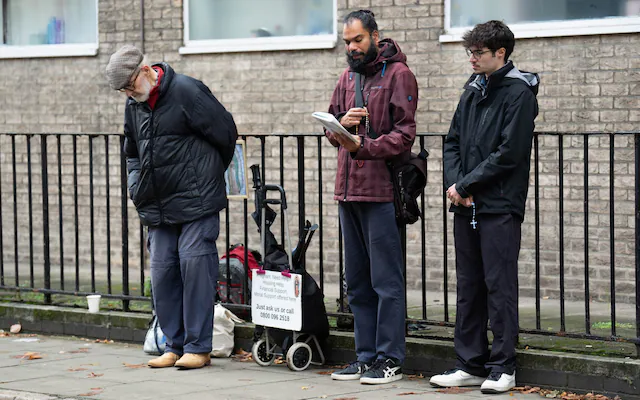
A Christian standing peacefully on a public sidewalk praying is fundamentally different from someone physically blocking an entrance, threatening a patient or committing an act of violence.
Therefore, reports suggesting that New Jersey has simply “criminalized prayer outside abortion clinics” go beyond what the law actually states.
Violations Carry Serious Penalties
The new law nevertheless carries substantial criminal consequences.
Interference with reproductive healthcare services is generally a fourth-degree crime, potentially punishable by up to 18 months in prison and a $10,000 fine.
When bodily injury is involved, the severity of the charge can increase. More serious cases can potentially become third- or second-degree crimes.
The legislation also establishes civil remedies, creating additional potential consequences for people found to have violated its provisions.
Could Peaceful Christian Prayer Be Affected?
This is where the issue becomes especially important for Christians.
The First Amendment protects freedom of speech, peaceful assembly and the free exercise of religion. Those constitutional protections do not disappear simply because someone is standing near an abortion clinic.
At the same time, the First Amendment does not provide a constitutional right to threaten patients, use violence or physically prevent someone from entering a healthcare facility.
The real issue may therefore become how New Jersey authorities enforce the law.
If enforcement focuses strictly on violence, genuine threats, force and physical obstruction, peaceful Christian prayer presents a very different legal situation.
But if peaceful prayer, preaching or lawful sidewalk counseling were eventually treated as criminal intimidation merely because the message makes someone uncomfortable, significant First Amendment questions could arise.
Public Safety Versus Religious Freedom
Supporters of the law argue that patients and healthcare providers deserve protection from threats, intimidation and violence when accessing or providing services that are legal in New Jersey.
That public-safety interest must be considered alongside another fundamental American principle: government cannot simply silence lawful religious expression because the message is controversial or unpopular.
This makes the distinction between conduct and speech especially important.
Christians and pro-life organizations should therefore watch not only what the legislation says, but how prosecutors and law-enforcement agencies actually apply it.
What Christians Should Watch Next
At this point, there is no factual basis for declaring that New Jersey has outlawed prayer outside abortion clinics.
But there is a legitimate reason to watch the law carefully.
The central question is straightforward:
Can New Jersey protect patients and healthcare workers from genuine threats and obstruction while also protecting Christians who peacefully pray, speak and witness on public sidewalks?
The answer may ultimately depend less on the headline surrounding the law and more on how it is enforced.
For Christians concerned about religious liberty, that is the part of this developing story worth watching.
Editorial Note
This article is intended to encourage biblical discussion—not to criticize any individual pastor, church, or denomination. CNIR affirms that Scripture honors faithful spiritual leaders while also emphasizing the importance of mentoring and preparing the next generation. Our hope is that this conversation inspires churches to remain biblically faithful, spiritually healthy, and ready for the future. This article was created with AI assistance and curated by CNIR Staff for accuracy and editorial standards. Source: Christian News & Investigative Reports (CNIR) — cnirbc.com