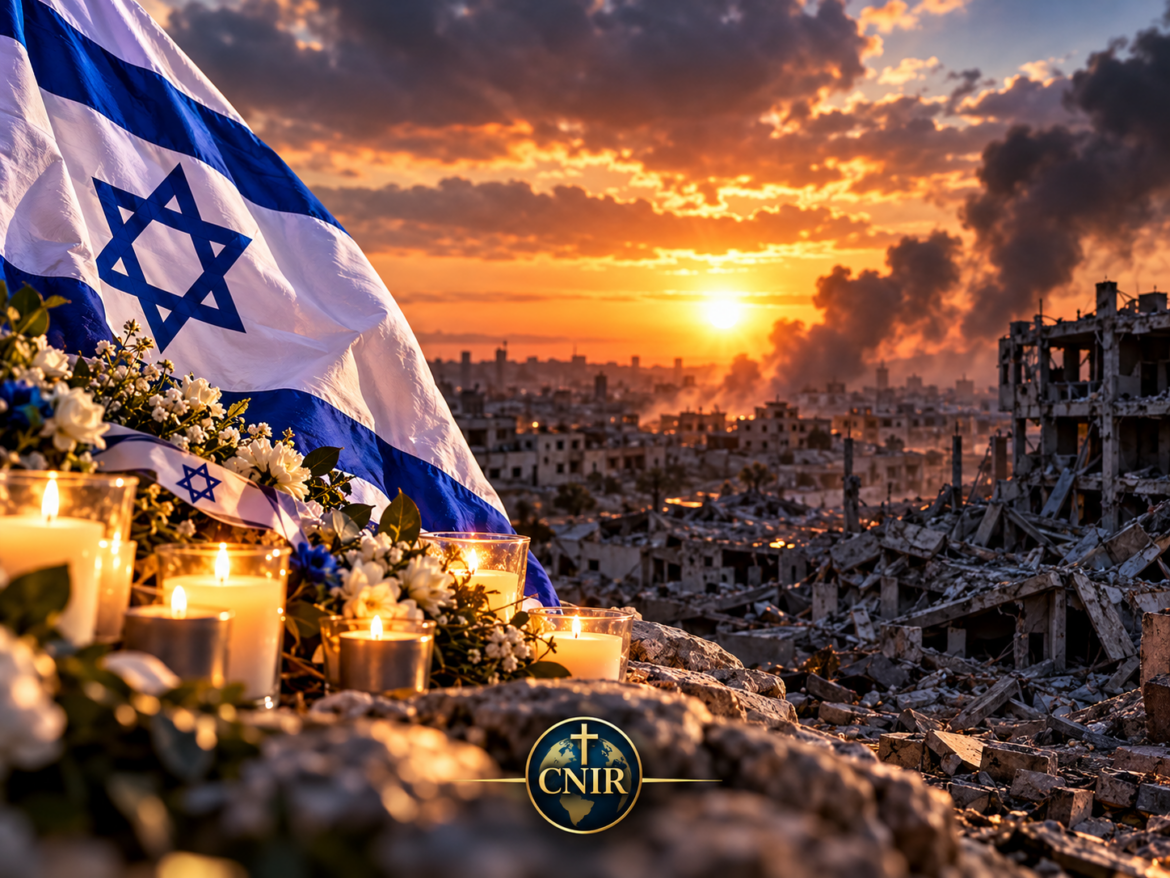
JERUSALEM — Three years have passed since the October 7, 2023 Hamas-led assault on southern Israel shattered the nation’s sense of security, ignited the devastating Gaza war and helped reshape the political and military landscape of the Middle East.
On Wednesday, Israelis gathered at communities near the Gaza border, memorial sites and other locations to remember those killed in the attack. Palestinians in Gaza marked the anniversary amid destroyed neighborhoods, displacement and the continuing consequences of three years of warfare.
October 7 remains a defining date for both peoples—but for profoundly different reasons.

The Morning That Changed Israel
On October 7, 2023, Hamas-led militants crossed from Gaza into southern Israel, attacking communities, military positions and the Nova music festival.
Approximately 1,200 people were killed and 251 people were taken hostage, according to Israeli and international accounts. The attack became the deadliest single day in Israel’s history.
Men, women, children and elderly people were among those abducted and taken into Gaza.
Israel responded by declaring war against Hamas and launching an extensive military campaign in the Gaza Strip.
What began that morning would eventually extend far beyond Gaza, contributing to escalating confrontations involving Lebanon, Yemen, Iran and other parts of the Middle East.
Three Years Later, No Hostages Remain in Gaza
The third anniversary carries one major difference from the previous two.
For the first time since October 7, no Israeli hostages from the attack remain inside Gaza, living or deceased.
Most surviving hostages were eventually released through negotiated agreements involving the release of Palestinian prisoners and detainees. Others died while being held.
For survivors, however, freedom has not erased the trauma.
Former hostage Eli Sharabi, who was held for 491 days, lost his wife, two daughters and brother during the attack and its aftermath. Other survivors have spoken publicly about rebuilding their lives while continuing to cope with the psychological effects of captivity.
Their stories have become part of Israel’s continuing effort to process what happened on October 7.
Gaza Bears the Devastation of Three Years of War
The human cost on the Palestinian side has also been enormous.
Israel’s bombardment and ground operations have killed more than 74,000 Palestinians, according to Gaza’s Health Ministry. The ministry’s figures do not distinguish between civilians and combatants.
Large sections of Gaza have been destroyed, and nearly the entire population has experienced displacement during the conflict.
Millions have faced disrupted access to housing, food, medical treatment, clean water and other necessities.
A U.S.-brokered ceasefire took effect on October 10, 2025, ending full-scale combat. However, the agreement has not produced complete peace.
Israeli strikes have continued, while Israel says Hamas has attempted to rebuild its military capabilities and conduct attacks. Hamas disputes Israel’s accusations and has accused Israel of violating the ceasefire.
More than 1,400 Palestinians have reportedly been killed since the ceasefire began, according to Gaza health authorities.

Gaza’s Future Remains Uncertain
Several of the most difficult questions that existed when the ceasefire began remain unresolved.
Hamas has not been fully disarmed. Israeli forces continue to control roughly two-thirds of Gaza, while reconstruction of the devastated territory has barely begun.
More than 1.2 million people continue to face acute hunger, according to humanitarian assessments cited by Reuters.
International estimates place Gaza’s reconstruction needs at more than $70 billion over the coming decade.
The ceasefire therefore stopped the return to full-scale warfare, but it has not resolved the conflict that produced it.
Israel Still Searching for Answers
Inside Israel, October 7 remains more than a memorial date.
Families of victims and other Israelis continue demanding accountability for the security and intelligence failures that allowed Hamas fighters to penetrate Israel’s heavily defended border.
Prime Minister Benjamin Netanyahu has resisted demands for an independent state commission examining the failures surrounding the attack and has rejected efforts to place responsibility for the security breakdown solely on his government.
Three years later, the political consequences remain substantial as Israel prepares for another national election.
Christians Continue Watching Israel
For millions of Christians around the world, October 7 also renewed attention on Israel and the broader Middle East.
Israel occupies a unique place throughout Scripture, from God’s covenant with Abraham in Genesis to Jerusalem’s prominent role in biblical prophecy.
That biblical significance, however, should not cause Christians to overlook human suffering.
Scripture calls believers to pray for peace:
“Pray for the peace of Jerusalem: they shall prosper that love thee.” — Psalm 122:6 (KJV)
Christians can mourn the murder of Israeli civilians and the taking of hostages while also grieving the deaths and suffering of Palestinian civilians caught in the war.
Recognizing one tragedy does not require ignoring another.
Three Years That Changed the Middle East
October 7, 2023 began as a single horrific morning.
Three years later, its consequences are still unfolding.
Israel is remembering those murdered and confronting questions about security, leadership and accountability. Former hostages and bereaved families continue rebuilding lives permanently altered by that day.
Palestinians in Gaza face a different reality—cities reduced to rubble, families divided, tens of thousands dead and an uncertain reconstruction process that could take years.
The hostages have returned and full-scale warfare has stopped, but the underlying Israeli-Palestinian conflict remains unresolved.
Three years after October 7, perhaps the clearest conclusion is also the simplest:
The fighting may have changed, but the wounds of October 7 and the war that followed have not disappeared.
CNIR — Christian News & Investigative Reports
Disclaimer: The information presented in this article is for informational and educational purposes only. Readers are advised to conduct thorough research before making any decisions. Source: Christian News & Investigative Reports (CNIR) — cnirbc.com Reporting the headline. Investigating the facts