CHRISTIAN NEWS & INVESTIGATIVE REPORTS (CNIR) | SPECIAL REPORT
A prominent Pentecostal bishop’s political support for a Muslim Senate candidate is drawing criticism and raising questions about religious convictions, church leadership, and the potential consequences of political alliances.
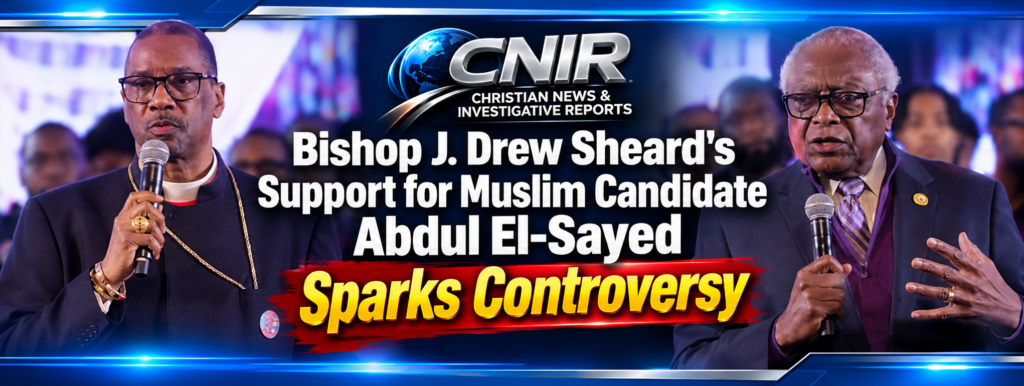
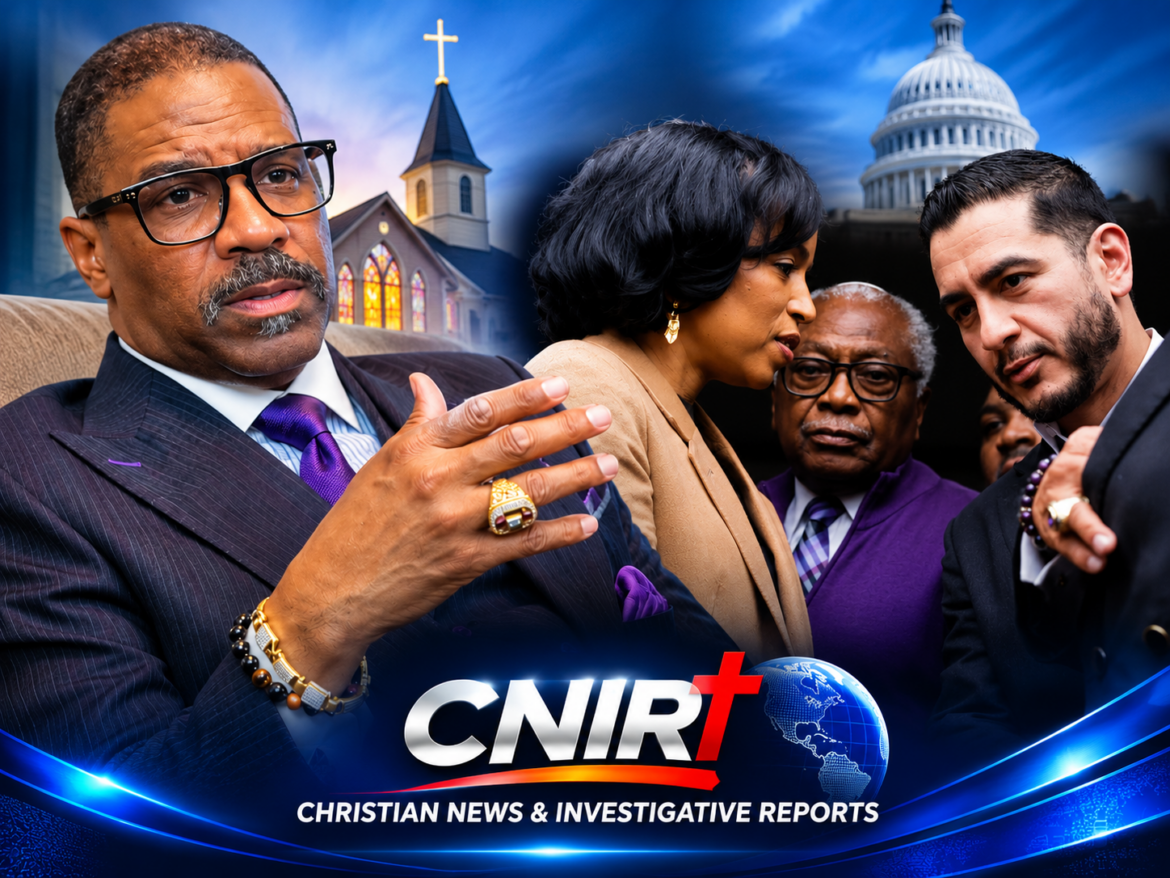
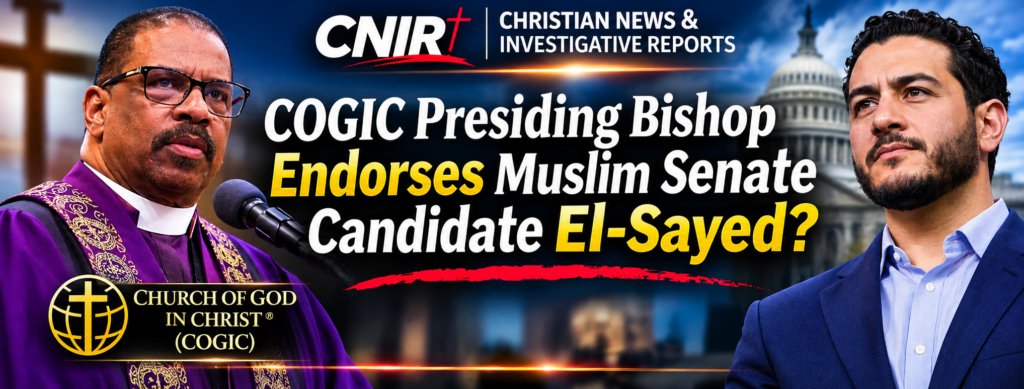
DETROIT, MICHIGAN — November 3, 2026 — Presiding Bishop J. Drew Sheard, leader of the Church of God in Christ (COGIC), has become the subject of public criticism following his declaration that he voted for Democratic U.S. Senate candidate Dr. Abdul El-Sayed, a Muslim politician.
The controversy extends beyond the bishop’s personal voting preference. Critics are questioning why a prominent Christian leader would publicly support a candidate whose religious beliefs differ fundamentally from historic Christian teachings about Jesus Christ.
The situation also raises questions about whether Christians under Sheard’s spiritual leadership share his political views and how public disagreements could affect confidence in church leadership.
BISHOP SHEARD PUBLICLY REVEALS HIS POLITICAL SUPPORT
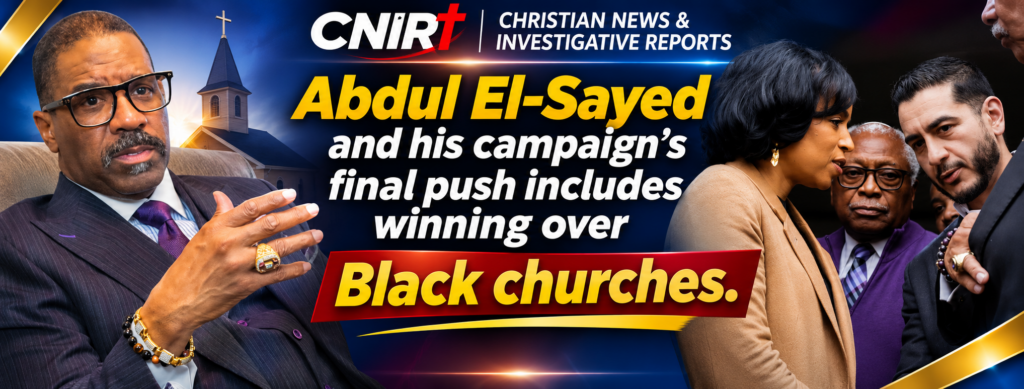
On November 1, 2026, El-Sayed appeared at Greater Emmanuel Institutional Church of God in Christ in Detroit, where Congressman Jim Clyburn introduced him to the congregation.
The Associated Press reported on the church appearance as part of the Democratic Party’s efforts to engage Michigan voters ahead of the November 3 election.
A Facebook video circulated in connection with the appearance contains captions attributing the following statements to Bishop Sheard:
“I can’t tell you who to vote for.”
“But I can tell you who I voted for.”
“I voted for Doctor El-Sayed.”
The statements identify Sheard’s personal political preference. However, they do not establish that the Church of God in Christ denomination officially endorsed El-Sayed.
CNIR reviewed the circulated video’s captions but has not independently authenticated a complete audio transcription.
WHY THE BISHOP’S DECISION IS DRAWING CHRISTIAN CRITICISM
The controversy centers on the religious differences between Christianity and Islam and the responsibilities of prominent Christian leaders.
Christianity teaches that Jesus Christ is the divine Son of God, that He died on the cross for humanity’s sins, and that He rose from the dead.
Islam recognizes Jesus, known as Isa, as a prophet and Messiah but rejects His divine sonship and the traditional Christian account of His crucifixion.
These differences represent fundamental theological disagreements between the two religions.
Criticism expressed in connection with the circulated video questions whether Sheard’s public political support is consistent with the expectations some Christians hold for their spiritual leaders.
However, supporting a political candidate does not necessarily mean accepting that candidate’s religious beliefs. Political alliances may be based on civic priorities, public policies, or other considerations independent of theology.
COULD SHEARD’S SUPPORT CREATE DIVISION WITHIN THE CHURCH?
One of the most significant questions surrounding the controversy is whether Christians under Bishop Sheard’s leadership agree with his decision.
As presiding bishop of COGIC, Sheard holds a position of considerable influence within the Pentecostal Christian community.
His public identification of a preferred candidate may carry significance for congregants who expect religious leaders to prioritize biblical teaching and spiritual responsibilities.
The criticism reflected in the circulated video illustrates how the bishop’s political position has become a subject of public disagreement.
Nevertheless, CNIR has not independently established how many COGIC members oppose Sheard’s decision or whether the controversy has caused an organized dispute within the denomination.
No verified evidence reviewed for this report establishes that church members have resigned, congregations have withdrawn support, or denominational disciplinary proceedings have resulted from the controversy.
CRITICS QUESTION THE RESPONSIBILITIES OF CHRISTIAN LEADERS
The appearance has also attracted commentary concerning El-Sayed’s political positions on Israel.
In a November 3 opinion article published by The Jerusalem Post, commentator Mike Evans criticized the decision to provide El-Sayed with a platform at Greater Emmanuel.
Evans raised concerns about political rhetoric involving Israel and the responsibilities of Christian leaders when engaging with candidates whose positions they may consider objectionable.
His criticism represents an expressed opinion, not an independently established finding that Sheard or El-Sayed engaged in wrongdoing.
The controversy highlights a broader disagreement over how religious leaders should participate in elections and whether publicly identifying their preferred candidates creates expectations among church members.
PERSONAL POLITICAL RIGHTS VERSUS SPIRITUAL LEADERSHIP
Religious leaders possess the same personal voting rights as other American citizens.
A pastor may support a political candidate without requiring members of the congregation to make the same choice.
However, the responsibilities associated with spiritual leadership can complicate how those public statements are received.
Some Christians believe pastors should avoid publicly identifying political preferences because doing so may create unnecessary disagreements within congregations.
Others maintain that religious leaders should remain free to participate openly in political discussions while preserving the distinction between personal choices and official church positions.
These differing perspectives are central to understanding the criticism surrounding Sheard’s remarks.
WHAT CONSEQUENCES COULD FOLLOW THE CONTROVERSY?
The potential consequences involve several unresolved questions.
Could the bishop’s political declaration create disagreements among COGIC members? Could it affect how some Christians perceive his leadership? Could the controversy prompt broader discussions about the relationship between religious doctrine and political participation?
Those are legitimate questions, but they are not yet established outcomes.
The available evidence demonstrates that Sheard’s public voting statement has attracted criticism. It does not establish the extent of opposition within his denomination or whether his leadership has suffered measurable consequences.
Any broader claims about internal church division would require additional evidence, including statements from COGIC members, local congregations, or denominational officials.
CNIR INVESTIGATION: THE ISSUE GOES BEYOND ONE POLITICAL ENDORSEMENT
Bishop J. Drew Sheard’s declaration that he voted for Abdul El-Sayed has brought renewed attention to the intersection of Christian leadership, religious identity, and American politics.
The central controversy is not simply that a Christian leader supported a Muslim candidate. It concerns how that decision is being interpreted by Christians who expect their religious leaders to uphold biblical convictions while participating in civic life.
The public criticism demonstrates that the issue has generated disagreement. Whether it produces lasting consequences within COGIC remains an open question.
For Christian communities, the larger discussion concerns the boundaries between personal political freedom, religious convictions, and the responsibilities of spiritual leadership.
CNIR will continue examining documented reactions and developments surrounding the controversy.
Sources for the report
- Associated Press — Coverage of the November 1 church appearance
- Church of God in Christ — Bishop Sheard’s official biography
- The Jerusalem Post — Commentary on the church appearance
- Primary video: Facebook clip supplied to CNIR, containing the reported voting remarks and criticism.
CNIR DISCLAIMER
This article is for informational and educational purposes only. CNIR reports verified facts, documented statements, and attributed opinions without endorsing political candidates or religious positions.
CNIR — Reporting the headline. Investigating the facts.
Source: CNIR — cnirbc.com