CNIR | CHRISTIAN EDUCATION & RELIGIOUS FREEDOM | NOVEMBER 21, 2026
Faculty members and alumni challenge the California university’s newly clarified biblical beliefs, while university leaders defend their responsibility to preserve its Christian identity.
By Christian News & Investigative Reports (CNIR)
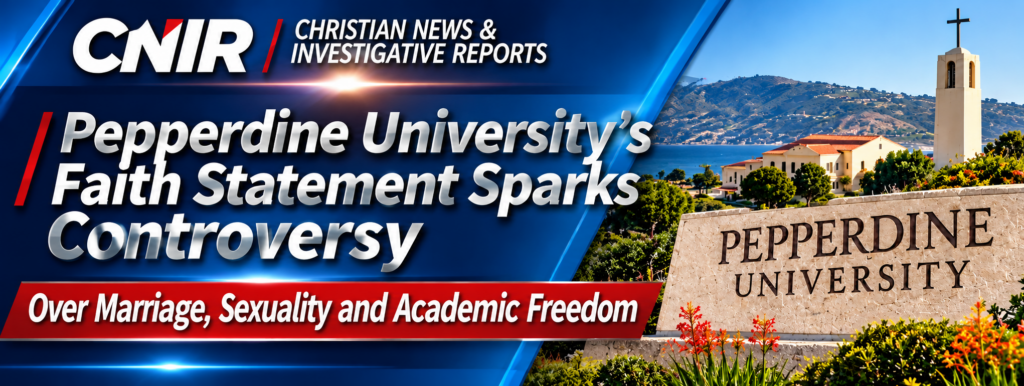
A Christian University’s Statement of Faith Ignites Debate
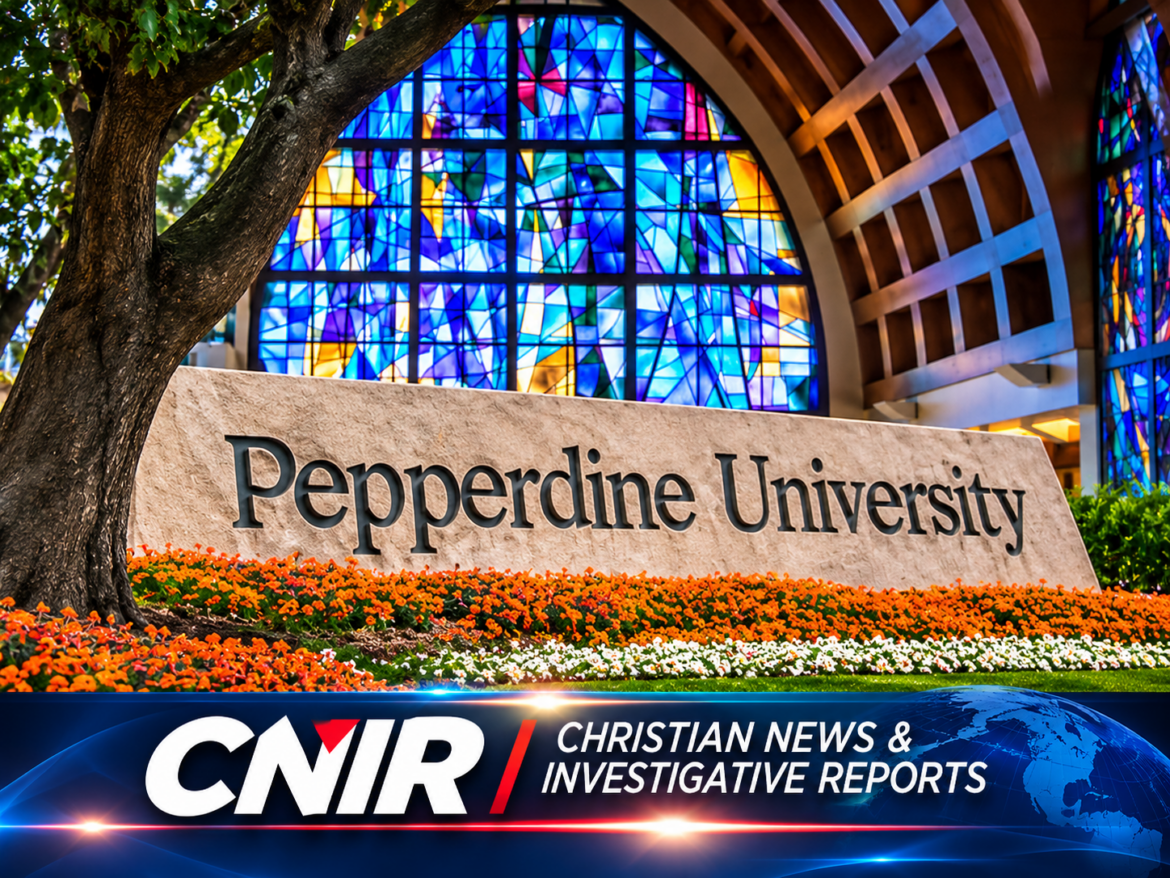
MALIBU, CALIFORNIA — Pepperdine University is facing criticism from faculty members and alumni following the adoption of a new Christian faith statement affirming traditional biblical teachings on marriage and human sexuality.
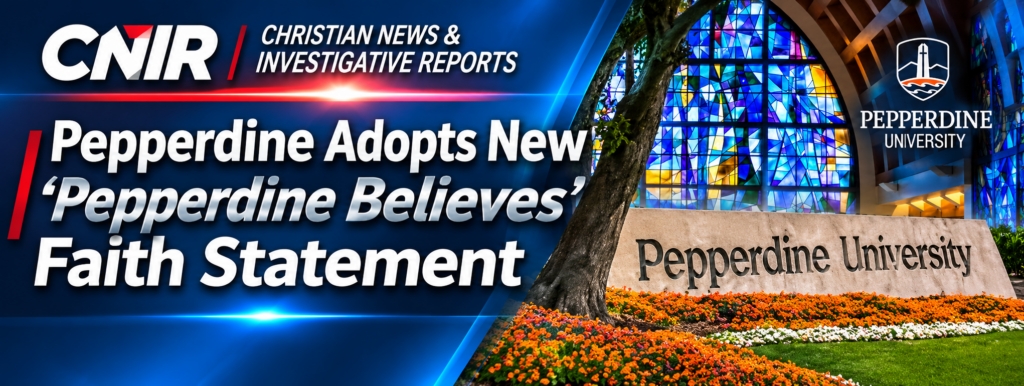
The controversy centers on a document titled “Pepperdine Believes,” which outlines the university’s theological commitments, including its understanding of Scripture, salvation, Christian living and sexual relationships.
While university officials describe the statement as a clarification of Pepperdine’s longstanding Christian identity, critics question whether its language could affect academic freedom, employment expectations and the university’s treatment of LGBTQ+ students and employees.
The dispute has become a significant discussion about the relationship between Christian doctrine, institutional identity and individual freedom within religious higher education.
What Does Pepperdine’s New Faith Statement Say?
Pepperdine, a private Christian university founded in 1937 and historically associated with the Churches of Christ, announced the statement to its community on October 8, 2026.
Approved unanimously by the university’s Board of Regents, the document represents the institution’s first major expansion of its public faith commitments since 1970.
It identifies seven areas of Christian belief: God, Jesus Christ, the Holy Spirit, the Bible, grace, the church and Christian living.
Among its theological declarations, the university affirms the authority of the Old and New Testaments and salvation through Jesus Christ.
The most disputed provision concerns human sexuality.
The statement affirms historic Christian beliefs about sexuality, while an accompanying explanation declares that sexual relationships are intended exclusively within marriage between a husband and wife.
This position has drawn criticism from individuals who believe it could communicate exclusion toward LGBTQ+ members of the university community.
Faculty Members Raise Academic Freedom Concerns
Several Pepperdine faculty members have questioned how the statement might influence classroom instruction, hiring decisions, tenure evaluations and expressions of personal belief.
Joshua Bowman, an associate professor of mathematics, told Inside Higher Ed that faculty concerns extend beyond disagreement with the statement’s theological content.
According to Bowman, some professors who personally agree with traditional Christian teachings nevertheless question whether adopting the statement could negatively affect members of the university community.
Chris Doran, president of the Seaver Faculty Senate, has also raised concerns about limited faculty involvement in developing the document and uncertainty surrounding its implementation.
Faculty members have sought additional clarification from university administrators regarding the relationship between institutional beliefs and academic responsibilities.
Importantly, the available reporting does not establish that Pepperdine has dismissed an employee for disagreeing with the new statement. The concerns reported so far involve its possible future application.
Alumni Organize Opposition to the Statement
The controversy has extended beyond the university’s faculty.
Former students have organized online campaigns challenging the new statement and expressing concerns about Pepperdine’s direction.
One initiative, called “We Are Pepperdine,” features alumni sharing their perspectives on Christianity, inclusion and the university’s religious identity.
Another group, Concerned Pepperdine Alumni, has attracted hundreds of participants discussing the university’s policies and leadership decisions.
Some alumni argue that Pepperdine’s Christian heritage should allow greater room for differing theological perspectives, particularly regarding marriage and sexuality.
Their objections reflect a broader disagreement over how a Christian university should balance its doctrinal commitments with the diversity of beliefs among students, graduates and employees.
University Leaders Defend Their Christian Identity
Pepperdine’s Board of Regents maintains that defining the institution’s theological foundation is an essential responsibility of university leadership.
In its official explanation, the board argues that Christian higher education must clearly communicate its religious commitments, particularly when the meaning of Christian identity is interpreted differently across contemporary society.
University officials also emphasize that the new statement is not a personal declaration of faith that students, faculty or employees must sign.
According to Pepperdine’s published guidance, individuals who disagree with portions of the statement remain welcome within the university community.
The administration distinguishes between establishing an institution’s theological identity and requiring every individual associated with that institution to personally embrace its beliefs.
Pepperdine further maintains that students and scholars from different religious backgrounds, including those without religious affiliation, remain valued participants in its educational mission.
The Biblical Question Behind the Controversy
The dispute raises a theological question that extends beyond Pepperdine University:
Should a Christian institution be expected to maintain traditional biblical teachings when those teachings conflict with contemporary cultural perspectives?
Supporters of traditional Christian marriage teachings commonly reference Genesis 2:24 and Matthew 19:4–6, passages describing marriage through the union of a man and a woman.
Other Christians interpret biblical teachings on marriage and sexuality differently and advocate for the inclusion of same-sex relationships within Christian communities.
These competing interpretations help explain why the university’s statement has generated disagreement even among individuals who identify as Christian.
The controversy also presents a separate institutional question: Can a university affirm a particular religious doctrine while protecting the academic freedom and dignity of individuals who disagree?
Pepperdine’s leadership maintains that its statement establishes institutional beliefs rather than imposing universal personal agreement. Critics continue seeking clearer assurances about how that distinction will operate in practice.
What Happens Next?
The Seaver Faculty Senate has been collecting faculty concerns and seeking discussions with university leadership.
Questions remain about whether the new statement will influence employment evaluations, academic instruction or other institutional policies.
As of November 21, there has been no reported withdrawal of the statement.
For Pepperdine, the central challenge is whether administrators can maintain the institution’s declared theological convictions while addressing concerns about academic freedom, religious differences and inclusion.
For Christian colleges nationwide, the dispute illustrates an increasingly important question about religious higher education:
How should Christian institutions preserve their founding biblical beliefs while educating and employing people who may not share every one of those convictions?
The answer could influence how Christian universities define their missions and communicate their expectations in the years ahead.
CNIR Editorial Note
This report distinguishes Pepperdine University’s documented theological position from concerns expressed by faculty members and alumni. Concerns about possible employment consequences are reported as concerns, not established disciplinary actions.
Sources: Pepperdine University’s official faith statement and frequently asked questions; Pepperdine Graphic, November 8, 2026; Inside Higher Ed, November 18, 2026; The Christian Post, November 20, 2026.
Christian News & Investigative Reports (CNIR)
Reporting the headline. Investigating the facts.
cnirbc.com