THE EARLY CHRISTIANS • INVESTIGATION #001
Did the Council of Nicaea Make Jesus God? What the Earliest Christians Actually Believed
By Christian News & Investigative Reports (CNIR)
Historical Investigation | Christianity | Church History
Christianity Before the Council of Nicaea
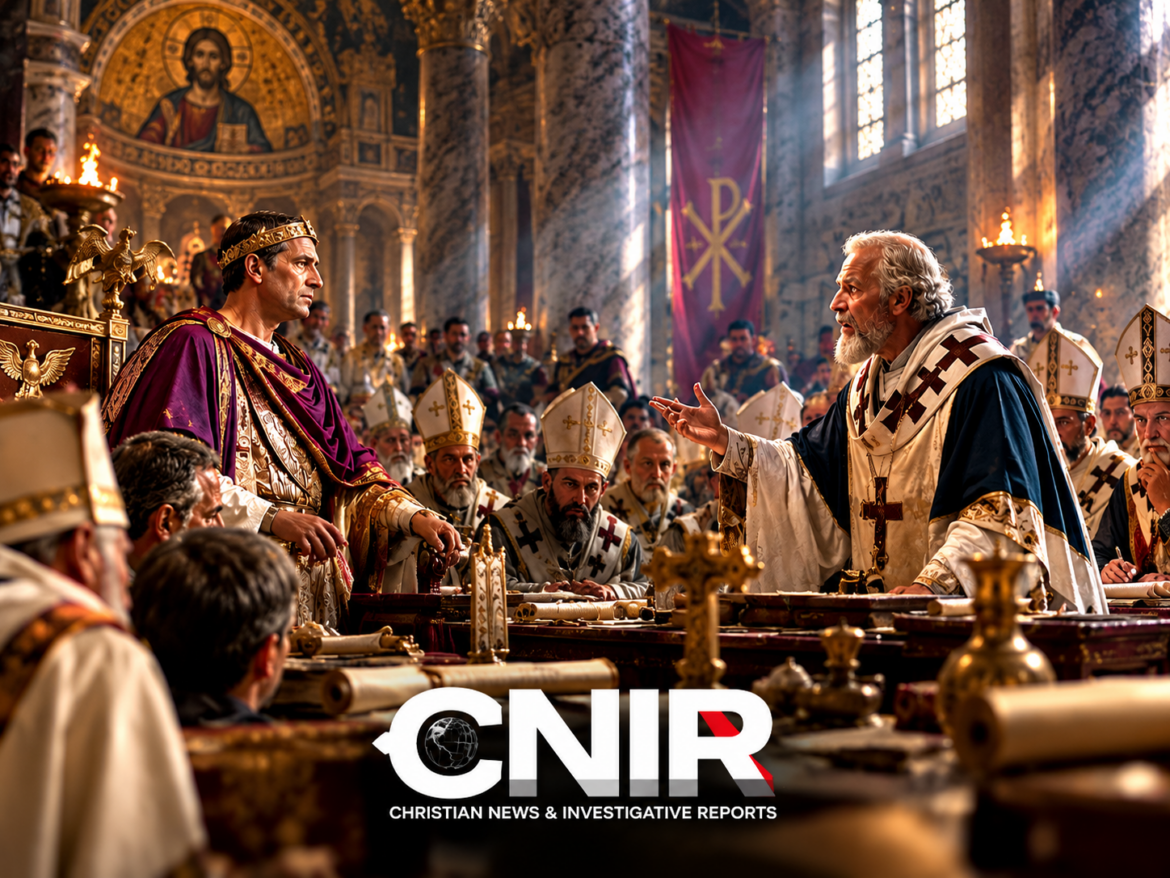
Nearly 300 years after the crucifixion of Jesus Christ, Christian leaders gathered in Nicaea, a city in the Roman Empire, to confront a controversy that threatened to divide the growing Church.
The year was AD 325. Roman Emperor Constantine had summoned bishops from across the empire to address disagreements over the identity and divine nature of Jesus Christ.
But an important historical question remains: Did the Council of Nicaea establish the divinity of Jesus, or were Christians already worshiping Him centuries before the council assembled?
Historical writings from the earliest centuries of Christianity provide substantial evidence that belief in Jesus’ divine status existed long before Constantine came to power.
The Earliest Christians Worshiped Jesus Before Constantine
More than two centuries before Nicaea, Roman officials had already documented Christian worship practices.
Around AD 112, Roman governor Pliny the Younger wrote to Emperor Trajan concerning Christians in his province. He described believers gathering before sunrise and singing hymns honoring Christ as divine.
Pliny was not defending Christianity. He was investigating its followers and seeking guidance about their punishment.
His correspondence provides valuable independent evidence that devotion to Jesus as divine existed long before the fourth-century council.
What Did the Early Church Fathers Believe?
Christian writers also left important records.
Ignatius of Antioch, writing in the early second century, referred to Jesus Christ as God. Justin Martyr, writing around the middle of that century, described Christians worshiping Jesus as the Son of God.
However, early Christian writers did not always explain the relationship between the Father and Son using identical terminology. Their writings reveal both substantial continuity in devotion to Christ and developing theological explanations of His divine identity.
These distinctions eventually became central to the controversy at Nicaea.
The Controversy That Divided Christianity
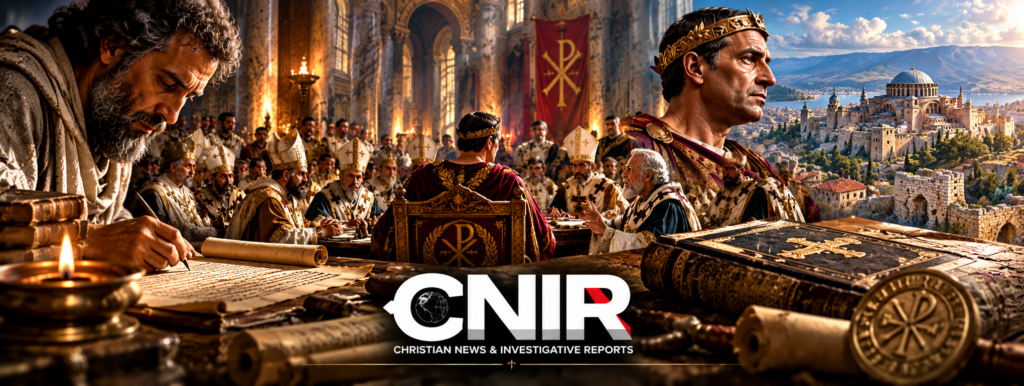
In the early fourth century, Arius, a Christian presbyter in Alexandria, Egypt, argued that the Son was not eternal in the same sense as God the Father.
His position challenged the teaching defended by Alexander, bishop of Alexandria, and others who maintained that the Son was eternally divine.
The disagreement spread throughout Christian communities, drawing the attention of Emperor Constantine, who feared that religious division could threaten imperial stability.
Constantine convened the Council of Nicaea in AD 325, bringing together bishops to address the controversy.
What Did the Council of Nicaea Actually Decide?
The bishops rejected Arius’s teaching and adopted a creed declaring that Jesus Christ was begotten, not made, and of the same substance as the Father.
The Greek term homoousios, meaning “of the same substance,” became central to the council’s declaration.
The council did not introduce Christian worship of Jesus. Instead, it formally defined a position concerning His divine nature amid an existing theological dispute.
Nevertheless, disagreements continued for decades after Nicaea, demonstrating that the council’s decision did not immediately resolve every controversy.
What History Reveals About the Earliest Christians
The surviving historical record challenges the popular assertion that Constantine invented belief in the divinity of Jesus.
Christian writings and Roman government correspondence document devotion to Christ long before AD 325.
What Nicaea established was a formal doctrinal definition concerning the relationship between the Father and Son, not the beginning of Christian belief in Jesus’ divine status.
For those investigating the origins of Christianity, the distinction is essential.
The Council of Nicaea remains one of the most influential gatherings in Christian history, but understanding its significance requires examining the believers, controversies, and writings that preceded it.
Disclaimer:
The information presented in this article is for informational and educational purposes only. Readers are advised to conduct thorough research before making any decisions. Source: Christian News & Investigative Reports (CNIR) — cnirbc.com Reporting the headline. Investigating the facts