CNIR | Christian News & Investigative Reports
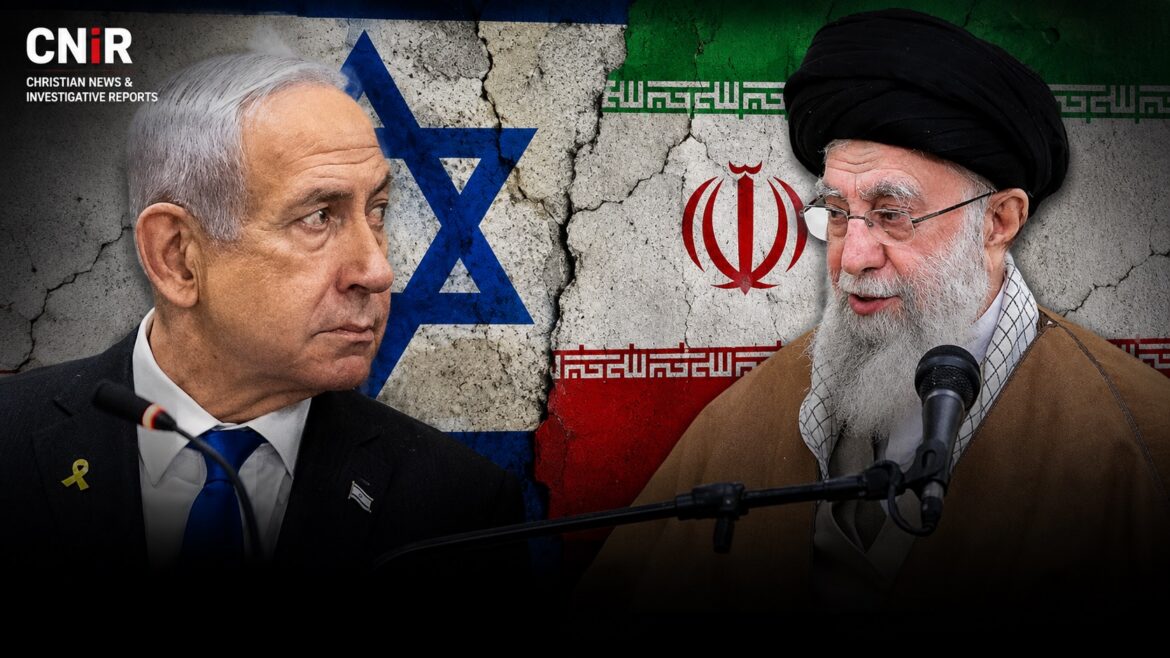
As tensions involving Israel, Iran and the wider Middle East continue reshaping regional alliances, an ancient biblical prophecy is receiving renewed attention. Ezekiel 38 describes a future multinational assault against Israel—but are current events actually fulfilling the prophecy, or merely creating conditions that resemble its geopolitical framework?
For students of Bible prophecy, the distinction matters.
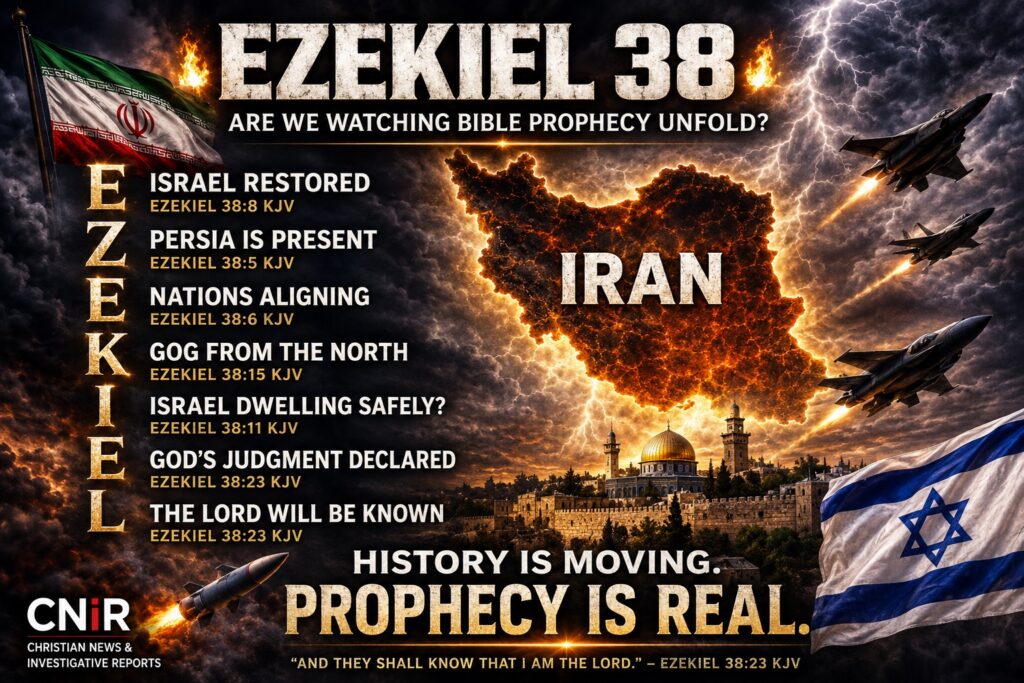
Ezekiel 38–39 describes Israel dwelling in its land when a massive coalition comes against it. Among the peoples named are Gog of Magog, Persia, Cush, Put, Gomer, Meshech, Tubal and Beth-togarmah.
Some aspects of that ancient description appear remarkably relevant to the modern world. Others have clearly not happened.
Persia Is Already on the Map
Perhaps the strongest modern connection is Persia, explicitly named in Ezekiel 38:5.
Ancient Persia corresponds substantially with modern Iran, which today stands among Israel’s most significant regional adversaries. Iran’s military capabilities, nuclear ambitions, regional influence and confrontation with Israel have made it central to Middle Eastern security.
That does not prove Ezekiel 38 is being fulfilled.
It does, however, mean that one of the nations most clearly identifiable in Ezekiel’s prophecy is already a major participant in the geopolitical struggle surrounding Israel.
Turkey and the Northern Dimension
Ezekiel also mentions Meshech, Tubal and Beth-togarmah, ancient peoples commonly associated with Anatolia and surrounding regions, including territory within modern Turkey.
Turkey’s increasingly complicated relationship with Israel therefore deserves attention from prophecy watchers.
Ezekiel 38:15 also describes Gog coming from the “north parts.” Israel’s northern geopolitical environment—including Syria and Turkey—remains strategically important and unstable.
However, Christians should exercise caution here. The popular identification of Magog specifically as modern Russia remains debated among biblical scholars. Scripture does not simply say “Russia,” and responsible interpretation should distinguish biblical geography from later prophetic speculation.
Israel Has Returned—but Is Israel “Dwelling Safely”?
One of the most important passages may actually present a reason not to declare Ezekiel 38 fulfilled.
Ezekiel 38:11 describes people who are “at rest” and “dwell safely.”
Modern Israel exists in its ancestral homeland, satisfying an important feature of Ezekiel’s setting. But Israel remains heavily defended and surrounded by significant security threats.
That raises a major prophetic question:
Could some future regional peace or security arrangement create the conditions described by Ezekiel before the invasion occurs?
If Israel eventually enters a period in which its leadership and population believe major regional threats have been contained, Ezekiel’s description would become even more noteworthy.
An Interesting Arabian Peninsula Connection
Ezekiel 38:13 introduces another intriguing detail.
“Sheba, and Dedan, and the merchants of Tarshish” question the invading force:
“Art thou come to take a spoil? hast thou gathered thy company to take a prey?”
Sheba and Dedan are historically associated with the Arabian Peninsula.
That does not authorize Christians to automatically equate every modern Arab government with a specific biblical nation. Nevertheless, changing relationships between Israel and Arab states deserve attention because Ezekiel depicts certain regional interests apparently questioning the invasion rather than joining it.
What Has Not Happened?
This is where responsible prophecy reporting becomes essential.
The unmistakable events of Ezekiel 38 have not occurred.
The complete prophetic coalition has not clearly assembled and launched Ezekiel’s described invasion. Gog has not been conclusively identified. Nor have we witnessed the extraordinary divine judgments described in the chapter.
Ezekiel says God responds with a tremendous earthquake, confusion among the invading forces, pestilence, flooding rain, hailstones, fire and brimstone.
Ezekiel 39 then describes an extraordinary aftermath involving the destruction of the invading armies, seven months of burial and seven years associated with burning the weapons.
Those are not minor details.
They are central components of the prophecy.
Therefore, declaring that “Ezekiel 38 is being fulfilled right now” goes beyond what the available evidence establishes.

Convergence Is Not Fulfillment
A more defensible conclusion is that the world may be witnessing geopolitical convergence with portions of Ezekiel’s prophetic framework.
Israel exists in the land.
Persia—Iran—is a major regional power and adversary of Israel.
Turkey and the territory associated with ancient Anatolia have become increasingly significant.
Israel’s northern neighborhood remains strategically unstable.
Relationships between Israel and several Arab nations have also undergone historic changes.
Those developments make Ezekiel 38 increasingly relevant to contemporary discussion.
But similarity is not fulfillment.
The Greater Message of Ezekiel 38
The central message of Ezekiel 38 is ultimately larger than Russia, Iran, Turkey or any modern military alliance.
Gog believes he is executing his own strategy. God reveals that human history remains under divine sovereignty.
The chapter concludes:
“And I will magnify myself, and sanctify myself; and I will be known in the eyes of many nations, and they shall know that I am the LORD.”
— Ezekiel 38:23, KJV
That is the prophetic destination Christians should not overlook.
The question is therefore not merely, “Are we watching Ezekiel 38 happen?”
The better question is:
Are current geopolitical developments creating a world increasingly compatible with the conditions Ezekiel described—and if so, what still must happen before anyone can responsibly call it fulfillment?
For now, the evidence supports watchfulness rather than declaration.
The pieces may appear increasingly familiar.
But the prophecy itself has not yet been conclusively fulfilled.
CNIR — Christian News & Investigative Reports
Biblical prophecy examined alongside verifiable world events.
Editorial Note
This article is intended to encourage biblical discussion—not to criticize any individual pastor, church, or denomination. CNIR affirms that Scripture honors faithful spiritual leaders while also emphasizing the importance of mentoring and preparing the next generation. Our hope is that this conversation inspires churches to remain biblically faithful, spiritually healthy, and ready for the future. This article was created with AI assistance and curated by CNIR Staff for accuracy and editorial standards. Source: Christian News & Investigative Reports (CNIR) — cnirbc.com