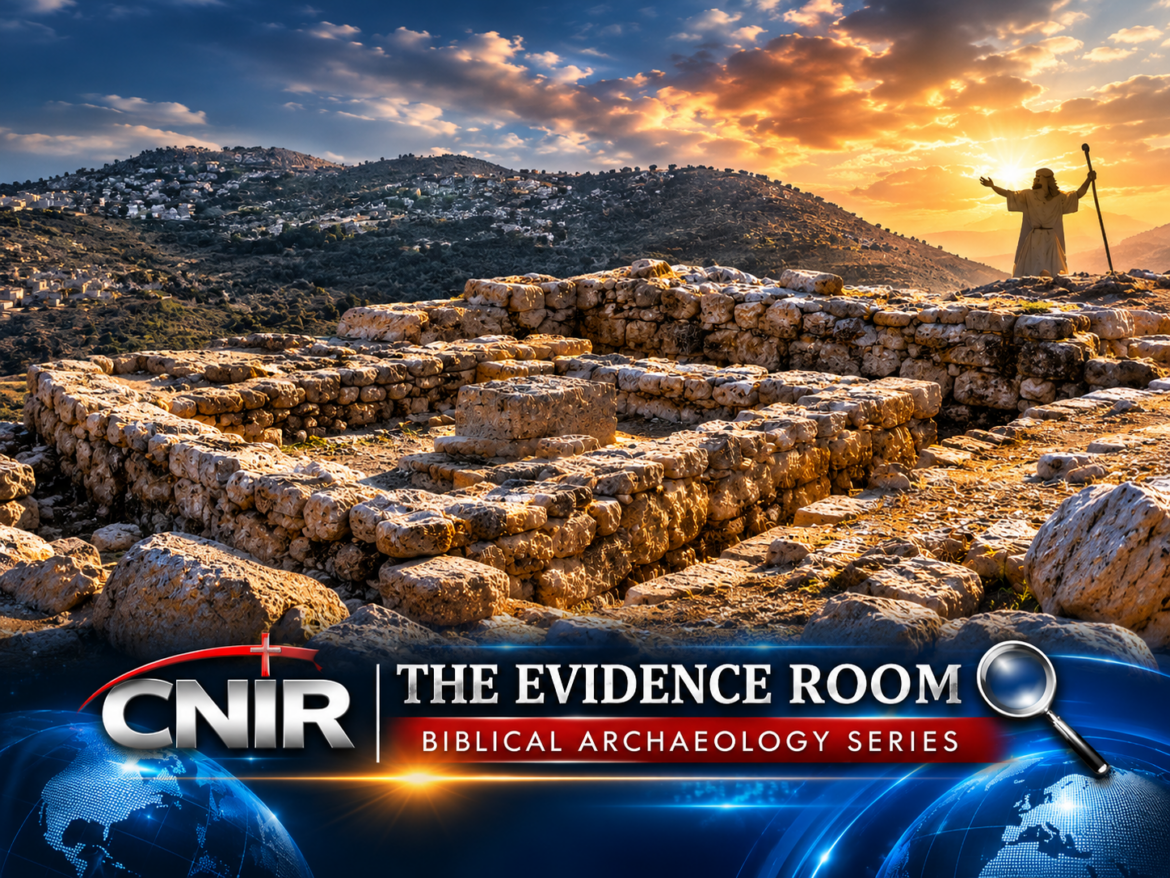
CNIR | THE EVIDENCE ROOM — BIBLICAL ARCHAEOLOGY | NOVEMBER 24, 2026
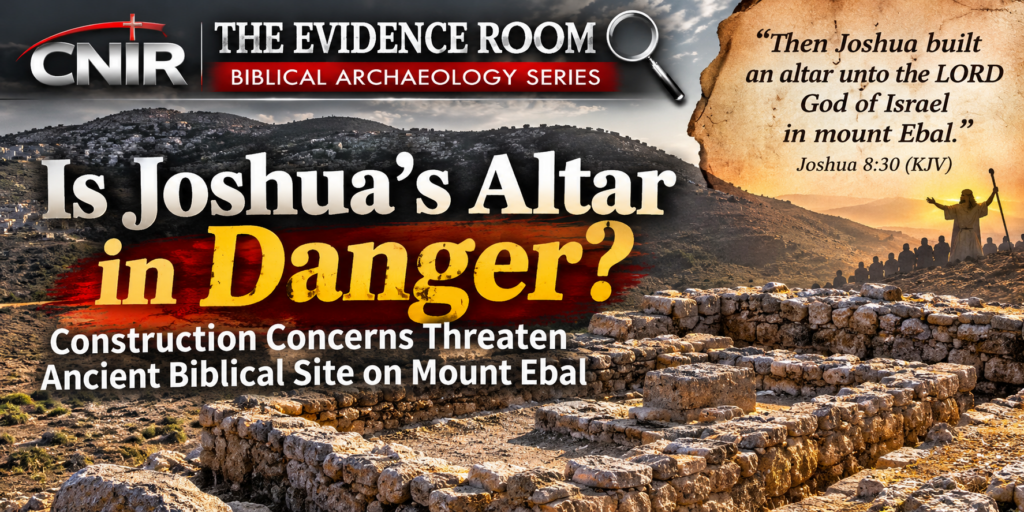
An ancient archaeological site on Mount Ebal, believed by some researchers to be associated with the altar built by Joshua following the Israelites’ entrance into the Promised Land, is facing renewed preservation concerns amid reports of Palestinian construction activity in the surrounding area.
The developments have raised questions about the protection of a significant archaeological discovery that could provide insight into the biblical account of early Israel.
Construction Raises Preservation Concerns
According to a November 23 report by CBN News, biblical heritage advocate Aaron Lipkin warned that proposed residential development near the archaeological compound could jeopardize its preservation.
Earlier reports from November documented construction equipment operating near Mount Ebal on October 29, prompting Israeli residents to intervene and notify military authorities.
Lipkin has called for greater protection of the archaeological site, emphasizing its historical and religious importance to both Jewish and Christian communities.
CNIR has not independently obtained the proposed construction plans or verified the intentions behind the development.
An Archaeological Discovery Dating Back More Than 3,000 Years
In 1980, Israeli archaeologist Adam Zertal discovered an ancient stone compound during an archaeological survey of Mount Ebal, located near Nablus in the West Bank.
Subsequent excavations uncovered a substantial stone structure, ancient pottery, animal bones and architectural features that Zertal interpreted as evidence of religious activity.
Pottery recovered from the location dates to the early Iron Age, approximately the period between 1200 and 1000 BC.
Zertal proposed that the discovery could be the altar described in the Old Testament. However, other archaeologists have challenged his interpretation, suggesting alternative purposes for the structure.
What Does the Bible Say About Mount Ebal?
Mount Ebal occupies a significant place in the biblical history of Israel.
In Deuteronomy 27:4–6, Moses instructed the Israelites to construct an altar after crossing the Jordan River.
Joshua 8:30 records the fulfillment of that instruction:
“Then Joshua built an altar unto the LORD God of Israel in mount Ebal.” — Joshua 8:30 (KJV)
According to Scripture, the location became the setting for sacrifices, the public reading of God’s law and a national ceremony involving blessings and curses.
The geographical connection between the archaeological discovery and the biblical narrative remains one of the most intriguing aspects of the investigation.
A History of Archaeological Damage
Concerns surrounding Mount Ebal are not new.
In February 2021, the Israeli archaeological organization Emek Shaveh condemned damage to an ancient perimeter wall during road construction.
The organization disputed the identification of the structure as Joshua’s biblical altar but nevertheless called for the protection of the archaeological remains.
The incident demonstrates that preservation remains important regardless of differing interpretations of the site’s original purpose.
What Has the Evidence Established?
Archaeological investigations have established the presence of an ancient Iron Age compound on Mount Ebal. Its precise function and direct association with Joshua, however, remain subjects of scholarly debate.
Preserving the location would allow future generations of researchers to continue examining the material evidence.
For Christians, Mount Ebal represents an opportunity to explore the relationship between biblical Scripture, geographical history and archaeological discoveries.
Whether the structure ultimately proves to be Joshua’s altar or another ancient installation, its destruction could permanently eliminate valuable evidence from a significant period in biblical history.
CNIR will continue examining the historical and archaeological evidence surrounding Mount Ebal as developments unfold.
About This Series
The Evidence Room is a CNIR original investigative series examining archaeological discoveries, ancient manuscripts, historical records and physical evidence associated with the biblical narrative.
CNIR — Christian News & Investigative Reports
Reporting the headline. Investigating the facts.
Source Verification
CBN News Nov. 23, 2026 Recent construction concerns CBN News
Charisma Media Nov. 2, 2026 October 29 construction incident Charisma Magazine Online
Israel365 News Nov. 1, 2026 Reported construction activity Israel365 News
Editorial verification: The November 23 development is supported by published reporting. The article deliberately distinguishes established archaeological evidence from the disputed identification of Joshua’s altar and allegations concerning construction intentions. No unverified claim has been presented as an established fact.