Christian News & Investigative Reports | CNIR
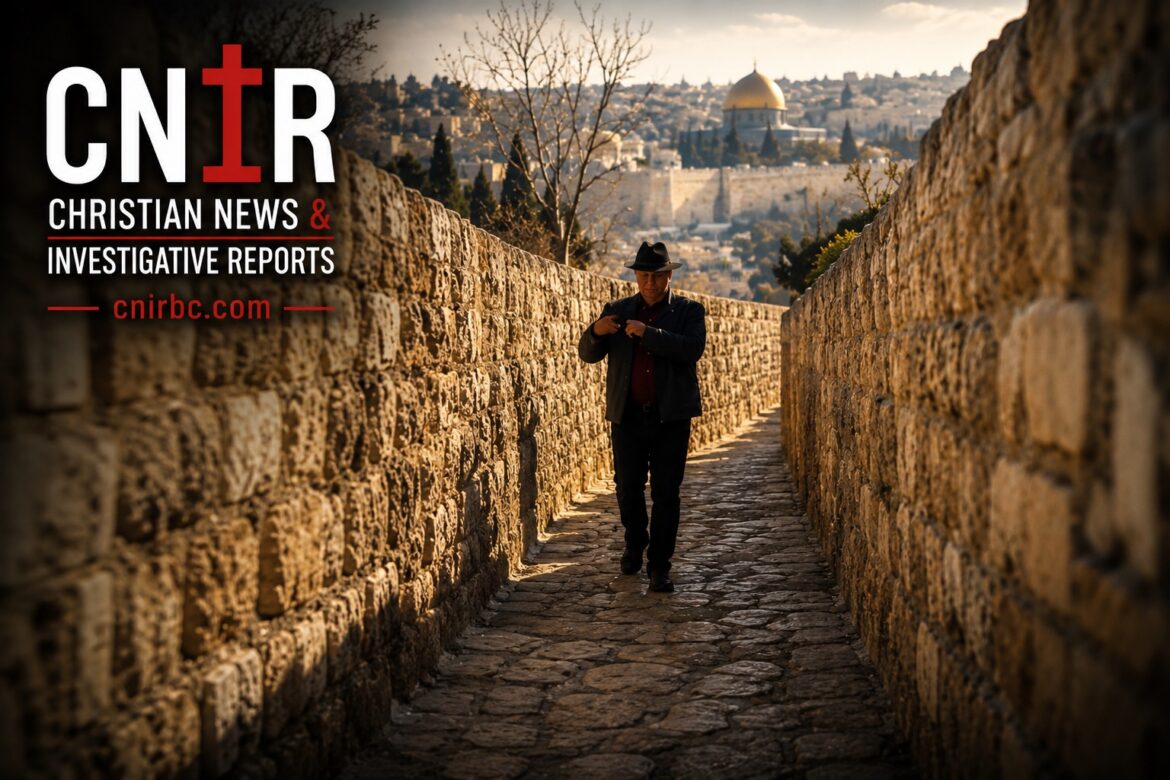
For nearly 2,000 years, Christians have read the Gospel accounts describing Jesus Christ moving toward Jerusalem, standing before Roman authority, being led outside the city and crucified at Golgotha.
But an intriguing question remains: How much of that physical world can archaeology actually recover?
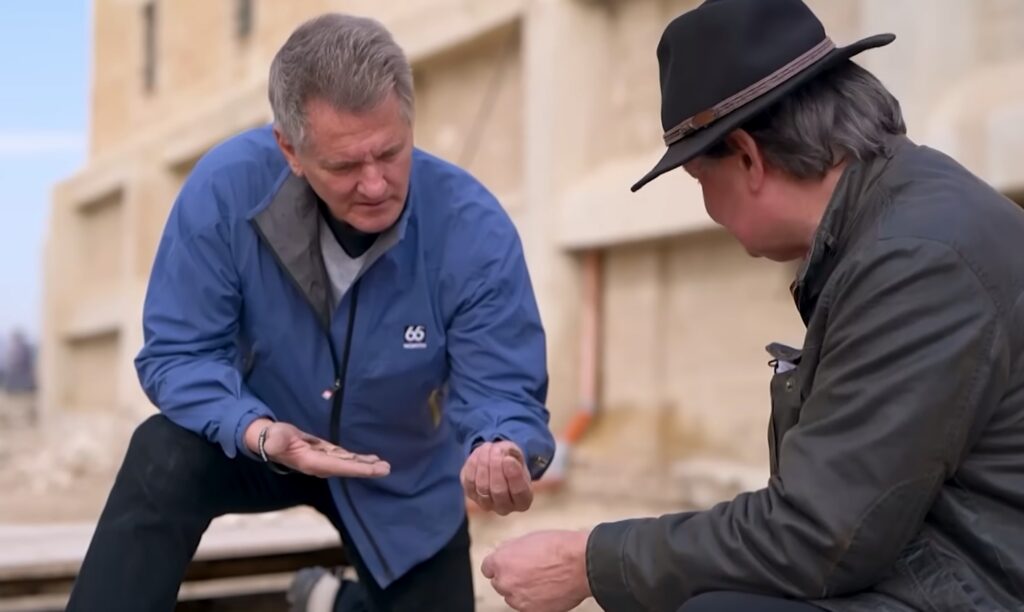
Recent attention surrounding archaeologist Dr. Shimon Gibson has brought that question back into focus. In a TBN presentation highlighted by Charisma Magazine, Gibson takes viewers through locations associated with the ministry and final journey of Jesus, arguing that archaeology can illuminate the geographical and historical world described in the Gospels.
CNIR examined the underlying claims. What emerges is more nuanced—and arguably more fascinating—than simply saying that archaeology has “proved the Bible.”
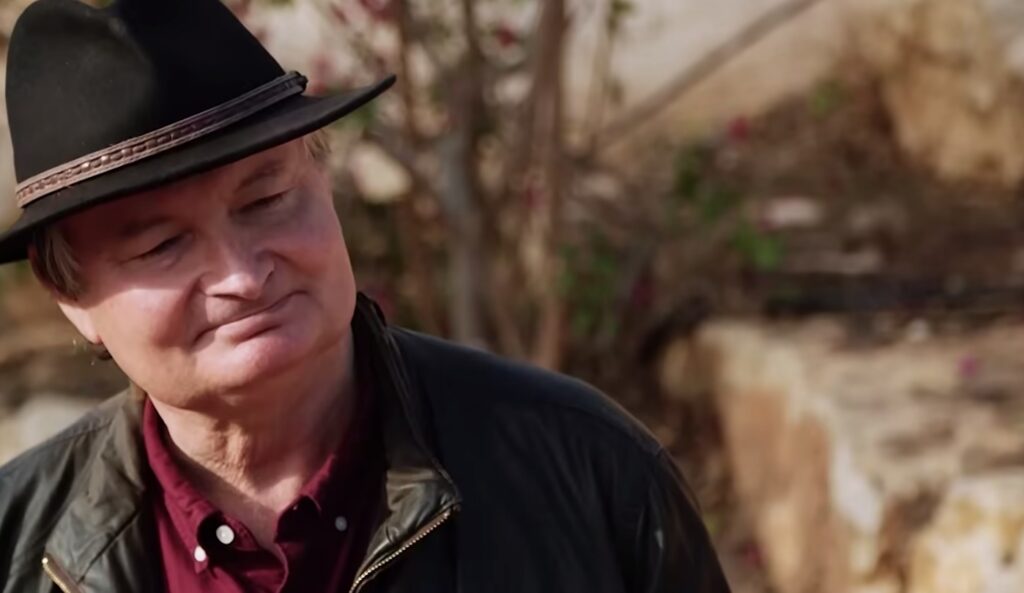
🏺 WHO IS SHIMON GIBSON?
Gibson is an established archaeologist whose research has focused extensively on Jerusalem and biblical-period archaeology. His work on locations associated with Jesus did not begin with a television program.
Among his scholarly publications is Beneath the Church of the Holy Sepulchre Jerusalem: The Archaeology and Early History of Traditional Golgotha, co-authored with Joan E. Taylor and published by the Palestine Exploration Fund in 1994.
That matters because some of the claims attracting attention today are rooted in archaeological investigations extending back decades.
The larger question, however, isn’t whether Gibson is a legitimate archaeologist.
He is.
The question is what the archaeology actually demonstrates.
🌊 THE JORDAN: WHERE JESUS’ PUBLIC MINISTRY BEGAN
The Gospel record places John the Baptist’s ministry along the Jordan.
Matthew 3:13 records:
“Then cometh Jesus from Galilee to Jordan unto John, to be baptized of him.” — Matthew 3:13 KJV
John’s Gospel identifies the location of John’s activity as “Bethany beyond Jordan” in many early manuscripts, while the KJV reads “Bethabara beyond Jordan.”
Ancient Christian tradition eventually associated the baptism of Jesus with an area now known as Al-Maghtas on the eastern side of the Jordan. Archaeological remains there document centuries of Christian remembrance and pilgrimage, including Byzantine structures associated with John the Baptist.
But an important distinction must be made.
Archaeology can demonstrate that ancient communities occupied these regions and that Christians subsequently commemorated Jesus’ baptism there.
It cannot identify a particular spot in the Jordan and scientifically declare:
Jesus of Nazareth stood exactly here.
That distinction will become increasingly important as the journey moves toward Jerusalem.
🏛️ WHERE DID JESUS STAND BEFORE PONTIUS PILATE?
One of the most intriguing archaeological questions surrounding Jesus’ final hours concerns His trial.
The Gospels state that Jesus was brought before the Roman governor Pontius Pilate.
John 18:28 says:
“Then led they Jesus from Caiaphas unto the hall of judgment…” — John 18:28 KJV
The question is: Where was that judgment actually conducted?
Gibson argues that Herod the Great’s former palace on Jerusalem’s western side is the strongest candidate for Pilate’s headquarters—the praetorium—when the Roman governor was in Jerusalem.
If that identification is correct, surviving first-century archaeological remains in this area bring us extraordinarily close to the physical setting described in the Passion narrative.
Yet CNIR must draw the line carefully.
A first-century pavement associated with the correct governmental complex is archaeological evidence.
Declaring that Jesus personally stepped on one particular surviving stone is a historical reconstruction.
Those are not identical claims.
✝️ GOLGOTHA: ARCHAEOLOGY MEETS THE GOSPEL
Perhaps the strongest archaeological portion of the investigation concerns the traditional location of Jesus’ crucifixion.
John records:
“And he bearing his cross went forth into a place called the place of a skull, which is called in the Hebrew Golgotha.” — John 19:17 KJV
Hebrews likewise describes Jesus suffering “without the gate” (Hebrews 13:12).
Today the Church of the Holy Sepulchre stands inside Jerusalem’s present walls, something that initially appears inconsistent with an execution outside the ancient city.
But modern Jerusalem’s walls are not the walls of Jesus’ Jerusalem.
Archaeological investigation indicates that the Holy Sepulchre area was once a stone quarry located outside the ancient city wall. The area subsequently contained rock-cut burial places, including first-century burial caves.
That is significant.
It means the traditional location possesses several characteristics expected from the Gospel accounts:
It was outside the relevant city boundary.
It contained exposed rock and former quarry workings.
Burial activity occurred there.
And first-century tombs existed in the vicinity.
None of this proves that a particular tomb was Jesus’ tomb.
But archaeology demonstrates that the traditional location fits the kind of environment described by the Gospel writers remarkably well.
🪦 WHAT ABOUT THE TOMB OF JESUS?
John provides another geographical detail:
“Now in the place where he was crucified there was a garden; and in the garden a new sepulchre…” — John 19:41 KJV
The proximity of burial caves to the traditional Golgotha location therefore becomes important.
Archaeological investigation beneath and around the Church of the Holy Sepulchre has documented ancient quarrying and burial activity. Gibson and Taylor devoted an entire archaeological study to the site’s development and its relationship to the traditional Golgotha.
Again, however, archaeology encounters a boundary.
It can examine rock.
It can date pottery.
It can reconstruct city walls.
It can identify tombs.
It can study ancient roads and buildings.
It cannot excavate the Resurrection.
The Christian declaration that Jesus Christ rose from the dead rests upon the historical testimony preserved in the New Testament and the foundational claims of the earliest Christian witnesses—not an archaeological artifact bearing the words “Jesus rose here.”
🔎 CNIR INVESTIGATION: WHAT IS ACTUALLY CONFIRMED?
This is where sensational headlines can become problematic.
Saying “archaeology proves Jesus walked here” goes further than the physical evidence generally permits.
But saying “archaeology has nothing to say about the Gospel accounts” would be equally misleading.
Archaeology has recovered significant portions of the world in which the New Testament places Jesus.
Locations existed.
Roman government operated in Jerusalem.
First-century streets and structures survive.
The geography surrounding the traditional Golgotha is compatible with execution outside the ancient city.
First-century burial caves existed near the location traditionally associated with Jesus’ death and burial.
These findings don’t identify Jesus through DNA, inscriptions or personal artifacts.
Instead, archaeology repeatedly provides something different:
historical context.
It allows researchers to ask whether the physical world underneath Jerusalem resembles the world the Gospel writers described.
In several important respects, it does.
⚠️ EVIDENCE IS NOT THE SAME AS PROOF
Christians should not need archaeology to exaggerate its findings in order to defend Scripture.
If archaeologists discover a first-century road in Jerusalem, Christians don’t need to declare, “Jesus definitely walked on this exact stone.”
If researchers establish that a tomb dates to the appropriate period, Christians don’t need to claim archaeology has therefore proven it was Christ’s tomb.
Strong biblical reporting should be willing to say:
We know this.
The evidence suggests this.
Tradition identifies this.
And Christians believe this.
Those categories can complement one another without being confused.
Archaeology is most persuasive when researchers allow the evidence to speak at the level the evidence actually permits.
📖 THE BIBLE IS DESCRIBING REAL GEOGRAPHY
Perhaps this is the most important takeaway from Gibson’s journey.
The Gospel narratives aren’t written in an imaginary landscape.
Jesus moves through identifiable places.
Jordan.
Jerusalem.
Golgotha.
Roman-controlled Judea.
Burial places outside the ancient city.
These locations existed within a real political, religious and geographical environment that archaeologists continue to uncover.
A shovel cannot prove every sentence of the Gospel.
But after centuries of excavation, the landscape underneath ancient Jerusalem continues providing physical context for the world described in the New Testament.
And sometimes archaeology does something extraordinarily valuable:
It takes names Christians have read on the pages of Scripture for generations and puts dirt, stone, roads, walls and tombs beneath them.
✝️ WHERE ARCHAEOLOGY ENDS, THE CENTRAL CHRISTIAN CLAIM BEGINS
Ultimately, Christianity doesn’t stand or fall upon whether archaeologists can identify the precise paving stone where Jesus stood before Pilate.
Its central claim goes much further.
Paul wrote:
“And if Christ be not risen, then is our preaching vain, and your faith is also vain.” — 1 Corinthians 15:14 KJV
Archaeology can investigate the Jerusalem of Jesus.
It can uncover the world of Pontius Pilate.
It can examine Golgotha.
It can study ancient Jewish tombs.
But the Resurrection presents a different historical and theological question.
For Christians, the empty tomb is not merely an archaeological destination.
It is the declaration at the center of the faith:
“He is not here: for he is risen, as he said.” — Matthew 28:6 KJV
CNIR Bottom Line
The archaeological evidence surrounding Jesus’ final journey is real and historically significant, but it should not be exaggerated.
Archaeology does not prove that Jesus stepped on a particular surviving stone, nor can it scientifically prove His resurrection.
What it can demonstrate is that important geographical and archaeological features surrounding the Gospel narrative belong to the authentic historical landscape of first-century Judea and Jerusalem.
And that makes the continuing archaeological investigation of Jesus’ final journey worthy of serious attention—not because Christians need archaeology to manufacture faith, but because archaeology continues helping us understand the real world in which the Gospel story unfolded.
Christian News & Investigative Reports | CNIR
Editorial Note
This article is intended to encourage biblical discussion—not to criticize any individual pastor, church, or denomination. CNIR affirms that Scripture honors faithful spiritual leaders while also emphasizing the importance of mentoring and preparing the next generation. Our hope is that this conversation inspires churches to remain biblically faithful, spiritually healthy, and ready for the future. This article was created with AI assistance and curated by CNIR Staff for accuracy and editorial standards. Source: Christian News & Investigative Reports (CNIR) — cnirbc.com