A Spiritual Collision at Mount Kailash
A striking spiritual dimension surrounds the tragedy unfolding along the Nepal–Tibet border. Many of those killed, missing or caught in the catastrophic flooding were traveling along pilgrimage routes connected to Mount Kailash, one of Asia’s most revered religious sites. The mountain is considered sacred by Hindus, Buddhists, Jains and followers of the Tibetan Bon tradition.
The disaster has done more than claim lives and leave families searching for loved ones. Floodwaters, mud and debris devastated portions of the Nepal–Tibet transportation corridor used by travelers heading toward the Mount Kailash region. Roads, bridges and border infrastructure suffered catastrophic damage, disrupting a route traveled by international pilgrims.
But beyond the destruction lies a deeper spiritual story.
For Christians, Mount Kailash raises an ancient question that remains relevant in an increasingly religiously pluralistic world:
Are all objects of worship ultimately the same God—or does it matter whom we worship?
From the biblical perspective, the answer is unmistakable.
“Thou shalt have no other gods before me.” — Exodus 20:3, KJV
Christianity makes an exclusive claim concerning reconciliation between humanity and God. Jesus Christ declared:
“I am the way, the truth, and the life: no man cometh unto the Father, but by me.” — John 14:6, KJV
That conviction does not give Christians permission to celebrate tragedy or declare that those killed in this disaster were personally judged by God. In Luke 13:1–5, Jesus warned against assuming that victims of tragedy were worse sinners than others.
Compassion for those suffering and conviction about the Gospel are not contradictory. Christians can mourn with grieving families while still examining the profound theological questions raised by this pilgrimage.
Walking Around a Mountain Seeking Cleansing From Sin
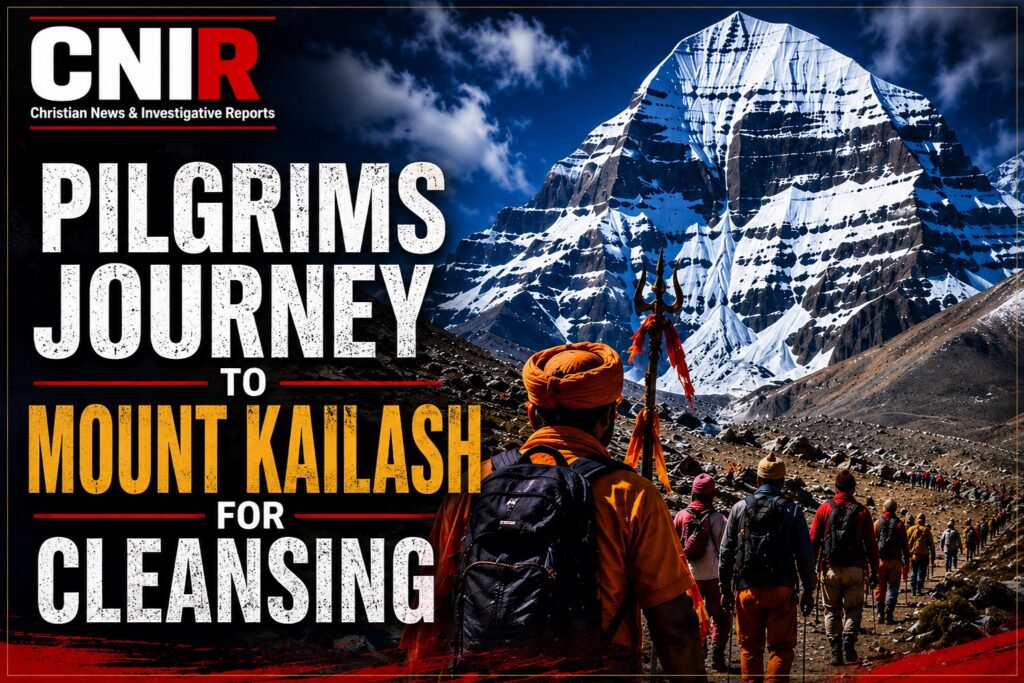
Perhaps the most significant spiritual dimension of the Mount Kailash story is why many pilgrims undertake the difficult journey around the mountain.
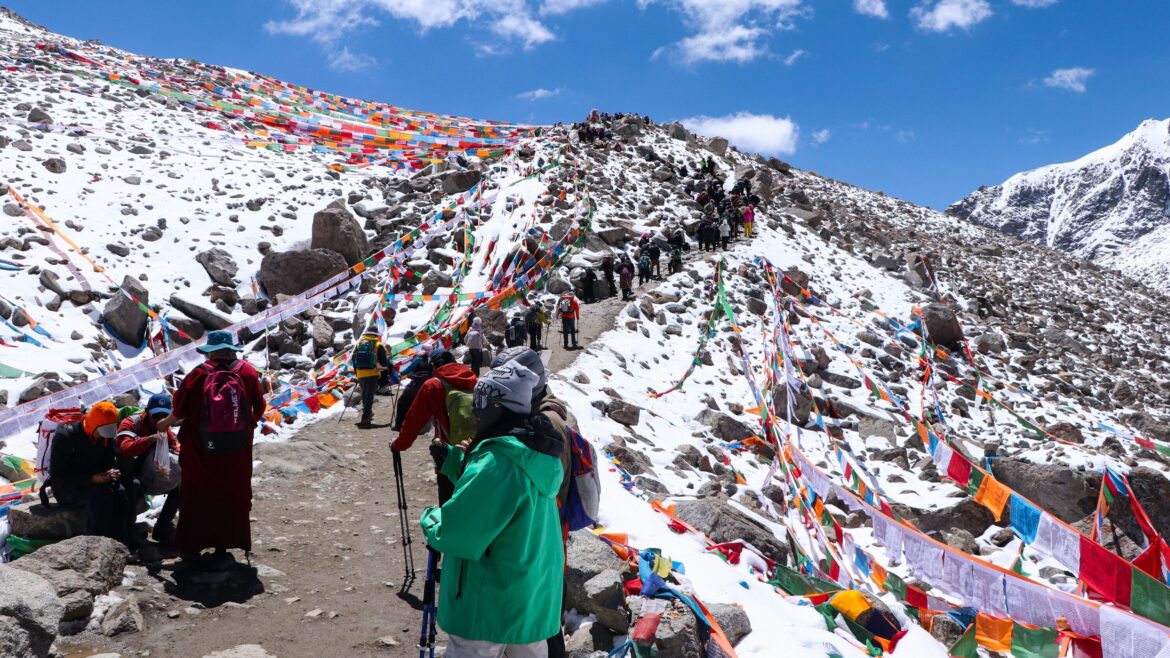
Pilgrims traditionally do not climb Mount Kailash. Instead, they complete a roughly 33-mile (53-kilometer) circuit around it, commonly called a kora in Tibetan Buddhist tradition or parikrama in Hindu tradition. The demanding journey typically takes about three days.
For many pilgrims, this is far more than tourism.
The circuit carries beliefs connected with spiritual purification, religious merit and cleansing from sin. Hindus and Buddhists traditionally travel clockwise around the mountain, while followers of the Bon tradition generally make the journey counterclockwise.
This makes Mount Kailash more than a geographical destination. For generations of pilgrims, the physical journey has represented a spiritual pursuit.
Nearby Lake Manasarovar adds another dimension. The lake is considered sacred, particularly within Hindu tradition, and some pilgrims have traditionally bathed in its waters in connection with beliefs about spiritual purification and cleansing from sin.
For Christians, this presents a striking contrast.
Humanity has spent thousands of years searching for ways to deal with guilt, sin, mortality and the distance between humanity and the divine. Across civilizations, that search has produced sacred places, pilgrimages, sacrifices and purification rituals.
The Bible acknowledges humanity’s sin problem—but presents a radically different answer.
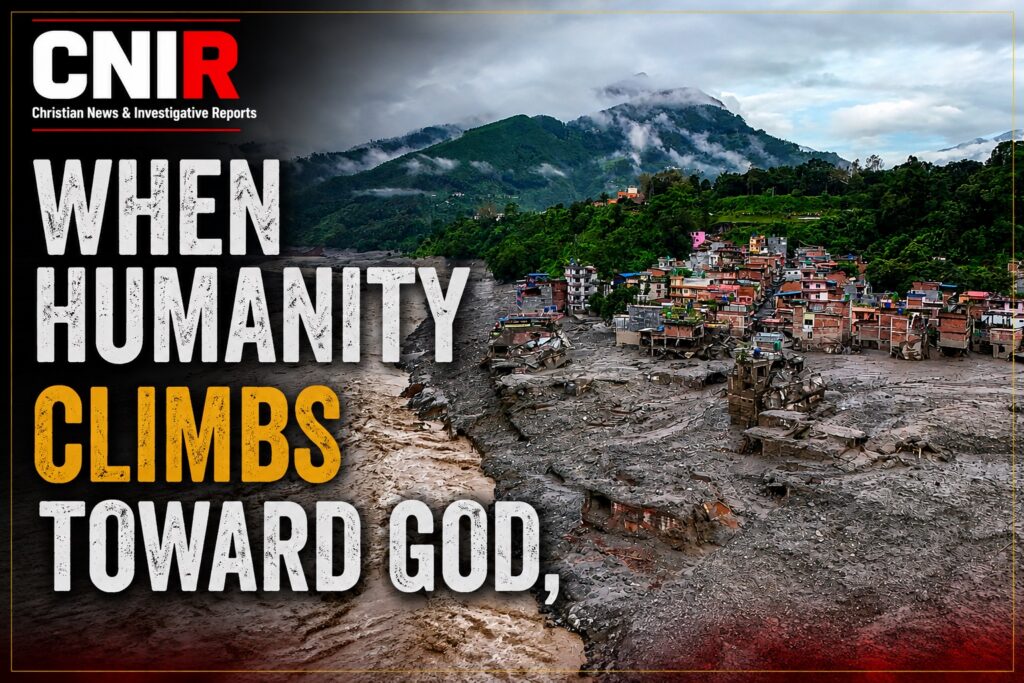
The Gospel Says Christ Has Already Made the Sacrifice
Biblical Christianity does not teach that forgiveness is obtained by traveling to a sacred mountain, completing a difficult pilgrimage or entering sacred water.
Christianity declares that Christ has already made the sacrifice necessary for the forgiveness of sin.
At the Last Supper, Jesus said:
“For this is my blood of the new testament, which is shed for many for the remission of sins.” — Matthew 26:28, KJV
Hebrews explains the biblical relationship between sacrifice and forgiveness:
“And almost all things are by the law purged with blood; and without shedding of blood is no remission.” — Hebrews 9:22, KJV
And 1 John declares:
“The blood of Jesus Christ his Son cleanseth us from all sin.” — 1 John 1:7, KJV
Here lies the theological collision at the center of the Mount Kailash story.
Christianity does not teach that sinners must climb high enough, walk far enough, circle a sacred mountain enough times or reach sufficiently holy water to obtain forgiveness.
According to the Gospel, humanity could never travel far enough to remove its own sin.
So God came to humanity.
John 1:14 declares, “And the Word was made flesh, and dwelt among us.”
Salvation, therefore, is not presented in Scripture as the reward at the end of an exhausting religious journey. It is God’s gift received through faith in Jesus Christ:
“For by grace are ye saved through faith; and that not of yourselves: it is the gift of God.” — Ephesians 2:8, KJV
Compassion Without Compromising the Gospel
The Christian response to the Nepal–Tibet catastrophe should be compassion—not celebration.
People have died. Families are grieving. Others have desperately waited for information about missing loved ones. Christians should pray for those affected and support legitimate humanitarian efforts assisting survivors.
But compassion does not require Christians to abandon the central claim of their faith.
The tragedy surrounding Mount Kailash brings two dramatically different understandings of spiritual cleansing into view.
One involves humanity undertaking an arduous journey toward a mountain regarded as sacred, with pilgrims participating in practices associated with purification.
The Gospel reverses the direction.
At Mount Kailash, people journey toward a sacred mountain seeking cleansing.
In the Gospel, God came down to humanity and provided cleansing through Jesus Christ.
And for biblical Christianity, that difference lies at the very heart of the Gospel.
Editorial Note
This article is intended to encourage biblical discussion—not to criticize any individual pastor, church, or denomination. CNIR affirms that Scripture honors faithful spiritual leaders while also emphasizing the importance of mentoring and preparing the next generation. Our hope is that this conversation inspires churches to remain biblically faithful, spiritually healthy, and ready for the future. This article was created with AI assistance and curated by CNIR Staff for accuracy and editorial standards. Source: Christian News & Investigative Reports (CNIR) — cnirbc.com