
October 30, 2026 | CNIR — The Evidence Room | Biblical Archaeology Investigation
New drilling operations, underground radar anomalies, and materials submitted for laboratory testing have reopened one of biblical archaeology’s most controversial investigations. But has anything been discovered that can actually be linked to Noah’s Ark?
A New Chapter in the Search for Noah’s Ark
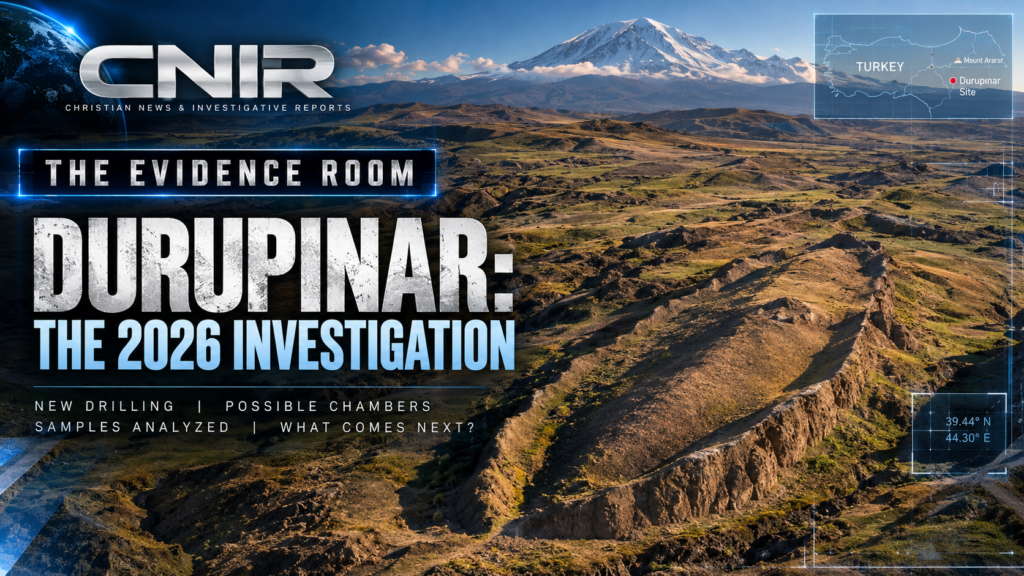
A renewed scientific investigation at Turkey’s Durupınar formation is attracting international attention after researchers conducted underground drilling, collected soil samples, and identified possible structural anomalies beneath the boat-shaped site.
Located near Mount Ararat in eastern Turkey, the formation has long been associated with the biblical account of Noah’s Ark in Genesis chapters 6–8.
During the 2026 research season, an international team working with Sivas Cumhuriyet University and Noah’s Ark Scans conducted field investigations intended to determine whether the formation is entirely natural or contains evidence of an ancient human-made structure.
Although researchers describe their preliminary findings as encouraging, no independently verified archaeological discovery has established that the site contains Noah’s Ark.
Sixteen Boreholes Open a New Investigation
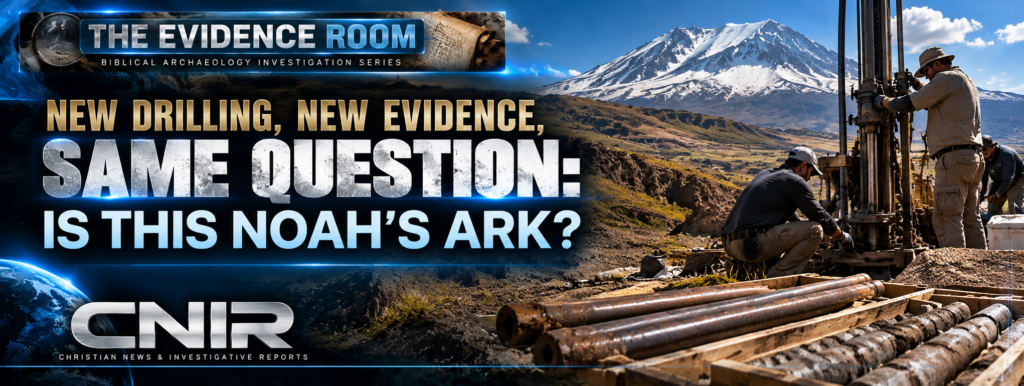
According to an October 22 report by The Jerusalem Post, investigators drilled 16 boreholes, including 12 inside the formation and four outside.
Some drilling extended approximately 20 meters below the surface.
Andrew Jones, founder of Noah’s Ark Scans, reported that the drilling did not encounter a continuous solid bedrock layer in the areas tested.
Researchers believe this finding warrants additional investigation because several geological explanations involve buried rock formations.
However, the absence of bedrock in the tested boreholes does not establish that a wooden vessel lies beneath the surface.
Additional geological analysis is necessary.
Underground Radar Reveals Possible Chambers
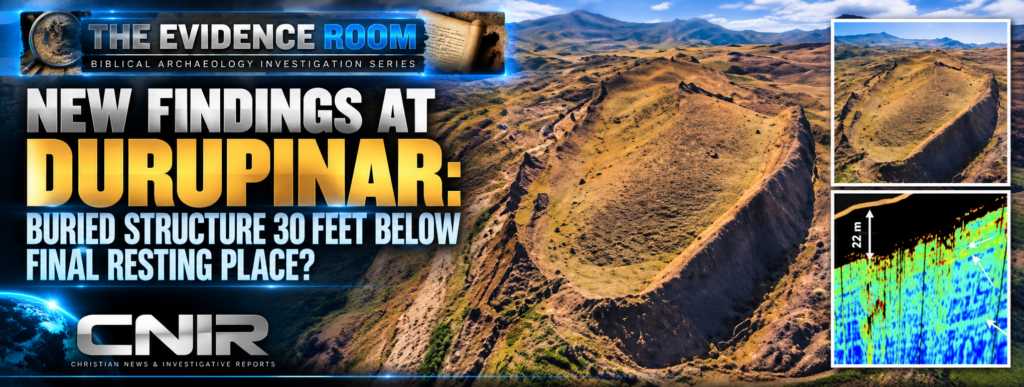
Another development involves subsurface imaging conducted using a radar system developed by engineer Khosrow Bakhtar.
The research team reported detecting linear patterns, angular intersections, layered features, and possible underground voids.
Investigators have suggested that some anomalies might represent corridors, compartments, or multiple internal levels.
Such an interpretation has attracted attention because Genesis 6:16 describes Noah’s Ark as having lower, second, and third stories.
However, radar images do not directly identify wooden walls or prove the existence of constructed rooms.
Professor Cenker Atila, who is overseeing the archaeological research, has acknowledged that some apparent openings could have geological explanations.
Possible Wood Fragments Sent for Testing
Researchers have also reported recovering material that may include mineralized or burned wood.
Samples have been submitted for laboratory identification and dating.
The distinction is important. Material that resembles wood must first be scientifically identified before researchers can determine its age, origin, or possible relationship to human activity.
At the time of this report, no publicly available laboratory findings have conclusively identified the recovered material as part of an ancient vessel.
Soil samples are also undergoing analysis to examine organic content and chemical differences between areas inside and outside the formation.
Scientists Challenge the Ark Interpretation
The renewed investigation has not eliminated longstanding scientific objections.
Geologists have previously attributed the formation’s unusual appearance to natural processes involving landslides, erosion, and geological deformation.
On October 20, researcher Nate Loper published a critical evaluation in Answers Research Journal, questioning whether the available geophysical and chemical findings justify claims of an ancient ship.
The following day, Turkey’s Chamber of Geological Engineers also challenged the Ark interpretation, emphasizing the need for verifiable geological and archaeological evidence.
These objections demonstrate why independent testing remains essential.
What Does the Bible Actually Say?
Genesis 8:4 states that the Ark came to rest upon the “mountains of Ararat.”
The passage refers to a mountainous region rather than identifying the modern Durupınar formation.
The biblical account therefore does not establish that this particular site must contain the vessel.
For Christians interested in biblical archaeology, the question is whether physical evidence can independently support a connection between the location and the ancient Flood narrative.
What Happens Next in 2027?
Researchers expect to continue their investigation during the 2027 field season.
Additional drilling, geophysical surveys, and laboratory testing could help determine whether the reported anomalies are geological features or evidence of human construction.
A more comprehensive research report is anticipated in spring 2027.
Until those findings become available, the formation’s identity remains disputed.
CNIR Evidence Room — Investigative Conclusion
The 2026 investigation represents a meaningful development because researchers have moved beyond surface observations and radar interpretations to collect physical samples from beneath the formation.
Nevertheless, scientific investigation requires distinguishing an interesting discovery from a proven historical conclusion.
The Durupınar site has produced new evidence to examine, but it has not produced verified proof of Noah’s Ark.
For CNIR, the investigation continues with a central question:
Are researchers approaching an extraordinary archaeological discovery, or will further testing reinforce the geological explanation?
CNIR — Reporting the headline. Investigating the facts.
This report is provided for informational and educational purposes. Source: Christian News & Investigative Reports — cnirbc.com.