Christian News & Investigative Reports (CNIR)
Trump Administration Unveils Major Faith-Based Aid Initiative
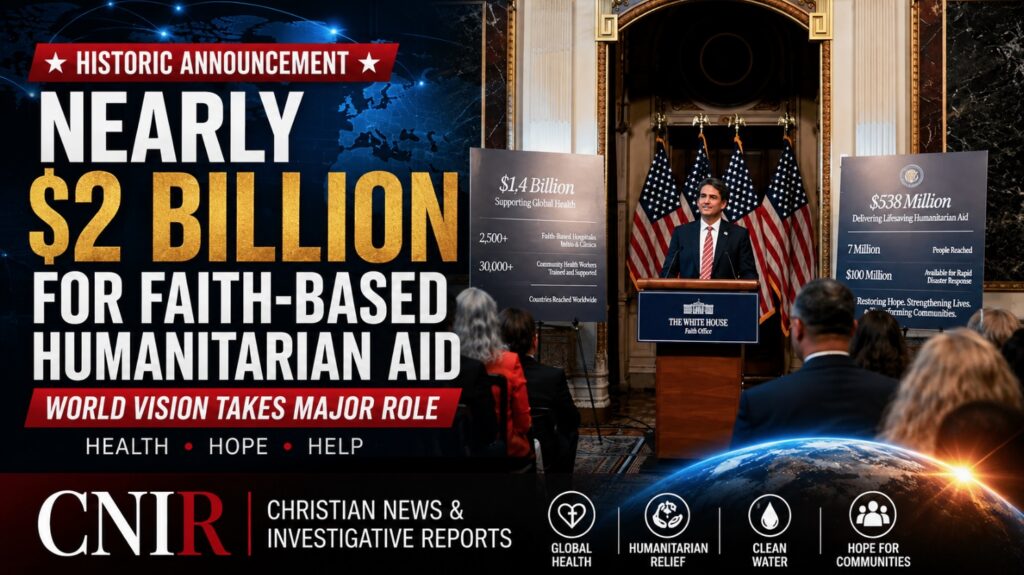
The Trump administration has announced nearly $2 billion in U.S. health and humanitarian assistance involving faith-based and community organizations, placing Christian humanitarian organizations—including World Vision—at the center of a significant change in how portions of American foreign assistance will be delivered.
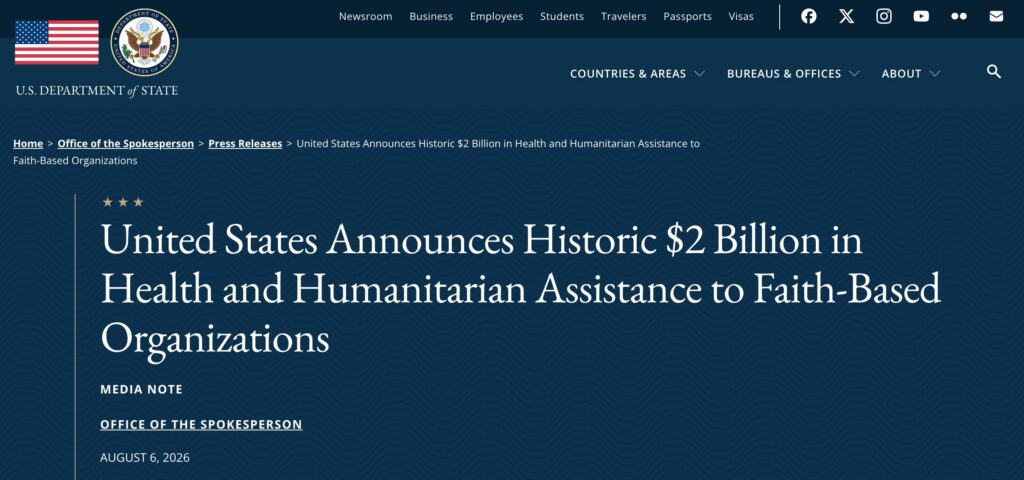
The U.S. Department of State officially announced the initiative on August 6, 2026, describing it as a major expansion of partnerships with faith-based organizations providing health care and humanitarian assistance around the world.
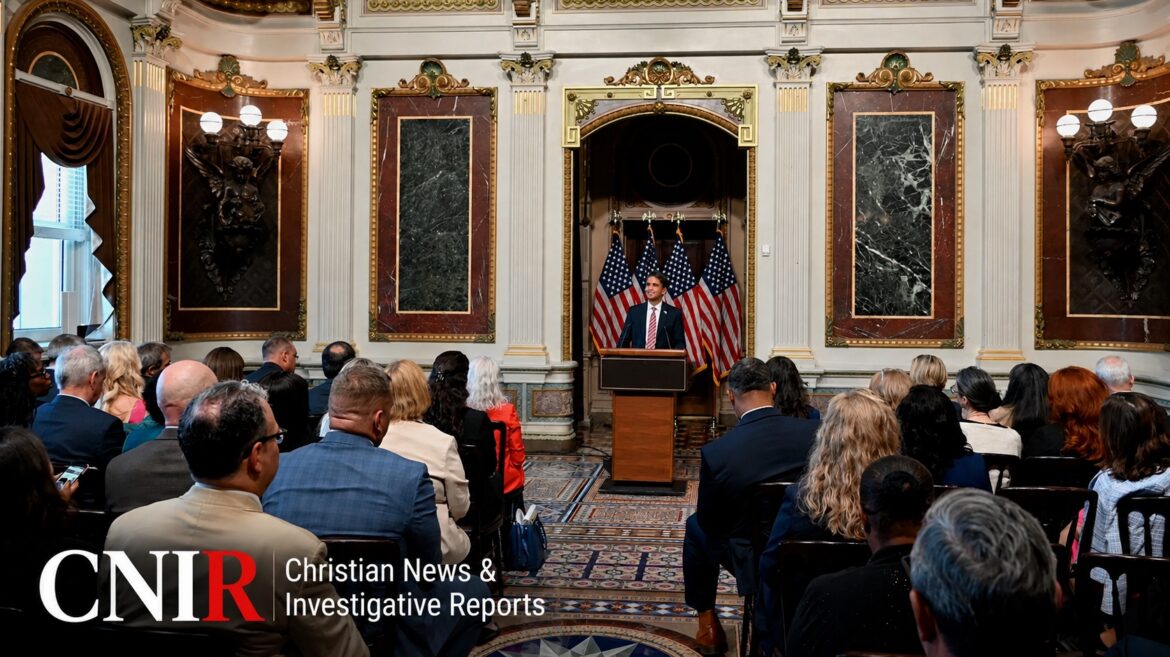
World Vision U.S. President and CEO Edgar Sandoval also appeared at a White House gathering connected with the announcement, according to Christianity Today, which published a photograph identifying Sandoval speaking at the event.
Did Trump Give Christian Organizations $2 Billion?
That description would be attention-grabbing—but it would also require important context.
The administration did announce nearly $2 billion in health and humanitarian partnerships involving faith-based and community organizations. However, the money should not simply be characterized as $2 billion being handed to churches or Christian ministries for evangelism or religious activities.
The federal funds are intended for designated humanitarian and global-health purposes, including health care, HIV/AIDS programs, disaster assistance, food security, clean water and services for vulnerable communities.
The Christian-news significance is not simply the amount of money. It is the administration’s decision to make faith-based organizations major partners in delivering U.S. humanitarian assistance.
$1.4 Billion Directed Toward Global Health
A major component of the initiative involves approximately $1.4 billion in global health foreign assistance involving faith-based and community hospitals, clinics and organizations.
According to the State Department, the initiative represents the largest announcement of U.S. global-health foreign assistance to faith-based organizations in more than 20 years.
These organizations already operate extensive networks in areas where hospitals, medical personnel and government health infrastructure can be limited.
That existing infrastructure is one reason faith-based organizations can become important partners in delivering humanitarian assistance.
World Vision Could Oversee Hundreds of Millions
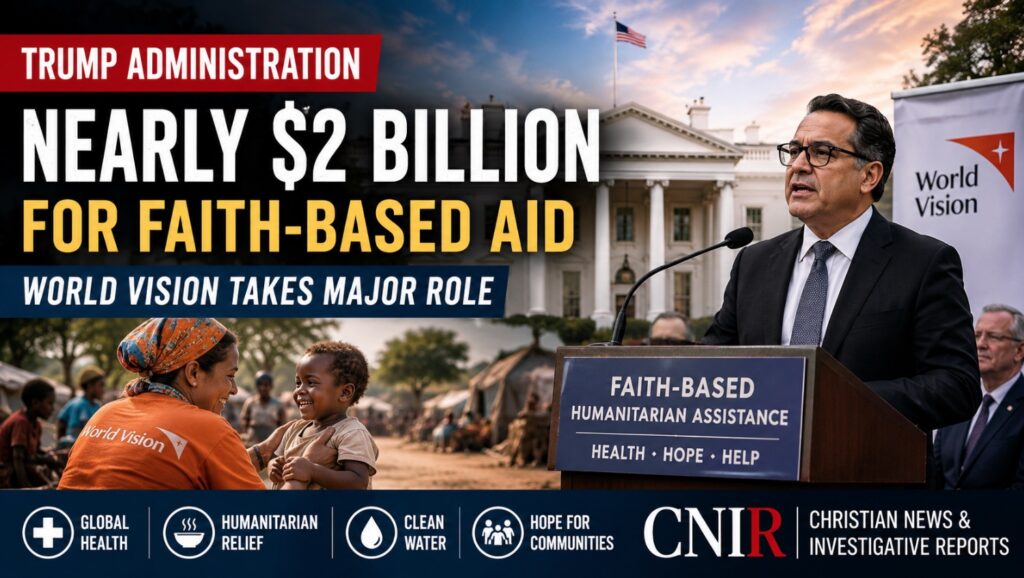
One of the most significant organizations involved is World Vision, a major Christian humanitarian organization operating internationally.
Under the new Faith and Community Initiative, World Vision is expected to lead a consortium working with local faith-based organizations.
According to the State Department, the initiative could receive up to $850 million over five years, subject to the availability of funding.
The initiative is expected to work through thousands of faith-based hospitals, clinics and community hubs while supporting and training tens of thousands of community health workers.
That places World Vision in an unusually influential position within the administration’s developing foreign-assistance strategy.
World Vision CEO Edgar Sandoval Appears at White House Event
The announcement also carried symbolic significance.
Edgar Sandoval, president and CEO of World Vision U.S., spoke at the White House gathering associated with the funding announcement, according to Christianity Today’s reporting and its published photograph of the event.
Sandoval’s presence is noteworthy because World Vision was among the Christian humanitarian organizations affected by the earlier disruption and restructuring of U.S. foreign assistance.
The organization is now positioned to play a major role in portions of the system emerging from those changes.
From USAID Cuts to a New Foreign-Aid Model
The announcement cannot be fully understood without considering what happened to U.S. foreign assistance before it.
The Trump administration’s restructuring and reduction of the traditional foreign-aid system created significant disruptions for humanitarian organizations that had depended on U.S. government grants.
Christian organizations were not exempt.
World Vision previously warned that private Christian giving alone could not immediately replace the enormous amount of government humanitarian assistance being reduced or eliminated.
The latest announcement therefore raises an important question: Is Washington simply restoring some of the humanitarian funding that disappeared—or building an entirely different system for distributing American foreign aid?
Evidence currently points toward a different model.
Rather than recreating the previous system exactly as it existed, the administration appears to be directing significant resources through selected faith-based, community and locally established networks.
Christian Organizations Become Major Humanitarian Partners
World Vision is not the only Christian organization involved.
Christianity Today reports that Compassion International and other faith-based humanitarian organizations are participating in portions of the new assistance structure.
The programs are expected to address needs ranging from health care and HIV treatment to disaster response, hunger and access to clean water.
This creates an important distinction.
Government money is not being provided merely because these organizations identify as Christian. The organizations are being used as humanitarian partners because many already possess hospitals, clinics, personnel and community networks capable of delivering assistance.
Why Faith-Based Organizations?
Christian organizations have operated hospitals, orphanages, schools, food programs, disaster-response operations and medical missions around the world for generations.
In some developing communities, religious institutions may have deeper local relationships than distant government agencies.
That can make them effective humanitarian partners.
But effectiveness must still be demonstrated.
Receiving hundreds of millions of dollars in taxpayer funding brings a responsibility not only to serve people compassionately but also to demonstrate where the money went and what it accomplished.
The Church-State Question Cannot Be Ignored
There is another issue CNIR believes deserves careful attention.
Government funding of humanitarian work performed by Christian organizations is not the same thing as government funding Christianity itself.
That distinction matters constitutionally, financially and spiritually.
Federal funds designated for medical treatment, food, clean water or disaster relief come with public-accountability requirements. They should not be confused with church offerings, missionary donations or money specifically designated for evangelism.
Christian organizations receiving government funding must therefore navigate two responsibilities: maintaining their Christian identity while complying with the legal requirements attached to taxpayer-supported humanitarian programs.

CNIR Investigates the $2 Billion Question
The announcement is significant, but the dollar amount should not end the investigation.
It should begin it.
CNIR believes several questions deserve continued attention:
Where exactly will the nearly $2 billion go?
Which organizations will ultimately receive federal funds?
How much money will reach local hospitals, clinics and communities?
What administrative costs will be permitted?
What oversight will the federal government require?
And most importantly, will the new faith-based model produce measurable improvements for the people these programs are designed to help?
Those questions matter whether the organization receiving the money is Christian, secular or governmental.
A Biblical Responsibility That Predates Washington
For Christians, caring for people in need did not begin with a federal grant.
Jesus said:
“For I was an hungred, and ye gave me meat: I was thirsty, and ye gave me drink: I was a stranger, and ye took me in.” — Matthew 25:35 (KJV)
Christian humanitarian service existed long before modern government foreign-aid programs.
Government funding may dramatically increase the resources available to organizations providing humanitarian assistance, but it does not create the Christian responsibility to serve.
And should government priorities change again, that biblical responsibility remains.
CNIR Bottom Line
Yes, the nearly $2 billion announcement is real.
The U.S. Department of State officially announced nearly $2 billion in health and humanitarian partnerships involving faith-based and community organizations, including approximately $1.4 billion connected with global health initiatives.
World Vision is positioned to play a significant role, with its Faith and Community Initiative potentially receiving up to $850 million over five years, subject to available funding.
But saying simply that “Trump gave Christian organizations $2 billion” would leave readers with an incomplete picture.
This is taxpayer-funded humanitarian and global-health assistance being delivered through a new structure in which faith-based organizations are expected to play a major role.
For Christians, taxpayers and journalists, the next question should be the same:
Where does the money go—and will it reach the people who need it most?
Editorial Note
This article is intended to encourage biblical discussion—not to criticize any individual pastor, church, or denomination. CNIR affirms that Scripture honors faithful spiritual leaders while also emphasizing the importance of mentoring and preparing the next generation. Our hope is that this conversation inspires churches to remain biblically faithful, spiritually healthy, and ready for the future. This article was created with AI assistance and curated by CNIR Staff for accuracy and editorial standards. Source: Christian News & Investigative Reports (CNIR) — cnirbc.com