
By CNIR Investigative Desk
A financial-services company born from American Lutheranism is expanding its presence across the nation’s Christian churches, raising new questions about the growing intersection of religious institutions, charitable giving and financial services.
Thrivent, founded through the merger of two Lutheran organizations in 2002, now defines its membership around a broader “common bond of Christianity.” Christians and spouses of Christians can qualify for membership.
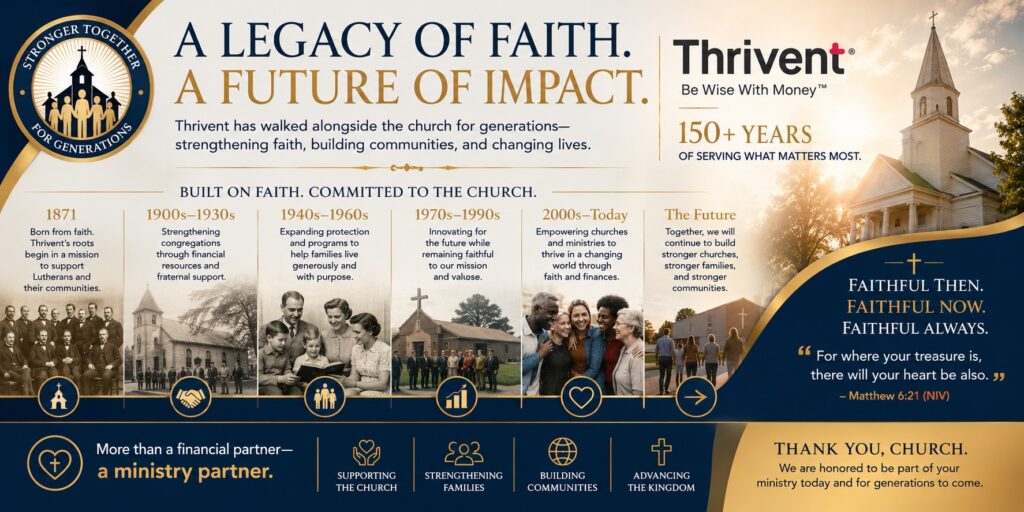
That relationship with churches is becoming more significant.
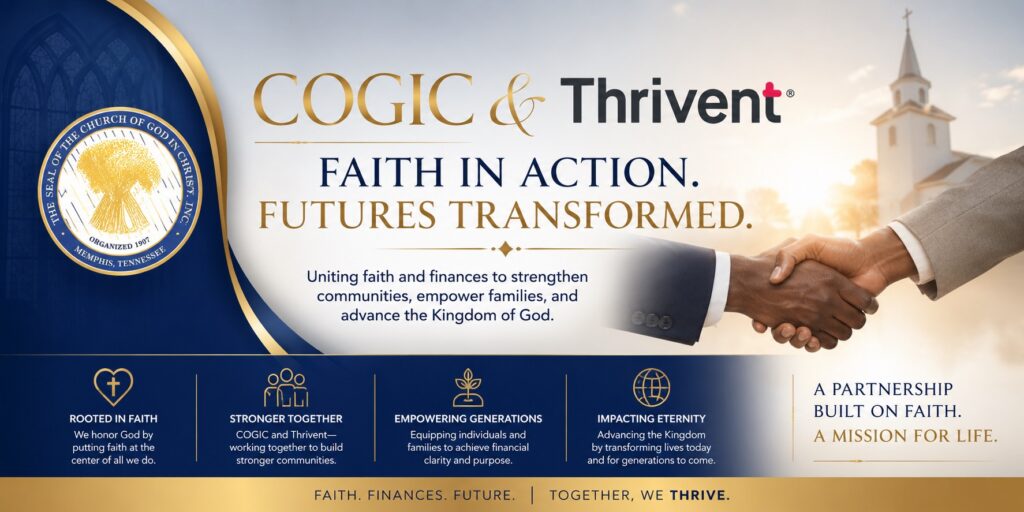
In June 2026, Thrivent announced a new multiyear partnership with the Church of God in Christ (COGIC), one of the largest Pentecostal denominations in the United States. The agreement gives Thrivent access to COGIC’s network of more than 12,000 churches, where it will provide financial education, workshops and individual consultations. Thrivent will also offer investment, insurance and other financial services through the network.
The partnership includes a charitable component as well. Thrivent has agreed to match COGIC donations by up to $65,000 annually and work toward creating a future COGIC endowment.
Millions Already Flow to Congregations
COGIC is not Thrivent’s first major connection to American churches.
Thrivent reports that since 2010, its Thrivent Choice program has distributed more than $660 million to churches and nonprofits. Of that amount, its 2026 figures show approximately $386 million went to congregations.
The program allows eligible members to direct Thrivent grant funding toward participating organizations.
That means Thrivent’s relationship with churches extends beyond financial products. The company is also a significant source of charitable funding for congregations across the country.
Where Does Financial Education End and Marketing Begin?
Thrivent describes its church partnerships as efforts to improve financial education and stewardship.
But the arrangement raises questions worth examining.
Thrivent financial professionals will conduct presentations, workshops and one-on-one consultations through COGIC conferences and its church network. At the same time, Thrivent offers investments, insurance and other financial products.
That creates an important question for churches and consumers:
When financial education is delivered through a trusted religious institution, what safeguards distinguish education from financial marketing?
CNIR found no evidence in the publicly available materials that COGIC members are being improperly pressured to purchase Thrivent products or that church officials are improperly compensated for referrals.
However, the financial relationships deserve transparency—particularly when a financial company gains access to congregants through denominational and church leadership.
From Lutheran Roots to a National Christian Network
Thrivent’s transformation is significant.
Its predecessor organizations were created specifically within Lutheran communities. Today, the company describes itself as a Christian fraternal organization serving more than 2.4 million clients.
The COGIC partnership demonstrates how that model has expanded beyond its Lutheran roots.
The result is a distinctive institution operating at the intersection of faith, finance and philanthropy.
The central questions for further investigation are straightforward: How many denominations have formal relationships with Thrivent? How much money flows to churches through those relationships? Are financial advisers compensated for business generated through church networks? And what disclosures are provided when financial products are discussed inside churches?
Those answers could provide a clearer picture of just how deeply Thrivent has become embedded in American religious life.
Editorial Note
This article is intended to encourage biblical discussion—not to criticize any individual pastor, church, or denomination. CNIR affirms that Scripture honors faithful spiritual leaders while also emphasizing the importance of mentoring and preparing the next generation. Our hope is that this conversation inspires churches to remain biblically faithful, spiritually healthy, and ready for the future. This article was created with AI assistance and curated by CNIR Staff for accuracy and editorial standards. Source: Christian News & Investigative Reports (CNIR) — cnirbc.com