PLYMOUTH, Mass. — Michael P. Desronvil walked into the Lindsay Clancy murder trial as one of 12 ordinary citizens selected to determine whether a Massachusetts mother should be held criminally responsible for killing her three young children.
He walked out as the one juror who refused to agree with the other eleven—and has since become the center of an extraordinary national debate.
Now, more than $350,000 has been raised in support of Desronvil, while Lindsay Clancy’s defense attorneys are asking a judge to investigate his conduct during the trial.
The reaction has exposed two dramatically different views of the same man.
Some see a juror who stood firm when everyone around him disagreed. Others believe his actions and reasoning deserve further scrutiny.
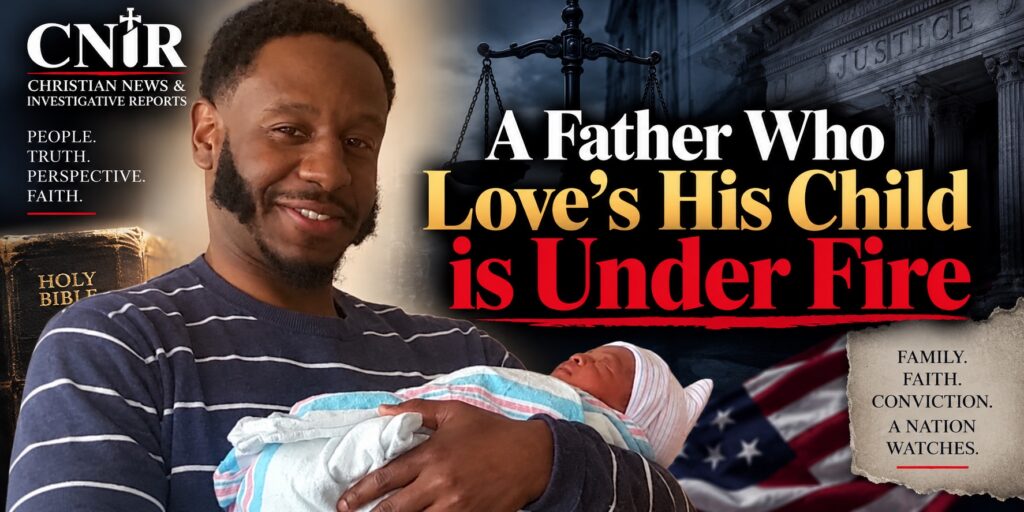
And for Christian readers following the case, another detail has emerged: Desronvil is described as a devout Catholic whose faith has reportedly helped sustain him through the intense backlash following the mistrial.

The Juror Who Wouldn’t Change His Vote
Clancy was charged with murdering her three children—Cora, 5, Dawson, 3, and Callan, 8 months—inside the family’s Duxbury home in January 2023.
Her defense maintained that she was suffering from severe mental illness, including postpartum psychosis, and therefore was not criminally responsible.
Prosecutors argued that evidence showed Clancy understood her actions and deliberately planned the killings.
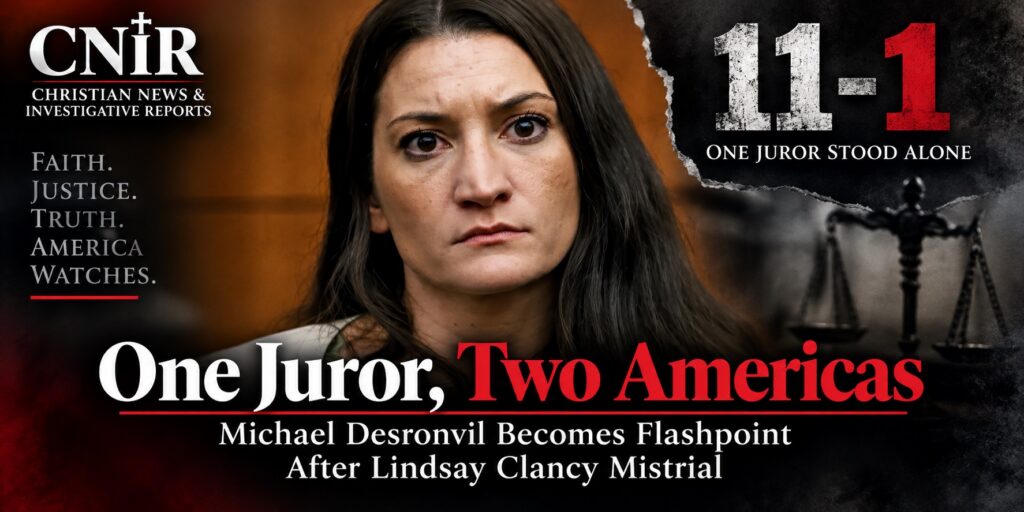
After seven days of deliberations, 11 jurors reportedly favored finding Clancy not criminally responsible because of mental illness.
Desronvil disagreed.
The deadlock resulted in Judge William Sullivan declaring a mistrial on Sept. 4.
Desronvil Breaks His Silence
Following intense public scrutiny, the 48-year-old juror eventually identified himself and publicly defended his decision.
“I didn’t have any doubts,” Desronvil said in a statement released through his representative.
He disputed accounts suggesting that he had acknowledged reasonable doubt during deliberations.
Desronvil said the physical evidence, key witnesses and prosecution’s presentation convinced him that Clancy understood what she was doing and had planned her actions.
His account conflicts with descriptions provided publicly by some of his fellow jurors, making what happened inside the jury room another major point of controversy.
A Christian Man Standing Alone
Desronvil’s faith has also become part of his story.
His attorney, Edward Andrew Paltzik, has described Desronvil as a devout Catholic, devoted father and “man of God.” Public accounts surrounding Desronvil have similarly identified him as a practicing Catholic.
His attorney has said Desronvil’s faith has helped him remain strong amid the intense criticism surrounding his decision.
That distinction is important.
Desronvil has defended his verdict based upon the evidence presented at trial, rather than publicly claiming that his Christian beliefs dictated his vote.
But for Christians watching the case, his faith provides additional context about the man who found himself standing alone against 11 other jurors.
His story raises a question familiar to believers: What happens when your conscience and convictions leave you standing alone?
Whether Desronvil correctly applied the law remains part of the wider public debate. His faith does not answer that legal question, but it helps explain another dimension of the man now at its center.
More Than $350,000 Raised for Desronvil
Whatever criticism Desronvil has received, he clearly is not standing alone outside the courtroom.
A GiveSendGo campaign titled “Stand With the Juror” has surpassed $350,000 in donations.
The fundraiser was established by supporters after the mistrial and is intended to assist Desronvil with security, lost income and other necessities resulting from the intense attention surrounding him.
His attorney says Desronvil has experienced threats, harassment and doxxing and has been staying at an undisclosed secure location.
The fundraising response represents one of the clearest signs that significant public sympathy exists for the lone holdout.
Inside the jury room, the division was 11-to-1.
Outside the courtroom, the picture is considerably more complicated.
Critics See a Very Different Juror
Not everyone views Desronvil’s stand as admirable.
Several fellow jurors have publicly challenged his reasoning and disputed portions of his description of the deliberations.
Questions have also emerged concerning Desronvil’s personal history and what information was disclosed during jury selection.
Reporting has revealed a previous domestic-violence allegation against Desronvil. He pleaded not guilty, and the criminal charge was later dismissed. His past has also included a restraining order and financial difficulties.
None of those facts, by themselves, establishes that Desronvil committed misconduct as a juror.
But Clancy’s attorneys now want the court to investigate.
Defense Seeks Investigation of Holdout Juror
Clancy attorney Kevin Reddington has asked Judge Sullivan to examine whether Desronvil accurately answered questions during the jury-selection process.
The defense has also raised allegations that Desronvil may have improperly used his cellphone during deliberations.
Reddington is seeking information that could include cellphone records, courthouse surveillance footage and other records related to the juror.
The allegations have not been established as fact, and the court has not determined that Desronvil committed juror misconduct.
A hearing is scheduled for Sept. 29, when some of these questions could receive further attention. Prosecutors have not yet publicly announced whether they will retry Clancy.
One Juror, Two Americas
Michael Desronvil has now become something much larger than Juror No. 11 in a Massachusetts courtroom.
To some Americans, he represents a troubling holdout whose conduct and reasoning should be closely examined.
To others, he represents something entirely different—a citizen who listened to weeks of evidence, reached his own conclusion and refused to surrender it simply because 11 people sitting around him disagreed.
The more than $350,000 raised for him suggests that the second view has attracted substantial support, although a fundraising total cannot tell us what Americans as a whole believe.
For Christian observers, there is another element.
The man at the center of this extraordinary controversy is also described as a man of faith—someone whose attorney says his Catholic beliefs have helped carry him through the storm that followed his decision.
Christian faith does not establish whether Desronvil’s interpretation of the evidence was correct. Neither popularity nor hundreds of thousands of dollars in donations determines whether his conclusion was legally sound.
Those questions belong to the judicial process.
But the controversy surrounding Michael Desronvil has produced a question extending well beyond the Lindsay Clancy trial:
When eleven people are telling you that you’re wrong, but your conscience and understanding of the evidence tell you otherwise, do you change your position—or stand alone?
For Michael Desronvil, the answer was clear.
He stood alone.
Now America is debating what that stand means.
Disclaimer: The information presented in this article is for informational and educational purposes only. Readers are advised to conduct thorough research before making any decisions. Source: Christian News & Investigative Reports (CNIR) — cnirbc.com