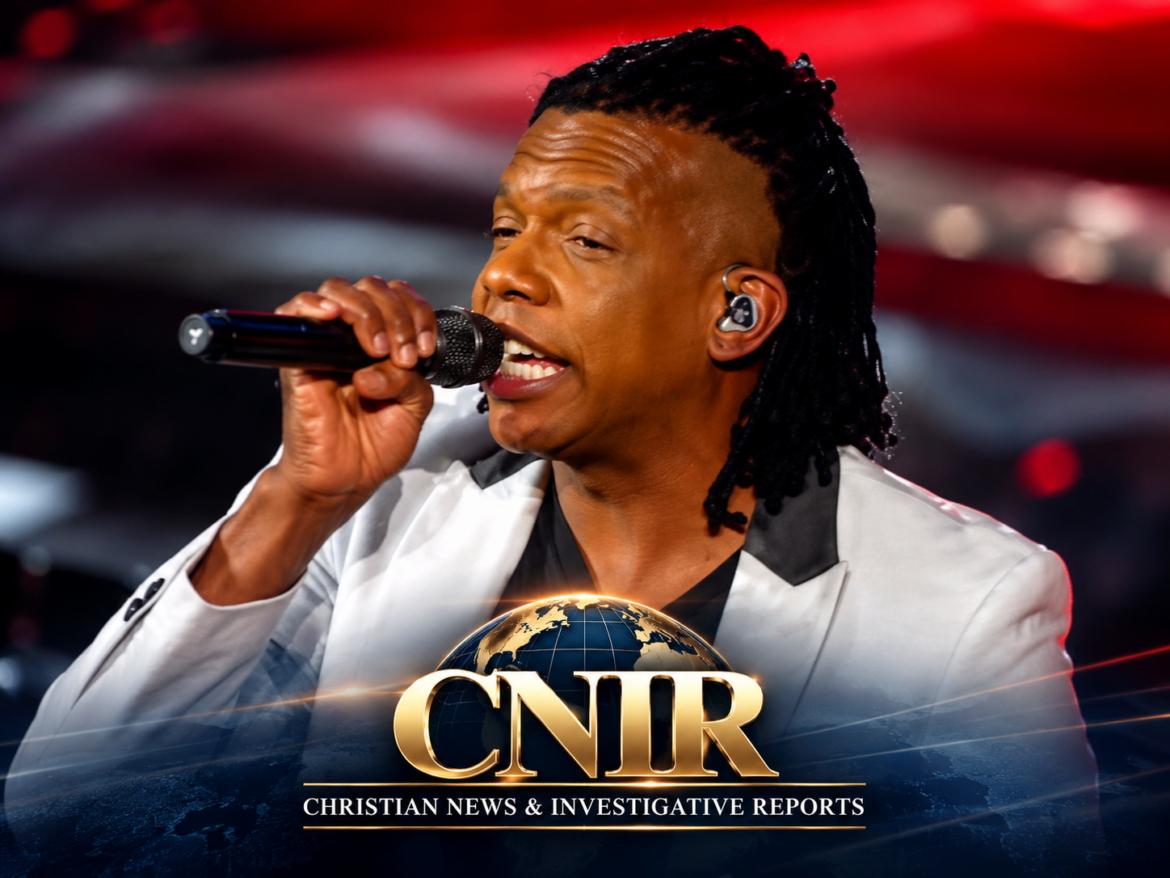
KANSAS CITY, Mo. — Former Newsboys and DC Talk singer Michael Tait has resurfaced publicly at a pastors gathering in Kansas City, Missouri, igniting a larger conversation among Christians about forgiveness, accountability and whether restoration to fellowship should ever be confused with restoration to ministry.
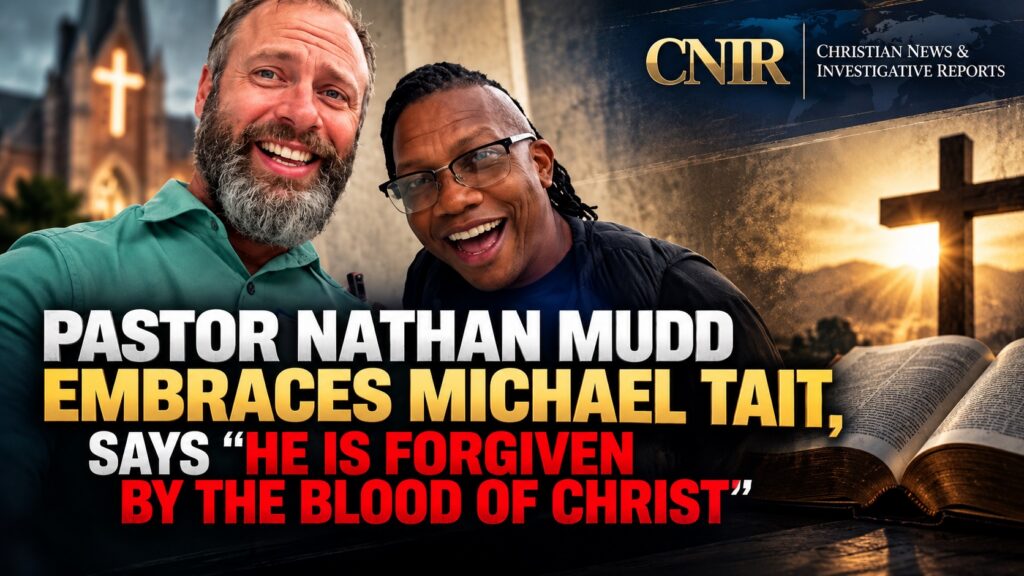
Tait was photographed with Pastor Nathan Mudd at a gathering held at Macedonia Baptist Church. Mudd shared the encounter publicly and defended embracing the former Christian music star, declaring that Tait is “forgiven by the blood of Christ.”
The photograph quickly attracted attention because of the serious controversy surrounding Tait.
Tait’s Fall From Christian Music
Tait, once one of contemporary Christian music’s most recognizable voices, stepped away from Newsboys in 2025 amid revelations about his private life.
Multiple men subsequently accused Tait of sexual misconduct, including allegations involving sexual assault, grooming and drugging. Tait later released a public statement acknowledging that many of the allegations against him were “largely true.”
He admitted years of cocaine and alcohol abuse and acknowledged engaging in unwanted sensual touching, while disputing some details contained in the allegations.
The revelations sent shock waves through Christian music. Some Christian radio stations removed music associated with Tait, and Newsboys later lost its relationship with its record label.
Tait said he intended to pursue repentance, healing and restoration privately and away from the spotlight.
A Hug Becomes a Christian Debate
That history is why a seemingly simple photograph of Tait standing beside a pastor has generated such strong reactions.
Mudd initially celebrated seeing Tait among pastors and spoke about embracing him. After criticism followed, the pastor defended his actions by emphasizing the Christian doctrine of forgiveness.
That raises an important distinction.
There is currently no indication that Tait preached at the gathering, performed music, received a ministry position or was formally restored to Christian leadership. His presence and Mudd’s public embrace should not automatically be interpreted as a return to ministry.
But the episode has opened a much larger discussion.
Can someone guilty of serious sin be forgiven by Jesus Christ?
Biblically, the answer is yes.
But another question remains:
Does forgiveness automatically restore someone to Christian leadership?

Forgiveness and Qualification Are Not the Same
Scripture repeatedly demonstrates that God can forgive people while earthly consequences remain.
King David received God’s forgiveness after his sin involving Bathsheba and Uriah, yet his actions produced devastating consequences.
Moses remained God’s servant after striking the rock contrary to God’s command, but he was still prohibited from entering the Promised Land.
The Apostle Paul also established serious qualifications for Christian leadership, writing that an overseer must be “above reproach.”
The Christian gospel therefore offers something extraordinary: genuine forgiveness and redemption for sinners.
But forgiveness, reconciliation, accountability and qualification for ministry are not necessarily identical.
A person may be completely forgiven by Christ while still needing to accept serious consequences for past actions.
Grace Without Ignoring Accountability
The Michael Tait controversy presents the Church with a difficult but important challenge.
Christians should be careful not to place themselves in the position of determining who is beyond the reach of God’s grace. At the same time, extending forgiveness does not require churches to minimize serious wrongdoing or disregard those who say they were harmed.
A pastor embracing Michael Tait is not necessarily the same thing as a pastor returning Michael Tait to the pulpit.
That distinction matters.
Perhaps the larger question emerging from the photograph isn’t whether Michael Tait deserves a hug.
It is whether the Church can demonstrate the radical forgiveness of Jesus Christ while simultaneously maintaining accountability, protecting people and preserving biblical standards for those entrusted with Christian leadership.
For the Church, those principles do not have to be enemies.
Grace can forgive the sinner while accountability still takes sin seriously.
Disclaimer: The information presented in this article is for informational and educational purposes only. Readers are advised to conduct thorough research before making any decisions. Source: Christian News & Investigative Reports (CNIR) — cnirbc.com Reporting the headline. Investigating the facts
CNIR — Christian News & Investigative Reports