CNIR — Christian News & Investigative Reports
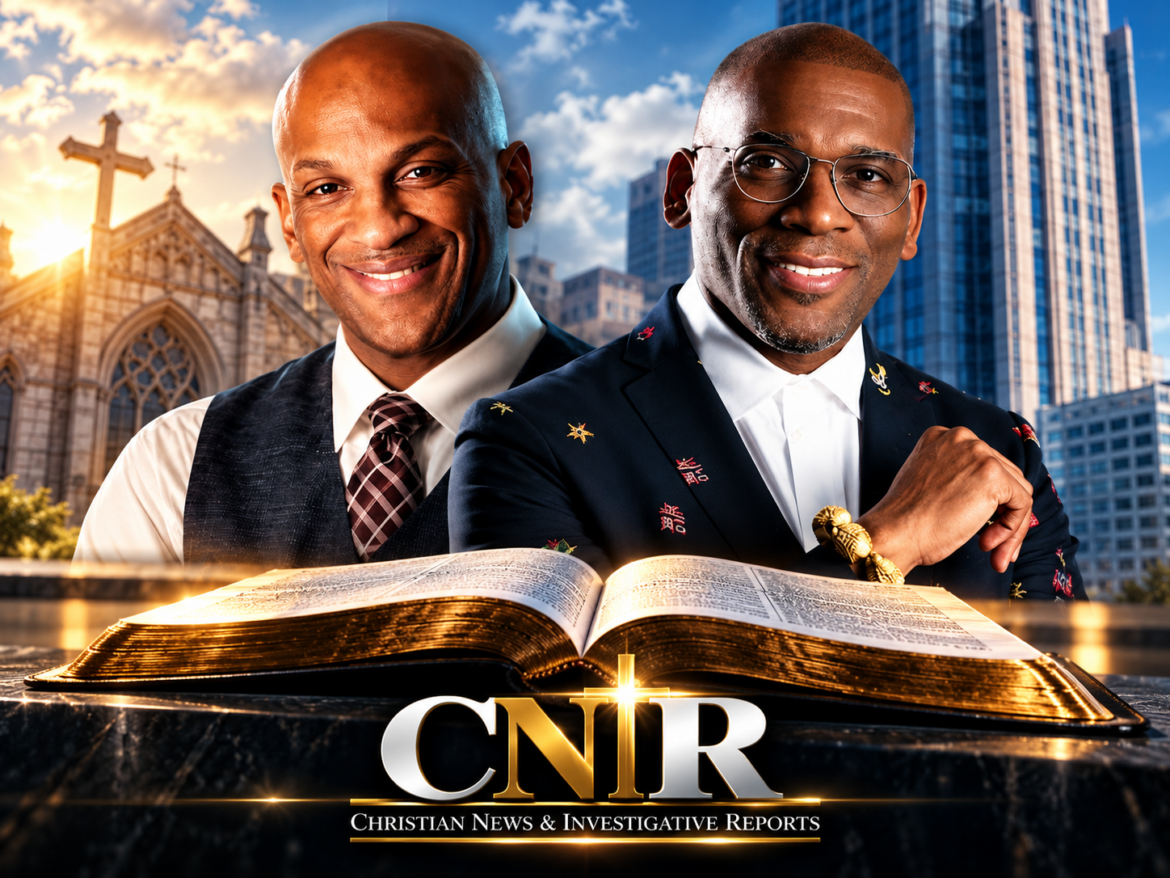
A sermon illustration from prominent Atlanta pastor Jamal Bryant has ignited a serious biblical debate after Grammy-winning gospel singer and Pastor Donnie McClurkin publicly condemned the teaching, warning Christians against confusing the authority of God with the power of human words.
At the center of the controversy is one Bible verse: Romans 4:17.
Bryant: “I Create What I Speak”
During an August 2 sermon at New Birth Missionary Baptist Church in Stonecrest, Georgia, Bryant recalled hearing a magician at his daughters’ school explain “abracadabra.”
Bryant told his congregation that he had been told the word was Arabic and meant, “I create what I speak.”
He then connected the expression with Romans 4:17 and encouraged his congregation to speak concerning what they wanted to see happen.
“If you want to see the hand of God in the month of August, abracadabra!” Bryant said, before referring to bills being paid.
The sermon was titled “It Didn’t End How I Thought It Would,” according to New Birth’s podcast listing, and was based primarily on Deuteronomy 3:26–27.
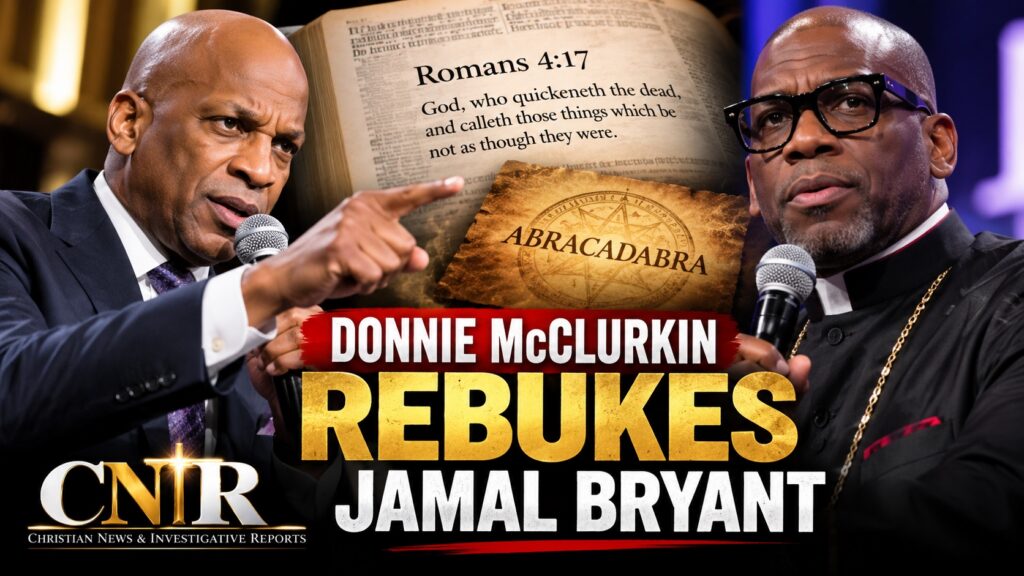
McClurkin Responds: “You Cannot Mix Witchcraft With Holiness”
Ten days later, McClurkin addressed the teaching during an August 12 service at Perfecting Faith Church in New York.
Although McClurkin did not identify Bryant by name, his description clearly referenced the Atlanta sermon and its “abracadabra” illustration.
McClurkin declared:
“You cannot mix witchcraft with holiness.”
He argued that Christians do not possess the divine ability to create reality simply by speaking words.
McClurkin warned that such teaching could cause believers to misunderstand the distinction between God’s authority and man’s faith.
He called the doctrine “wrong” and said Christians should not be taught that simply saying something causes it to come to pass.
What Does Romans 4:17 Actually Say?
This is where the controversy becomes a question of biblical interpretation.
Romans 4:17 says:
“…God, who quickeneth the dead, and calleth those things which be not as though they were.” — Romans 4:17 KJV
Notice the subject of the sentence.
It is God.
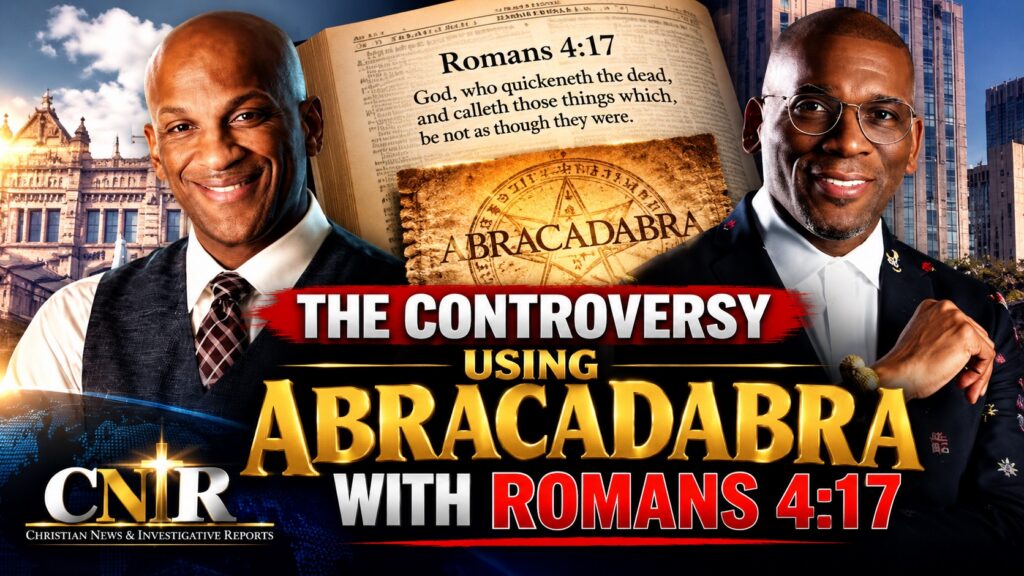
Paul does not say Abraham called things that did not exist into existence. He describes God as the One who gives life to the dead and calls things that are not as though they were.
The surrounding passage concerns Abraham trusting God’s promise even when circumstances appeared impossible.
Abraham’s faith was powerful because of the God in whom he believed, not because Abraham possessed God’s creative authority.
That distinction is important.
Biblical faith certainly includes prayer, confession, trust and speaking God’s Word. But Romans 4:17 does not explicitly teach that Christians can create whatever they desire merely by declaring it.
That is essentially the distinction McClurkin was making.
Is “Abracadabra” Really Arabic?
There is another problem with the illustration.
The historical origin of “abracadabra” is uncertain.
The American Heritage Dictionary identifies it as a Late Latin magical formula of unknown origin, while the Online Etymology Dictionary notes that numerous theories have been proposed but documentation establishing those proposed origins has not been found.
Its use can be traced at least as far back as the ancient Roman writer Serenus Sammonicus, who prescribed the word as part of an amulet intended to ward off disease.
Historical sources therefore do not establish as fact that “abracadabra” is an Arabic word meaning “I create what I speak.”
The Bigger Question for Christians
The controversy is ultimately bigger than Bryant or McClurkin.
It raises an important question about how Christians read Scripture:
Does faith mean speaking our desired reality into existence—or trusting God to accomplish what He has promised?
Scripture repeatedly emphasizes the tremendous importance of words, prayer and faith. But Scripture also maintains a distinction between the Creator and His creation.
Genesis begins with God speaking creation into existence.
Romans 4:17 describes God calling things that are not as though they were.
Abraham’s responsibility was not to become the creator.
His responsibility was to believe the Creator.
That may be the most important distinction emerging from this controversy.
CNIR Biblical Analysis: Romans 4:17 unquestionably teaches extraordinary faith in God’s ability to accomplish what appears humanly impossible. But the text itself attributes the power to give life and call nonexistent things into being to God—not Abraham and not the believer.
Disclaimer: The information presented in this article is for informational and educational purposes only. Readers are advised to conduct thorough research before making any decisions. Source: Christian News & Investigative Reports (CNIR) — cnirbc.com Reporting the headline. Investigating the facts