More than 2,000 years ago, a powerful ruler desecrated Jerusalem’s Temple, persecuted the Jewish people, and attempted to suppress their worship. Today, his actions remain central to a major biblical question: Did Antiochus IV Epiphanes establish a historical pattern that Scripture associates with a future Antichrist?
CNIR INVESTIGATIVE REPORT | October 29, 2026
1. THE ANCIENT KING BEHIND A MODERN PROPHETIC DEBATE
Long before the New Testament described a coming opponent of God, a Seleucid king named Antiochus IV Epiphanes ruled territories that included ancient Judea.
Reigning from 175 to 164 BC, Antiochus became notorious for policies that interfered with Jewish religious practices and worship conducted at Jerusalem’s Temple.
In 167 BC, his administration imposed measures that prohibited traditional Jewish observances and introduced pagan worship into the Temple. These actions helped ignite the Maccabean Revolt, a Jewish resistance movement that eventually reclaimed and rededicated the sanctuary.
The events are documented in ancient Jewish historical literature, particularly 1 and 2 Maccabees, and are closely associated with the visions recorded in Daniel.
2. THE BOOK OF DANIEL: WAS ANTIOCHUS THE FULFILLMENT OF PROPHECY?
Daniel 8 describes a powerful ruler emerging from the divisions of a Greek kingdom, opposing God’s people and interfering with the sanctuary.
Daniel 8:25 (KJV) states:
“And through his policy also he shall cause craft to prosper in his hand; and he shall magnify himself in his heart, and by peace shall destroy many.”
Many biblical scholars associate this description with Antiochus IV, whose political maneuvering and religious persecution resemble the ruler portrayed in the passage.
Daniel 11:31 further describes forces that would pollute the sanctuary, interrupt regular sacrifices, and establish what Scripture calls the abomination that maketh desolate.
The historical connection is substantial. However, whether Daniel’s prophecy also anticipates a separate future ruler remains a matter of theological interpretation.
3. THE ABOMINATION OF DESOLATION: WHAT REALLY HAPPENED IN JERUSALEM?
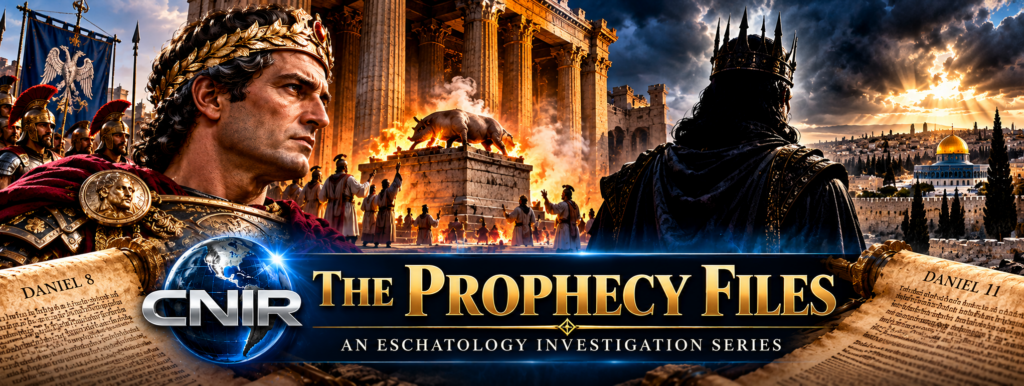
One of the most consequential acts attributed to Antiochus was the desecration of the Second Temple.
Ancient accounts describe the suppression of Jewish sacrifices and the introduction of pagan religious practices associated with Zeus. The sanctuary’s defilement became a defining episode of the persecution.
Jewish resistance eventually led to the Temple’s purification and rededication in 164 BC, commemorated through the festival of Hanukkah.
Daniel 8:14 refers to 2,300 evenings and mornings before the sanctuary would be restored. Scholars disagree about how to calculate that period, including whether it describes 2,300 full days or 1,150 pairs of daily offerings.
4. JESUS CHRIST AND THE PROPHECY THAT CONTINUED BEYOND ANTIOCHUS
Centuries after Antiochus died, Jesus referred to Daniel while teaching about future distress.
Matthew 24:15 (KJV) declares:
“When ye therefore shall see the abomination of desolation, spoken of by Daniel the prophet, stand in the holy place, (whoso readeth, let him understand:)”
This statement is central to the debate.
Some interpreters understand Jesus’ warning primarily in connection with the Roman destruction of Jerusalem in AD 70. Others believe His words point beyond that event toward a final period of tribulation.
Under the futurist interpretation, Antiochus becomes a historical foreshadowing of a future persecuting ruler, rather than the complete fulfillment of every related prophecy.
Neither interpretation establishes the identity of a future Antichrist through historical evidence alone.
5. ANTIOCHUS IV VERSUS THE ANTICHRIST: THE BIBLICAL COMPARISON
The New Testament introduces additional descriptions of opposition to God.
In 2 Thessalonians 2:3–4, the Apostle Paul describes a figure commonly called the man of sin or man of lawlessness, who exalts himself and claims divine authority.
Revelation 13 portrays a beast exercising political and religious power, speaking blasphemies and persecuting the saints for 42 months.
These characteristics resemble aspects of Antiochus’ historical conduct. Yet the Bible does not explicitly identify Antiochus as the future Antichrist, nor does it directly state that every figure in Daniel, Thessalonians, and Revelation represents the same individual.
6. WHAT DID THE APOSTLE JOHN REVEAL ABOUT THE ANTICHRIST?
The Apostle John provides another important distinction.
1 John 2:18 (KJV) states:
“Little children, it is the last time: and as ye have heard that antichrist shall come, even now are there many antichrists; whereby we know that it is the last time.”
John acknowledges both an anticipated Antichrist and the existence of multiple antichrists in his own generation.
This suggests that opposition to Christ is not limited to one historical period. However, identifying a specific future political leader remains an interpretive question, not an established historical conclusion.
7. THE HISTORICAL EVIDENCE: WHAT CAN CNIR ACTUALLY VERIFY?
The historical record confirms Antiochus’ reign, religious repression, and association with the Temple’s desecration. His career is documented in ancient accounts and modern historical scholarship.
The prophetic interpretation is more complex.
Futurist Christians frequently regard Antiochus as a precursor to a future Antichrist. Other interpreters understand Daniel’s descriptions principally within the second-century BC persecution, while some connect related New Testament warnings to first-century events.
The evidence supports a meaningful comparison between Antiochus and later biblical descriptions of persecuting rulers. It does not independently prove that a particular future ruler will repeat every historical action.
8. THE FINAL QUESTION: DID ANCIENT HISTORY FORESHADOW THE END TIMES?
Antiochus IV Epiphanes remains one of the most significant historical figures in discussions of biblical prophecy. His campaign against Jewish worship illustrates how political authority can become an instrument of religious persecution.
For Christians examining eschatology, the central question is not simply whether Antiochus resembled the Antichrist. It is whether Scripture intentionally establishes a recurring prophetic pattern extending beyond his lifetime.
The answer depends on how Daniel, Jesus’ Olivet Discourse, Paul’s letters, and Revelation are interpreted together.
CNIR’s investigation finds that the historical parallels are substantial, but claims of a specific future fulfillment must remain distinguished from documented events.
The investigation continues.
CNIR | THE PROPHECY FILES — INVESTIGATION IV
Primary biblical references: Daniel 7–8; Daniel 11–12; Matthew 24:15; 1 John 2:18; 2 Thessalonians 2:3–10; Revelation 13.
CNIR — Christian News & Investigative Reports
Reporting the headline. Investigating the facts.
The information presented in this investigation is intended for informational and educational purposes. Historical evidence and theological interpretations are distinguished throughout the report.
Source: CNIR — cnirbc.com