CHRISTIAN NEWS & INVESTIGATIVE REPORTS | WORLD NEWS | ISRAEL ELECTION 2026
Israel’s parliamentary election leaves Prime Minister Benjamin Netanyahu without a governing majority as opposition leaders prepare for coalition negotiations that could determine the nation’s political future.
JERUSALEM, ISRAEL | October 29, 2026
Netanyahu Remains Prime Minister as Election Produces Political Deadlock
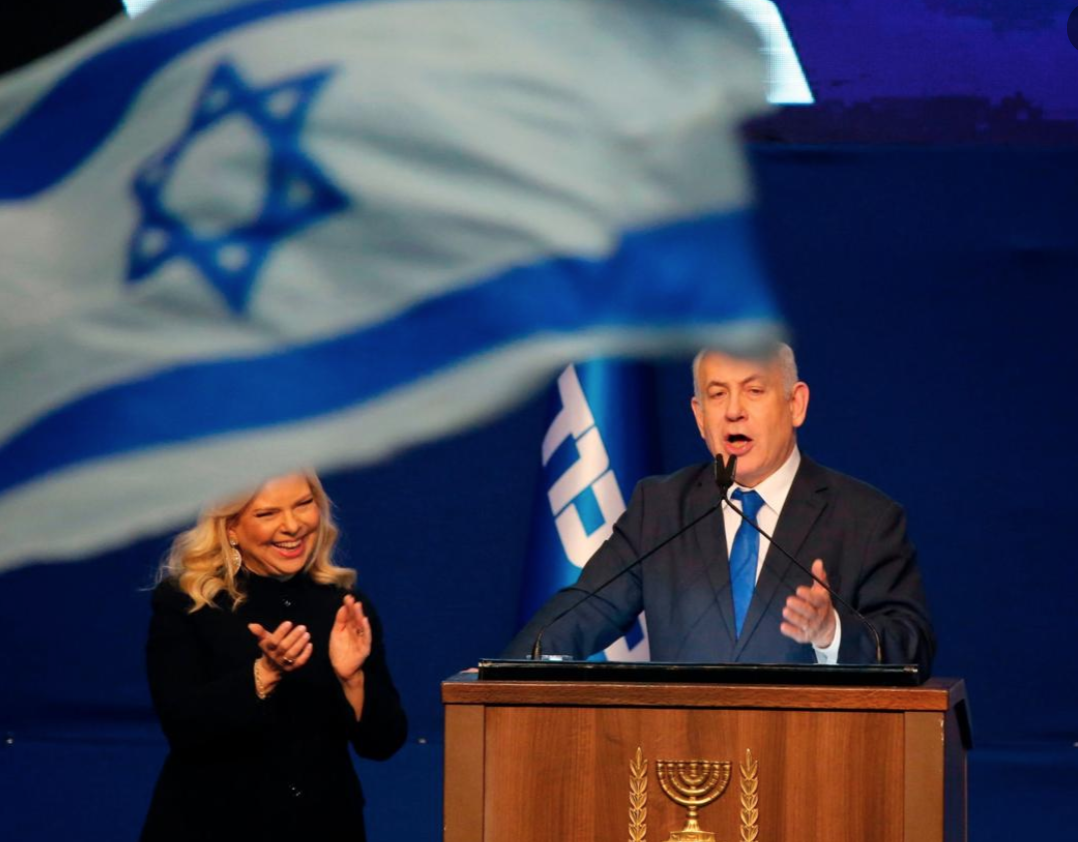
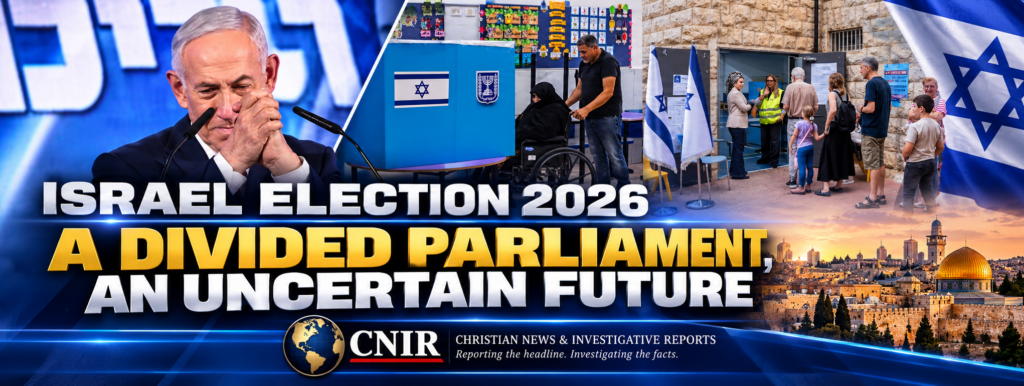
Israel’s October 27 parliamentary election has left the country’s political future uncertain, with Prime Minister Benjamin Netanyahu remaining in office despite his political alliance falling short of the majority needed to establish a new government.
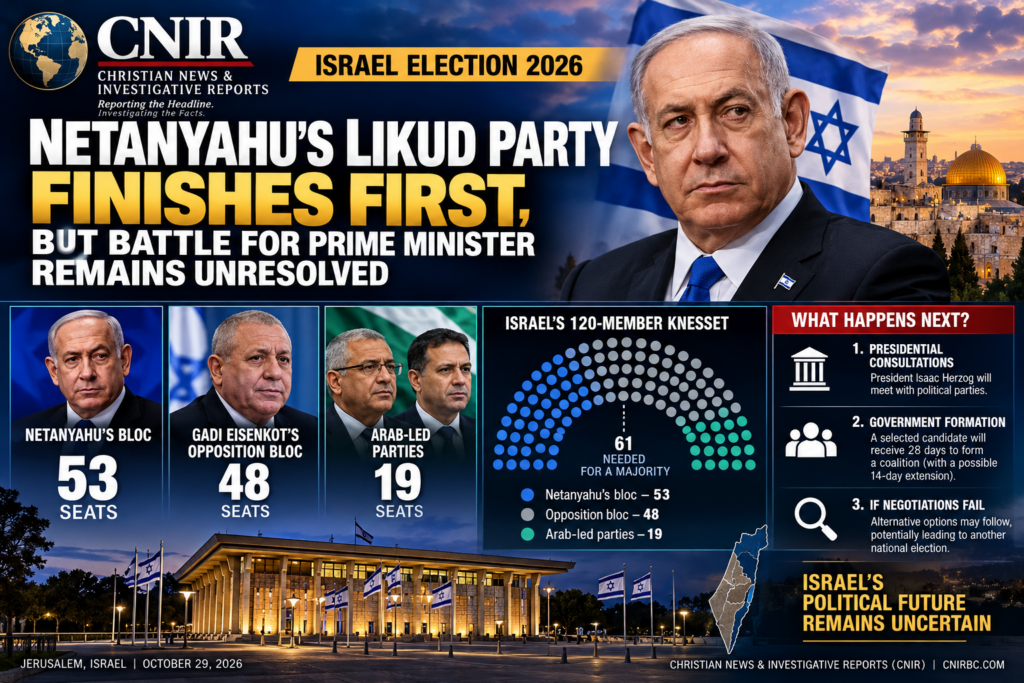
According to the reported completed vote count, Netanyahu’s Likud party secured 27 seats in Israel’s 120-member Knesset, making it the largest individual political party. However, his broader political bloc obtained only 53 seats, eight fewer than the 61 required to command a parliamentary majority.
The opposition bloc associated with former Israeli military chief Gadi Eisenkot secured 48 seats, while Arab-led political parties collectively obtained 19 seats.
Although Netanyahu’s party finished first, Israel’s parliamentary system requires political leaders to assemble a coalition capable of securing majority support. Consequently, the election results do not automatically guarantee Netanyahu another term as prime minister.
Israel Election Results Reveal a Divided Parliament
The reported parliamentary results illustrate the challenges confronting Israel’s political leadership.
Reported Knesset Seat Distribution:
- Netanyahu’s political bloc: 53 seats
- Opposition bloc associated with Gadi Eisenkot: 48 seats
- Arab-led political parties: 19 seats
- Total parliamentary seats: 120
- Seats required for a governing majority: 61
Within the broader political landscape, Netanyahu’s Likud party reportedly secured 27 seats, while Eisenkot’s Yashar party obtained 21 seats. Former Prime Minister Naftali Bennett’s B’Yachad party received 12 seats.
The figures demonstrate that no single political alliance currently possesses sufficient parliamentary support to establish a government independently.
Formal certification of the election results is expected November 4.
Arab Political Parties Gain Representation in Israel’s Parliament
One of the election’s most consequential developments involves the increased representation of Arab-led political parties in the Knesset.
The Joint List reportedly secured 11 parliamentary seats, while Ra’am obtained eight, giving the two parties a combined 19 seats.
Their increased representation could influence negotiations surrounding Israel’s next government, particularly if opposition leaders seek additional parliamentary support.
However, significant political disagreements remain regarding cooperation between Arab-led parties and other opposition factions.
These divisions could complicate efforts to form an alternative government, even if opposition parties collectively possess enough seats to challenge Netanyahu’s alliance.
Election Fraud Allegations Generate Political Controversy
The election’s aftermath has also produced controversy involving allegations of voting irregularities.
Netanyahu and political allies raised concerns about alleged voting misconduct and possible foreign interference.
Arab political leaders rejected allegations directed toward their communities, while Israeli election officials indicated that investigations into specific concerns had not established systematic damage to the election’s integrity.
Importantly, allegations of election misconduct should not be confused with verified findings of widespread fraud.
As of this report, no substantiated evidence has established that widespread electoral fraud altered the parliamentary outcome.
Religious Political Parties Could Influence Israel’s Next Government
Religious political organizations remain influential within Israel’s parliamentary system, particularly parties associated with Orthodox Jewish communities and religious-nationalist movements.
Netanyahu’s political alliance includes religious parties such as Shas and United Torah Judaism, alongside other right-wing political partners.
These organizations frequently advocate policies involving religious education, military service exemptions, Jewish religious identity, and the relationship between religious institutions and government.
Their participation in coalition negotiations could influence future legislation and government priorities.
For Christian observers, the election also raises broader questions about the relationship between religious identity, national leadership, and democratic governance in modern Israel.
President Isaac Herzog Will Determine the Next Step
Israeli President Isaac Herzog is expected to begin consultations with parliamentary representatives following the formal certification of election results.
Under Israel’s parliamentary system, the president assigns a member of the Knesset the responsibility of attempting to form a government.
The selected candidate generally receives 28 days to assemble a coalition, with a possible extension of 14 additional days.
If negotiations fail, alternative government-formation procedures may follow, potentially resulting in another national election.
Herzog has encouraged political leaders to pursue compromise rather than subject Israeli voters to another election.
Why Israel’s Election Matters to Christians and the International Community
Israel’s political direction carries implications extending far beyond its national borders.
The next government will confront significant decisions involving national security, regional relationships, relations with the United States, and the continuing consequences of conflicts affecting Gaza and neighboring territories.
For Christians who follow events in Israel because of its biblical history and religious significance, understanding the country’s contemporary political institutions remains essential.
Modern Israel operates through a parliamentary democratic system in which political parties compete for representation and negotiate governing agreements.
While biblical history gives Israel particular significance within Christianity, contemporary election results must be evaluated according to verified political developments rather than assumptions about biblical prophecy.
CNIR Final Analysis: Who Will Lead Israel’s Next Government?
Benjamin Netanyahu remains Israel’s prime minister, but the October 27 election has not produced a decisive governing majority.
His Likud party reportedly emerged as the largest individual political party, while opposition organizations and Arab-led parties secured substantial parliamentary representation.
The outcome now depends on whether Netanyahu can negotiate a governing coalition or whether opposition leaders can establish an alternative parliamentary majority.
The central question is no longer simply which political party finished first, but which leader can secure the parliamentary support necessary to govern Israel.
Until a new government is formally established, Netanyahu remains prime minister, and Israel’s political future remains unresolved.
Disclaimer:
The information presented in this article is for informational and educational purposes only. Readers are advised to conduct thorough research before making any decisions.
CNIR – Reporting the Headline. Investigating the Facts.
Source: Christian News & Investigative Reports (CNIR) — cnirbc.com