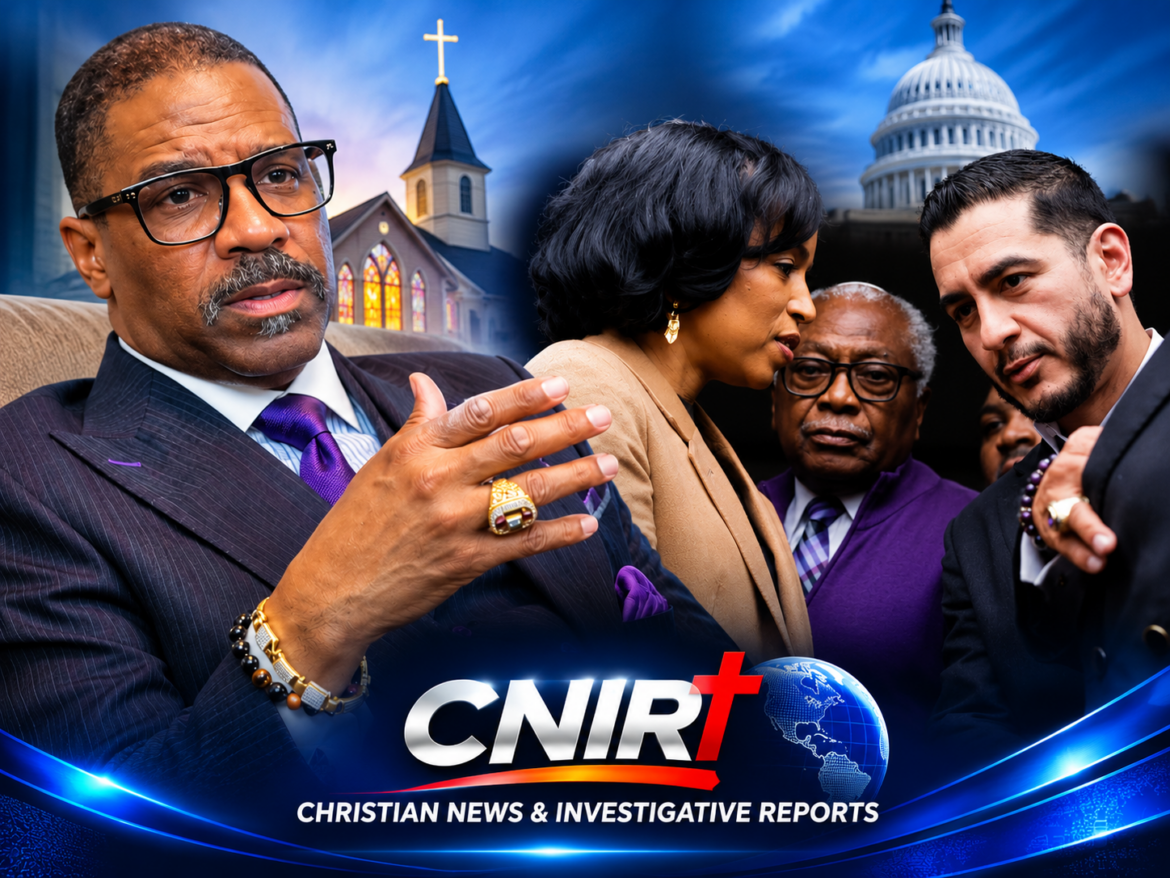
As Michigan approaches Election Day, Christian pastors’ endorsements of a Muslim Senate candidate raise questions about biblical convictions, political alliances, and the responsibility of spiritual leadership.
Christian Pastors Endorse Muslim Candidate in Michigan Senate Race
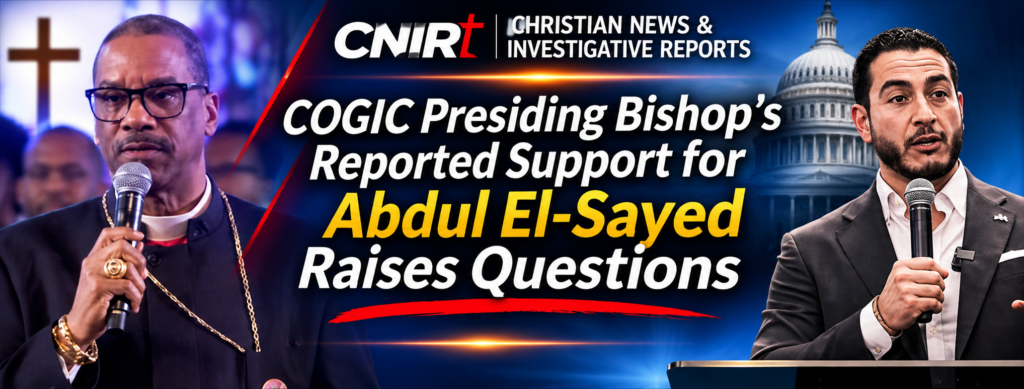
MICHIGAN — November 2, 2026. A political development involving several Church of God in Christ (COGIC) ministers is drawing attention to the relationship between Christian doctrine, religious leadership, and political endorsements.
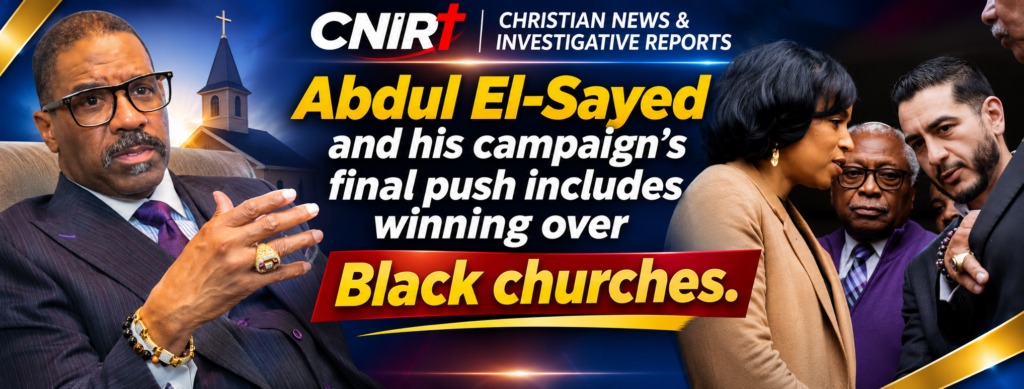
Abdul El-Sayed, a Democratic U.S. Senate candidate and practicing Muslim, has received public endorsements from Christian religious leaders, including Pastor Parris McMurray, senior pastor of Renaissance Church of God in Christ in Grand Rapids, Michigan.
McMurray’s name appears on El-Sayed’s official campaign endorsement list alongside other Christian clergy members.
The endorsements present a theological question for Christian congregations: Why would pastors who proclaim Jesus Christ as the Son of God publicly endorse a political candidate whose religious beliefs reject that central Christian doctrine?
While political endorsements do not necessarily represent religious agreement, the relationship between faith and political influence deserves closer examination.
Christianity and Islam: Fundamentally Different Beliefs About Jesus Christ
Christianity and Islam share certain historical and religious figures, but their teachings concerning Jesus Christ differ significantly.
Christianity proclaims that Jesus Christ is the Son of God, the Savior of humanity, and God manifested in the flesh.
John 3:16 (KJV) declares:
“For God so loved the world, that he gave his only begotten Son, that whosoever believeth in him should not perish, but have everlasting life.”
Islam recognizes Jesus, known as Isa, as a prophet and Messiah but rejects the Christian belief that Jesus is divine or the Son of God.
The Qur’an states in Surah 112:3 that God neither begets nor is begotten.
These theological differences concern the very identity of Jesus Christ, a foundational doctrine of the Christian faith.
However, supporting a candidate for public office does not automatically mean accepting that candidate’s religious beliefs.
COGIC Pastors Appear on Abdul El-Sayed’s Endorsement List
According to El-Sayed’s official campaign materials, several Christian religious leaders affiliated with COGIC congregations have publicly endorsed his Senate candidacy.
Among the listed supporters are Pastor Parris McMurray of Renaissance Church of God in Christ and other COGIC-affiliated ministers.
The Church of God in Christ is a historically Black Pentecostal Christian denomination that affirms the deity of Jesus Christ, His resurrection, and salvation through faith in Him.
An important distinction must be made: Individual clergy endorsements do not establish that the national Church of God in Christ denomination has officially endorsed El-Sayed.
Furthermore, the personal reasons behind each minister’s endorsement have not been independently established.
The central investigative question is whether these endorsements represent individual political judgments, broader community alliances, or institutional church involvement.
Souls to the Polls: When Political Campaigns Enter Christian Churches
On November 1, 2026, El-Sayed participated in a Souls to the Polls campaign event at Northend Church of God in Christ in Detroit.
Souls to the Polls is a longstanding voter-mobilization initiative that encourages participation in elections, particularly among historically Black congregations.
Churches frequently organize transportation, voter education, and community participation activities around election periods.
However, hosting a political candidate, encouraging citizens to vote, and officially endorsing a candidate are three different activities.
The question for Christian congregations is whether their churches are simply encouraging civic responsibility or becoming instruments of political campaigns.
The distinction is especially important because tax-exempt churches are generally prohibited from participating in political campaigns on behalf of or in opposition to candidates.
Is the Church Influencing Politics, or Is Politics Influencing the Church?
The endorsements invite examination of how Christian pastors balance their biblical responsibilities with political participation.
The Apostle John wrote:
1 John 4:15 (KJV)
“Whosoever shall confess that Jesus is the Son of God, God dwelleth in him, and he in God.”
For Christians who consider the deity of Jesus Christ essential to their faith, supporting a candidate whose religion rejects that doctrine may raise questions.
Others maintain that political endorsements concern public policies, leadership qualifications, and civic responsibilities rather than shared theological convictions.
Both perspectives involve an important distinction between religious agreement and cooperation within a pluralistic society.
The United States Constitution prohibits religious tests for federal public office. Muslim Americans, like Americans of every other faith, possess the same constitutional right to seek elected office.
The issue is therefore not whether a Muslim candidate is eligible to serve in government.
The issue is how Christian leaders explain their political endorsements while remaining faithful to their church’s biblical teachings.
What Does Scripture Teach About the Responsibilities of Christian Leaders?
The Bible places significant responsibilities upon those entrusted with spiritual leadership.
Titus 1:9 (KJV) states:
“Holding fast the faithful word as he hath been taught, that he may be able by sound doctrine both to exhort and to convince the gainsayers.”
Christian pastors are called to teach sound doctrine, protect their congregations from spiritual confusion, and provide leadership consistent with biblical principles.
Nevertheless, Scripture does not directly address the modern question of whether a Christian minister may endorse a political candidate belonging to another religion.
An endorsement by itself does not prove that a pastor has rejected Christian doctrine.
Still, church members may reasonably expect their spiritual leaders to explain how political decisions align with their understanding of biblical responsibility.
The Questions Christian Congregations Deserve to Have Answered
The documented endorsements raise several questions that deserve further investigation:
- Why did individual COGIC pastors choose to endorse Abdul El-Sayed?
- Were these endorsements made personally, or did they involve official church participation?
- Were congregations informed or consulted before their pastors publicly supported the candidate?
- What political policies or community concerns motivated the endorsements?
- How do these pastors distinguish political cooperation from theological agreement?
At present, the available endorsement records establish political support from individual Christian ministers, but they do not independently establish their motivations or demonstrate a change in their religious beliefs.
The Final Question: Faithfulness to Christ or Political Cooperation?
As Michigan approaches Election Day, the relationship between Christian leadership and political participation remains an important subject for examination.
For some Christians, cooperation with candidates of different religions is consistent with civic responsibility and does not require compromising biblical beliefs.
For others, public political endorsements by pastors raise concerns about the influence of political alliances within Christian congregations.
Can a Christian pastor faithfully proclaim Jesus Christ as the Son of God while publicly endorsing a candidate whose religion rejects that belief?
That question deserves thoughtful consideration, not assumptions about the motives or faithfulness of the individuals involved.
Ultimately, the distinction between supporting a candidate’s political agenda and endorsing that candidate’s religious beliefs remains central to understanding this developing story.
CNIR — Christian News & Investigative Reports
Reporting the headline. Investigating the facts.
Editorial Note: This report examines documented political endorsements by individual Christian clergy members. It does not establish that the national Church of God in Christ denomination endorsed Abdul El-Sayed or that any participating minister abandoned Christian doctrine.
Disclaimer: The information presented in this article is intended for informational and educational purposes. CNIR seeks to examine matters involving Christianity, public policy, and religious leadership through factual reporting and responsible investigation.
Source: CNIR — cnirbc.com