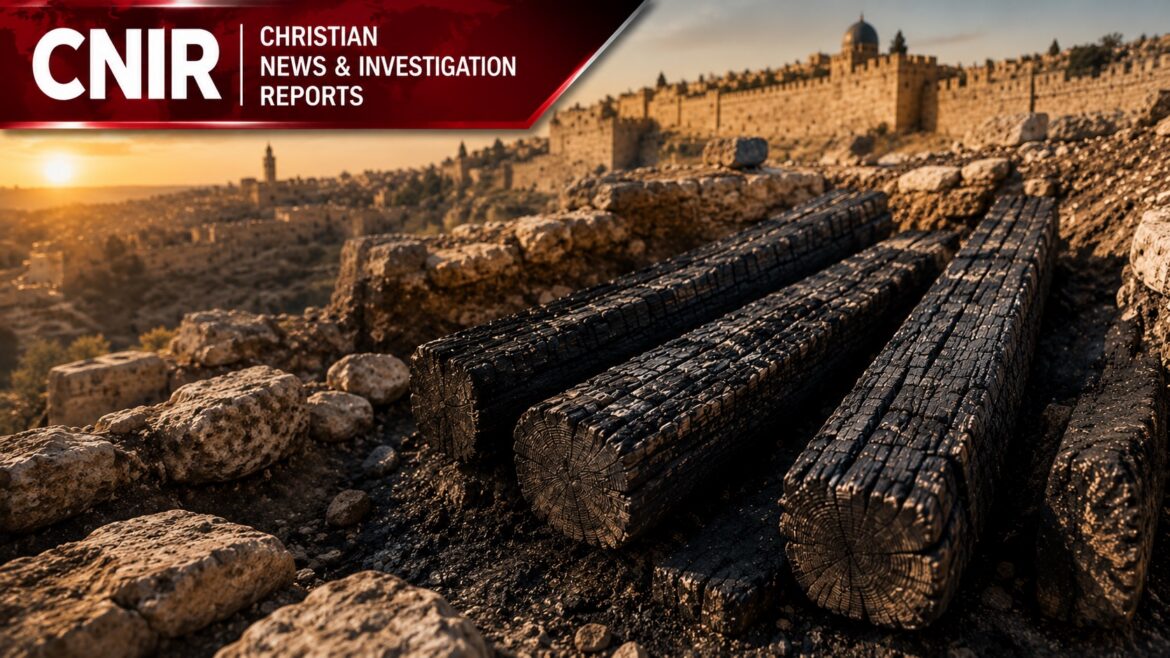
JERUSALEM — Archaeologists working in Jerusalem’s City of David have uncovered massive charred wooden beams believed to date to the Babylonian destruction of the First Temple in 586 B.C., providing one of the rarest pieces of preserved organic evidence from one of the Bible’s most significant historical events.
The discovery was made during excavations conducted by the Israel Antiquities Authority and Tel Aviv University within the Jerusalem Walls National Park. Researchers say the beams were found inside a First Temple-period building that collapsed during the Babylonian invasion under King Nebuchadnezzar II. The intense fire charred the timber, while molten plaster from the building’s walls sealed the wood beneath it, preserving the beams for approximately 2,600 years.
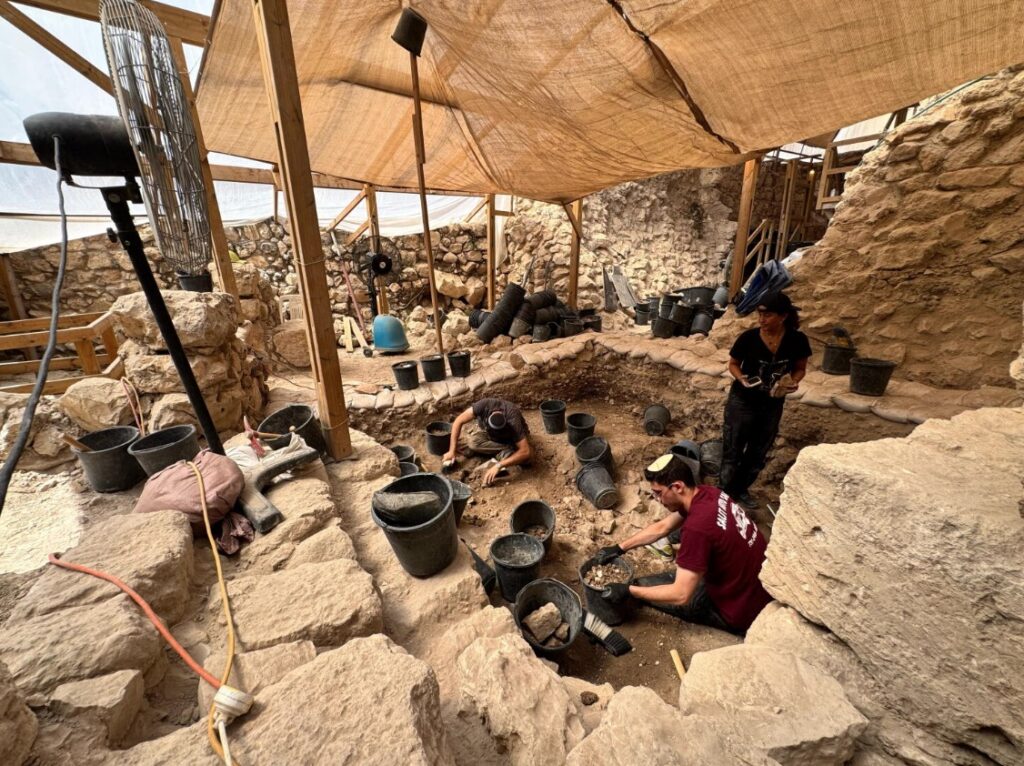
Although some headlines have referred to the discovery as “wooden beams from Solomon’s Temple,” archaeologists have been more precise. The beams were not recovered from the Temple itself, but from a nearby First Temple-period structure destroyed during the same historical event. The find nevertheless provides compelling archaeological evidence of the widespread destruction of Jerusalem recorded in both biblical and historical sources.
Researchers say the exceptionally preserved wood could significantly improve dating techniques. Because the beams contain numerous tree-growth rings, scientists may be able to narrow the timing of the destruction to within a decade rather than the broader centuries-long estimates often associated with Iron Age discoveries.
For Bible scholars and archaeologists alike, the discovery offers another tangible connection to the world of the First Temple period, reminding modern observers that beneath Jerusalem’s streets, history continues to emerge one excavation at a time.
Key Takeaway
Archaeologists uncovered rare charred wooden beams dating to Jerusalem’s destruction in 586 B.C.
The beams were discovered in a First Temple-period building, not in Solomon’s Temple itself.
Scientists believe the preserved timber may allow for far more precise dating of Jerusalem’s Babylonian destruction.