By Christian News & Investigative Reports (CNIR)
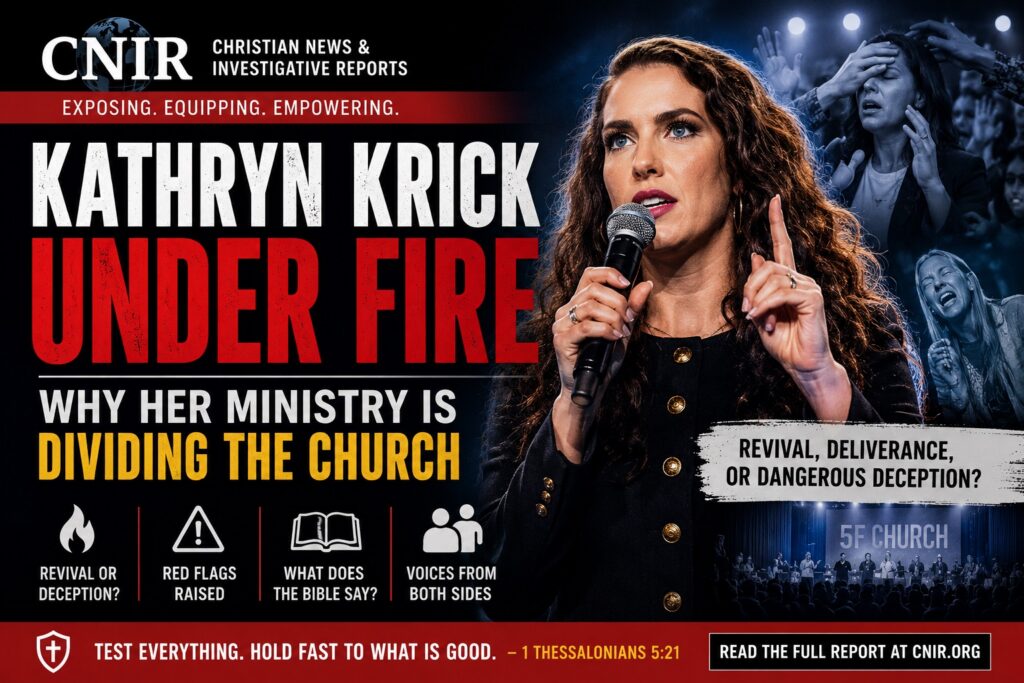
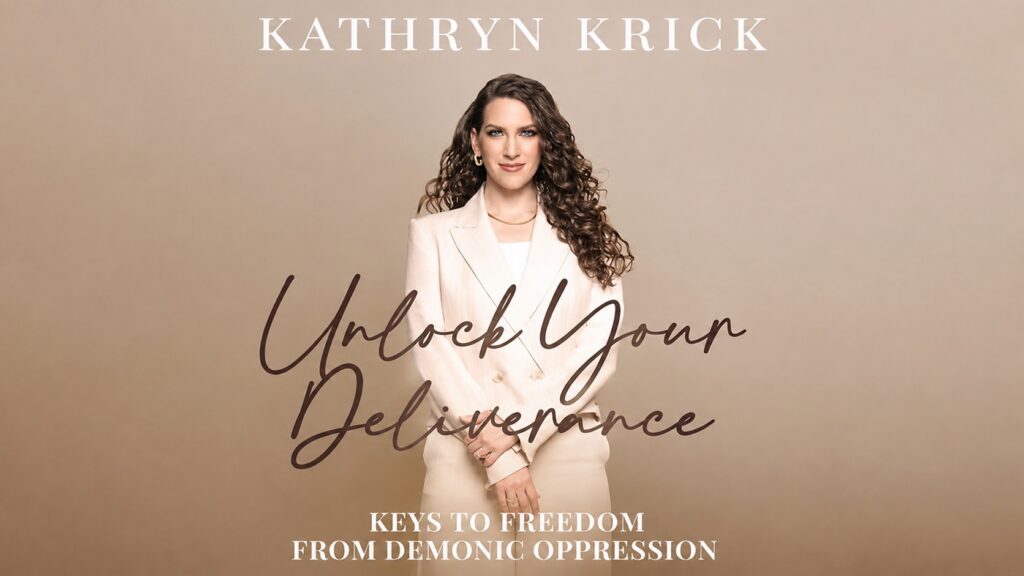
Few Christian leaders have generated as much online attention in recent months as self-described Apostle Kathryn Krick. With millions of views across TikTok, Instagram, YouTube, and Facebook, her ministry has become one of the fastest-growing voices in the modern charismatic movement. At the same time, it has become one of the most controversial.
Krick, founder of 5F Church in Los Angeles, is known for large revival meetings centered on healing, deliverance, prophecy, and what she describes as demonstrations of the power of the Holy Spirit. Videos of people falling, shaking, crying, or claiming freedom from demonic oppression routinely receive millions of views online, attracting both enthusiastic supporters and vocal critics.
A Growing Global Ministry
According to her ministry, Kathryn Krick believes God has called her to lead a worldwide revival. Her recent prophetic message for 2026 describes “a mighty wind of revival” that she says will spread across the nations through the work of the Holy Spirit. Her ministry continues to host conferences, international events, and online broadcasts that draw thousands of attendees.
Supporters describe Krick as a bold preacher who is unafraid to proclaim healing, deliverance, and spiritual freedom. Many testify that they have experienced personal transformation through her ministry and believe the supernatural manifestations seen in her services are evidence of God’s power at work.
Why Critics Are Concerned
Not everyone shares that view.
Many evangelical pastors, theologians, and Christian discernment ministries have questioned both her theology and ministry practices. Critics challenge her use of the title “Apostle,” her emphasis on supernatural manifestations, and the dramatic deliverance services that have become central to her public ministry.
Recent viral videos showing worshippers shaking, collapsing, or crying during ministry times have reignited debate throughout the Christian community. Some observers view these moments as genuine works of the Holy Spirit, while others argue they are emotionally driven experiences or practices that require careful biblical evaluation.
Krick has publicly rejected accusations that her ministry is cult-like and maintains that the criticism reflects misunderstanding and opposition to genuine revival.
What Does the Bible Say?
For Christians, the ultimate question is not whether a minister is popular, charismatic, or controversial—it is whether the ministry aligns with Scripture.
The Bible repeatedly instructs believers to exercise discernment:
- 1 John 4:1 — “Beloved, believe not every spirit, but try the spirits whether they are of God…”
- Matthew 7:15–20 — Jesus warned believers to recognize false teachers by their fruit.
- Deuteronomy 13:1–5 — God’s people were warned not to follow miraculous signs if they led people away from biblical truth.
- Acts 17:11 — The Bereans were commended for examining the Scriptures daily to verify what they were taught.
These passages remind Christians that supernatural claims should never be accepted—or rejected—without careful examination through the lens of God’s Word.
A Church Divided
The debate surrounding Kathryn Krick reflects a larger conversation taking place across Christianity today.
Some believers believe modern revival should include miraculous healing, prophecy, and deliverance just as recorded in the New Testament. Others caution that emotional experiences and supernatural claims must always be tested carefully against biblical doctrine.
Regardless of where one stands, Kathryn Krick has become one of the most talked-about figures in the charismatic movement, and the discussion surrounding her ministry is unlikely to end anytime soon.
CNIR Perspective
Christian News & Investigative Reports does not seek to determine a person’s eternal standing before God. Our responsibility is to encourage biblical discernment.
The New Testament neither commands believers to accept every supernatural claim nor to dismiss every report of God’s power. Instead, Scripture calls Christians to examine every teaching, every prophecy, and every ministry by the authority of God’s Word.
As the Apostle Paul wrote:
“Prove all things; hold fast that which is good.” — 1 Thessalonians 5:21 (KJV)
That remains wise counsel for every generation—including ours.
Sources
- Deseret News, This charismatic Christian has gone viral. Why?
- New York Post, LA-based ‘apostle’ defends ‘cult’ accusations after viral shaking videos
- 5F Church, The Prophetic Word of 2026
Editorial Note:
This article examines historical events, biblical texts, and theological perspectives. References to external publications are provided for additional context and do not necessarily represent the views of Christian News & Investigative Reports (CNIR). Readers are encouraged to compare all claims with Scripture and historical evidence. This article was created with AI assistance and curated by CNIR Staff for accuracy and editorial standards. Source: Christian News & Investigative Reports (CNIR) — cnirbc.com