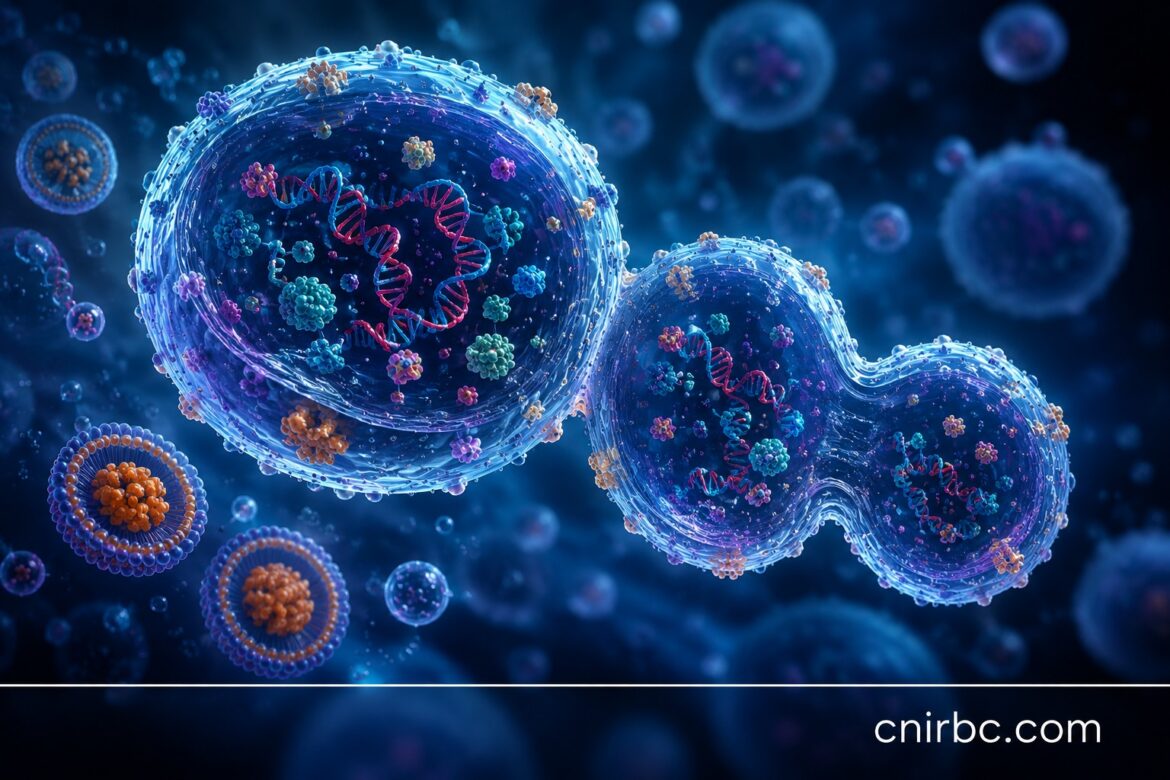
Researchers at the University of Minnesota have introduced SpudCell, a laboratory-built synthetic cell-like structure assembled entirely from non-living chemicals. The achievement marks a significant advance in synthetic biology and demonstrates that scientists can construct simplified biological systems capable of carrying out many functions associated with living cells.
According to the research team, SpudCell was built from approximately 150 to 200 molecules and contains just 36 genes. Unlike naturally occurring cells, it cannot manufacture its own proteins. Instead, researchers supply essential enzymes and ribosomes through tiny fatty spheres known as feeder liposomes. As these nutrients are absorbed, the synthetic cell grows, replicates its DNA, and eventually divides into daughter cells.
Despite this accomplishment, scientists caution that SpudCell is not considered fully independent life. It cannot survive outside carefully controlled laboratory conditions and depends entirely on researchers for its continued existence. In addition, the synthetic cells can reproduce only five to ten generations before critical internal components begin to deteriorate.
The breakthrough could eventually lead to programmable cells designed to manufacture life-saving medicines, deliver targeted therapies inside the human body, or help remove environmental pollutants.
From a biblical perspective, this discovery demonstrates humanity’s remarkable God-given ability to explore and understand creation (Genesis 1:28). However, Christians should distinguish between engineering biological systems and creating life itself. Scripture teaches that God alone is the ultimate Author and Giver of life (Genesis 2:7; Acts 17:25). As science advances, believers are called to celebrate beneficial discoveries while exercising wisdom, humility, and ethical discernment regarding technologies that influence the future of humanity.