CNIR TOP STORIES | INVESTIGATIVE REPORT
An investigation raises concerns about misleading YouTube videos, AI-generated images, and fabricated allegations targeting prominent Christian ministers.
October 31, 2026 | Christian News & Investigative Reports (CNIR)
YouTube Channel Accused of Spreading False Stories About Christian Leaders
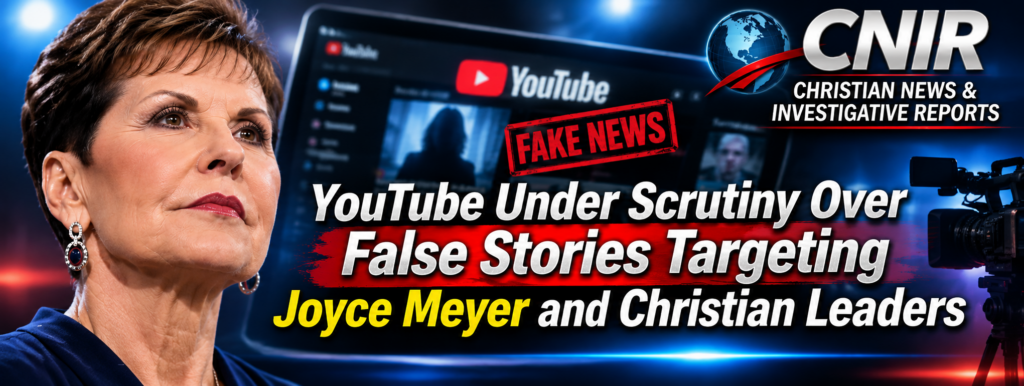
A YouTube channel accused of publishing fabricated scandals involving prominent Christian ministers has come under scrutiny following an investigation into misleading videos targeting Joyce Meyer, Tony Evans, Joel Osteen, and other well-known religious figures.
The controversy involves a channel identified as Case Files America, which reportedly uses sensational headlines, artificial intelligence-generated images, and unsubstantiated allegations to attract viewers.
According to an October 30, 2026, investigation by the Trinity Foundation, the channel published videos suggesting that several Christian leaders were involved in criminal investigations, shocking discoveries, or imprisonment.
However, the investigation found that the videos failed to provide credible evidence supporting their sensational claims.
The findings raise serious questions about misinformation, digital accountability, and whether online platforms are doing enough to prevent misleading religious content from reaching unsuspecting audiences.
Joyce Meyer Targeted by Disturbing and Unsupported Allegations
One of the most troubling examples involved internationally recognized Christian evangelist Joyce Meyer.
On October 3, Case Files America reportedly published a video featuring an AI-generated image of political commentator Tucker Carlson appearing emotionally distressed.
The thumbnail included a sensational allegation suggesting that 15 deceased women had been discovered in connection with Meyer.
No credible evidence supports the allegation, and the video did not substantiate the supposed discovery.
Instead, the content reportedly relied on dramatic narration and unsupported suggestions involving an investigation at Meyer’s residence.
The presentation created the appearance of a major criminal revelation without establishing that such an event had occurred.
The case illustrates how manipulated imagery and provocative headlines can damage reputations even when the underlying allegations are unsupported.
Tony Evans, Joel Osteen, and Other Pastors Also Targeted
Joyce Meyer was not the only Christian leader identified in the investigation.
On October 23, the same channel reportedly released a video suggesting that investigators had uncovered something shocking inside the residence of pastor Tony Evans.
However, the video failed to substantiate the alleged discovery.
Other misleading videos reportedly suggested that prominent ministers, including Benny Hinn, T.D. Jakes, Greg Laurie, and Joel Osteen, had been imprisoned.
The investigation did not establish that these sensational allegations were true.
Instead, the videos appeared to rely on recognizable names, dramatic imagery, and provocative descriptions designed to generate curiosity.
For viewers unfamiliar with the facts, such presentations can create confusion about the personal lives and ministries of prominent Christian figures.
Could Fake Christian News Be Generating Advertising Revenue?
Another concern involves the possible financial incentives associated with misleading online content.
The Trinity Foundation reported observing advertisements appearing before videos published by Case Files America.
This raises questions about whether sensational and potentially defamatory religious content can attract advertising even when the underlying allegations lack credible documentation.
However, advertisements appearing alongside a video do not necessarily establish how much money its creator receives.
The broader concern involves a digital advertising environment in which attention-grabbing content can attract substantial viewer interest regardless of its factual reliability.
When sensationalism becomes more profitable than accuracy, the credibility of online journalism can suffer.
For Christian audiences, the consequences may include damaged reputations, confusion among believers, and declining trust in legitimate religious reporting.

Why Has YouTube Allowed the Channel to Remain Online?
The investigation also raised questions about YouTube’s handling of misleading content involving public religious figures.
YouTube maintains policies addressing harassment, deceptive practices, and certain forms of harmful misinformation.
However, not every inaccurate or disputed statement automatically violates the platform’s removal policies.
The Trinity Foundation reported that the channel remained available despite the publication of videos containing unsupported allegations.
The investigation did not establish that YouTube had formally rejected a verified removal request involving this particular channel.
The organization also reported contacting Google’s press office without receiving a response before its findings were published.
The situation raises an important question about how digital platforms distinguish between legitimate commentary, sensational entertainment, and potentially damaging misinformation.
Artificial Intelligence Creates New Challenges for Christian Journalism
The increasing availability of artificial intelligence technology has made it easier to produce convincing images, dramatic presentations, and fictional narratives that resemble authentic news reports.
Although AI technology has legitimate uses in journalism and media production, its misuse can make fabricated allegations appear credible.
Christian leaders and religious organizations may be especially vulnerable when misleading content exploits their public recognition.
A fabricated image, misleading headline, or unverified allegation can spread rapidly across social media before audiences discover that the information is unreliable.
Responsible journalism requires more than an attention-grabbing presentation.
It requires documented evidence, credible sources, independent verification, and fairness toward individuals facing serious accusations.
CNIR Perspective: Christians Must Distinguish Truth From Deception
For Christian News & Investigative Reports, the controversy reinforces the importance of responsible reporting and biblical discernment.
Scripture encourages believers to examine information carefully rather than accepting every claim without verification.
1 Thessalonians 5:21 (KJV):
“Prove all things; hold fast that which is good.”
The responsibility to distinguish truth from deception applies not only to journalists but also to readers, social media users, and Christian communities.
Before sharing sensational allegations about a pastor, ministry, or religious organization, individuals should examine the source and determine whether credible evidence supports the claims.
The controversy surrounding Case Files America demonstrates how easily fabricated narratives can circulate when sensationalism replaces verification.
As artificial intelligence continues transforming digital communication, the need for trustworthy Christian journalism becomes increasingly important.
CNIR remains committed to investigating the facts, examining the evidence, and reporting responsibly without manufacturing scandals or promoting unsupported accusations.
CHRISTIAN NEWS & INVESTIGATIVE REPORTS (CNIR)
Reporting the headline. Investigating the facts.
Source: Trinity Foundation investigation, October 30, 2026, concerning misleading YouTube videos targeting Christian leaders.
Editorial Disclaimer: This report is provided for informational and educational purposes. Allegations described in this article are examples of reported misinformation and should not be interpreted as verified criminal accusations against the individuals named.