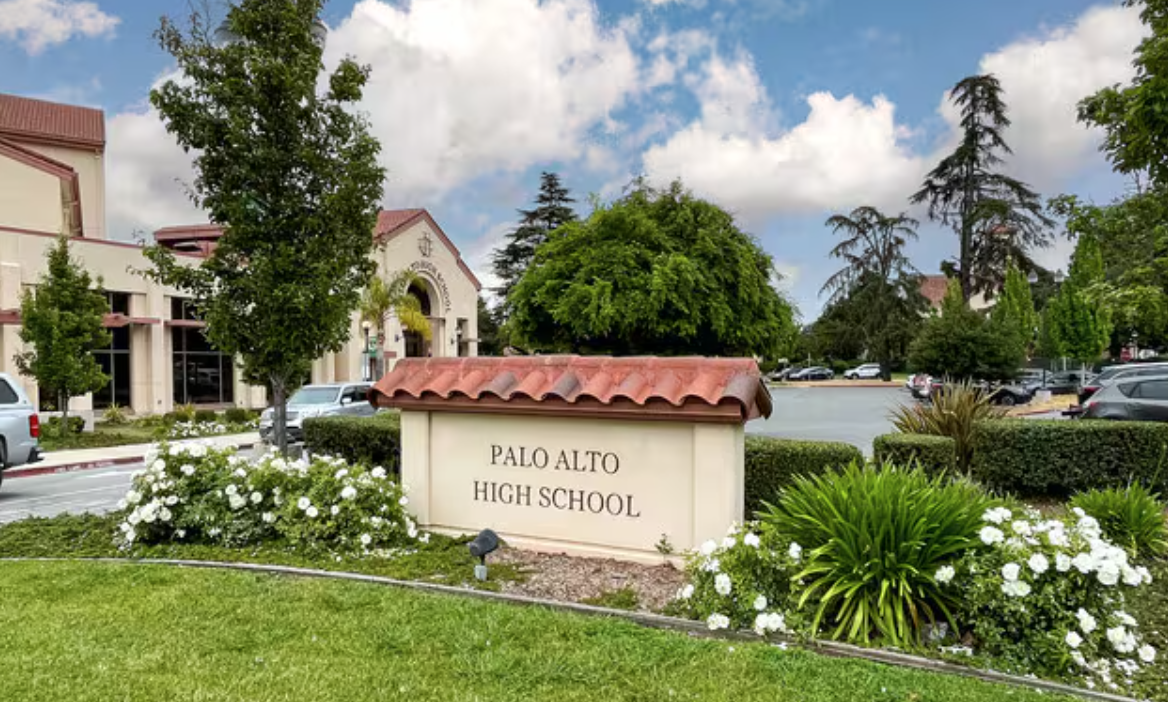
PALO ALTO, Calif. — A federal lawsuit against the Palo Alto Unified School District and Palo Alto High School Principal Brent Kline is raising questions about where public-school education about religion ends and unconstitutional religious endorsement may begin.
The lawsuit stems from a fall 2025 field trip involving students in Palo Alto High School’s Social Justice Pathway program who visited a mosque. Plaintiffs allege students were encouraged to wear Islamic religious attire, received copies of the Quran and were exposed to religious and political messages without sufficient balance or parental disclosure.
The district disputes the implications of those allegations and says religious instruction in public schools must remain academic rather than devotional.
What the Lawsuit Alleges
The federal case was filed August 7, 2026, by Community Members for Religious Neutrality in Public Schools — San Francisco Bay Area and several individual plaintiffs against Kline and PAUSD.
The plaintiffs reportedly include Jewish parents and former students as well as Hindu and Zoroastrian parents.
According to the complaint, students participating in the mosque visit were provided Qurans, female students were encouraged to wear hijabs, students observed prayer and interacted with a Quran-memorization program.
The lawsuit further alleges students received messaging portraying Islam as particularly connected with social-justice work.
These assertions remain allegations contained in a lawsuit and have not been established as findings of fact by a court.

Student Photographs Raise Additional Questions
Religion is not the lawsuit’s only issue.
Plaintiffs allege identifiable photographs of students wearing religious attire were subsequently posted online without specific informed parental authorization.
That allegation adds a separate student-privacy and parental-consent dimension to the dispute.
The plaintiffs are seeking damages and acknowledgments that the district was negligent in supervising the students and violated privacy and due-process rights.
Controversial Speaker Becomes Part of Dispute
The lawsuit also raises concerns about students’ exposure to Zahra Billoo, executive director of the San Francisco Bay Area office of the Council on American-Islamic Relations.
Plaintiffs contend Billoo was permitted to communicate religious and political perspectives to students without sufficient balancing viewpoints and cite previous statements they characterize as hostile toward Jews.
Billoo has defended the educational nature of the encounter, saying students’ exposure to her involved her firsthand experience as an American Muslim woman working in civil rights and social justice.
The allegations concerning Billoo should therefore be distinguished from an established judicial determination about what occurred during the field trip.
School District Responds
PAUSD Superintendent Jason Glass told the San Francisco Chronicle that the district learned about the litigation through news coverage and had not yet been formally served when he responded.
Glass emphasized that public-school teaching concerning religion must be educational rather than devotional and said the district was reviewing its practices.

That distinction is central to the controversy.
Public schools are not prohibited from teaching students about religion. Religion can be examined academically through history, literature, culture and social studies. The constitutional issue becomes more complicated when government institutions appear to promote, endorse or encourage participation in a particular faith.
Education or Religious Endorsement?
That may ultimately become one of the most important questions surrounding the case.
A student visiting a mosque, church, synagogue, Hindu temple or other religious institution does not by itself establish unconstitutional religious activity. Educational field trips can provide students with firsthand understanding of religious traditions and cultures.
The question raised by this lawsuit is whether the Palo Alto experience crossed that educational boundary.
Were students simply observing Islam academically, or were school-sponsored activities structured in a manner that effectively encouraged participation in Islamic religious practices?
The plaintiffs argue the latter. The district has not conceded that characterization.
A federal court has yet to resolve that dispute.
Why This Case Matters
The controversy extends beyond Palo Alto.
America’s increasingly religiously diverse public-school population requires educators to navigate a difficult constitutional balance: students should be able to learn about the beliefs and cultures of their neighbors without a government institution appearing to favor Christianity, Islam, Judaism, Hinduism or any other religion.
The same constitutional standard must apply regardless of which religion is involved.
For parents, the case also raises questions about transparency. How much information should families receive before students participate in school-sponsored visits to religious institutions? Should parents be specifically informed when religious clothing, sacred texts, prayer observation or photographs may be involved?
Those questions may prove just as significant as the controversy surrounding the mosque itself.
For now, one distinction remains essential: a federal lawsuit has been filed, but its allegations have not yet been proven in court.
The eventual significance of the Palo Alto case could reach beyond one field trip. It may contribute to the continuing national debate over how America’s public schools can teach students about religion while remaining constitutionally neutral toward religion itself.
Editorial Note: This article examines historical events, biblical texts, and theological perspectives. References to external publications are provided for additional context and do not necessarily represent the views of Christian News & Investigative Reports (CNIR). Readers are encouraged to compare all claims with Scripture and historical evidence. This article was created with AI assistance and curated by CNIR Staff for accuracy and editorial standards. Source: Christian News & Investigative Reports (CNIR) — cnirbc.com



This is a SHAME!!!