
By Christian News & Investigative Reports (CNIR)
The decision by Harvest Christian University in Dallas to award recording artist Chris Brown an honorary Doctor of Philosophy in Visual & Performing Arts has generated widespread discussion among Christians, educators, and church leaders. While honorary degrees are intended to recognize achievement and influence, this particular award has prompted many believers to ask a deeper question:
Should Christian universities honor individuals whose public lives have included conduct that appears inconsistent with biblical values?
The discussion reaches far beyond one celebrity. It challenges Christian institutions to consider how they balance talent, influence, redemption, and their responsibility to uphold a biblical witness.
📖 Honor Carries Meaning
An honorary doctorate differs from an earned academic degree. It is not awarded for completing coursework or academic research. Instead, it is a public recognition of a person’s accomplishments, influence, or contributions to a particular field.
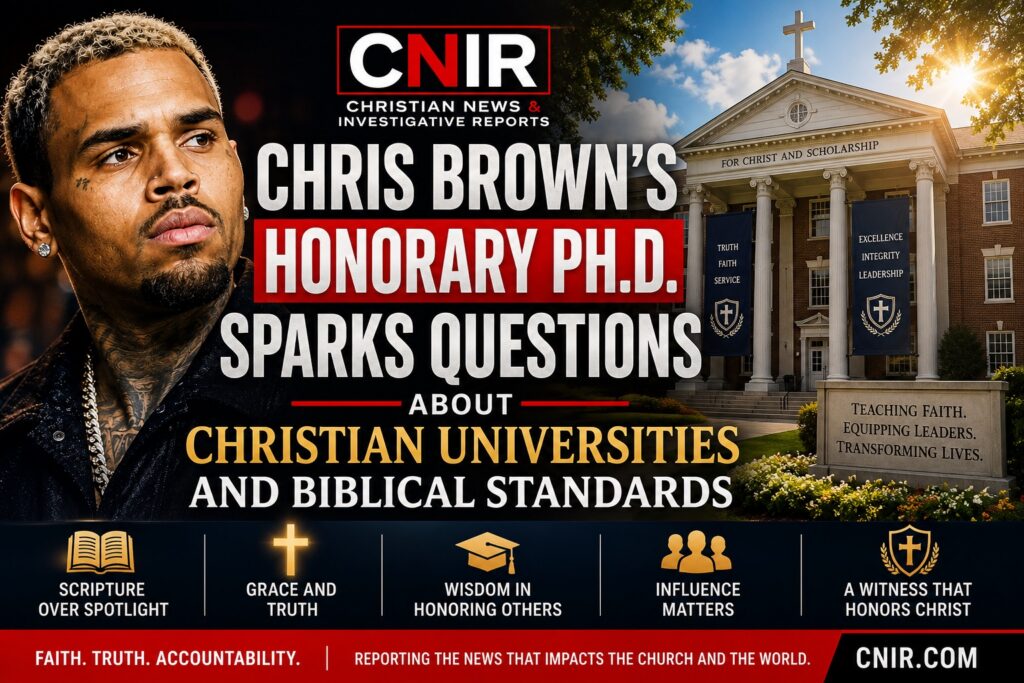
Because honorary degrees are symbolic, they also communicate something about the institution presenting them.
When a Christian university publicly honors someone, many people naturally associate that recognition with the values and mission of the school itself.
“Providing for honest things, not only in the sight of the Lord, but also in the sight of men.”
— 2 Corinthians 8:21 (KJV)
Christian colleges are called not only to educate students but also to reflect biblical truth through their public decisions.
⚖️ Talent and Character
Few would deny Chris Brown’s impact on the music industry. His career has influenced contemporary R&B and popular music for nearly two decades.
At the same time, his public record—including past legal issues involving violence against women and other well-publicized controversies—has caused many Christians to question whether a Christian institution should bestow one of its highest honors upon him.
This discussion is not about whether God can forgive.
Scripture clearly teaches that He can.
Rather, the question is whether Christian institutions should publicly recognize individuals whose public testimony remains the subject of significant moral concern.
✝️ Grace Does Not Eliminate Discernment
The Christian faith is built upon the message of redemption.
Every believer has sinned.
Every believer depends completely upon the grace of Jesus Christ.
Yet Scripture also teaches that grace and discernment belong together.
Jesus welcomed sinners, forgave sinners, and transformed sinners. His grace always pointed people toward repentance and a changed life.
“Go, and sin no more.”
— John 8:11 (KJV)
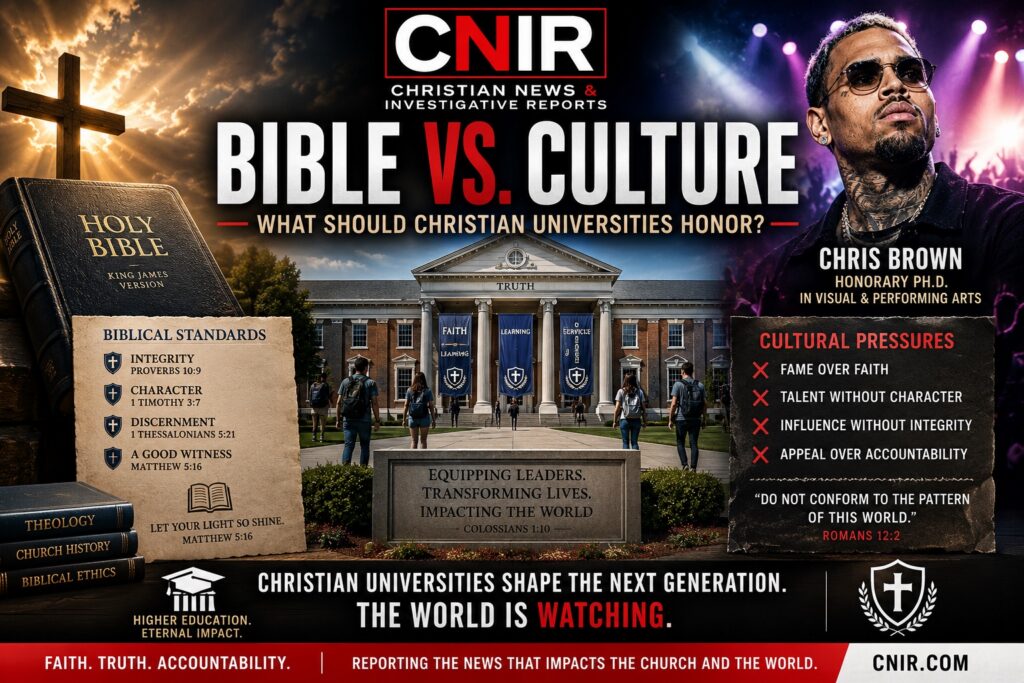
Extending grace is central to Christianity. Publicly honoring someone, however, is a separate decision that carries institutional significance.
Grace should never be confused with endorsement.
🏛️ Christian Universities Represent More Than Academics
Christian universities exist for more than intellectual development.
They seek to prepare students to live lives that honor Christ in both character and conduct.
Because of that mission, decisions regarding honorary degrees often receive greater scrutiny than similar recognitions given by secular institutions.
Parents, churches, alumni, and students rightly expect Christian universities to evaluate not only professional accomplishments but also whether recipients reflect the biblical values the institution professes.
“Abstain from all appearance of evil.”
— 1 Thessalonians 5:22 (KJV)
This passage does not require perfection. Rather, it reminds believers to guard their testimony and consider how their actions affect the credibility of the Gospel.
📚 Questions Worth Asking
The controversy surrounding Chris Brown’s honorary doctorate presents an opportunity for Christian colleges and universities to examine their own standards.
Important questions include:
- Should Christian institutions recognize achievement apart from personal character?
- How should biblical values influence honorary awards?
- What message do these honors communicate to students and the broader Christian community?
- Can grace and accountability coexist in institutional decision-making?
These questions deserve thoughtful discussion within Christian higher education.
✝️ A Biblical Perspective
The New Testament consistently emphasizes both truth and grace.
Believers are called to forgive as Christ forgives.
They are equally called to pursue holiness, wisdom, and integrity.
Public recognition is more than a celebration of success; it reflects what an institution chooses to commend before its students, supporters, and the watching world.
For Christian universities, every honorary degree becomes an opportunity to demonstrate what they value most.
📌 CNIR Perspective
Christian News & Investigative Reports believes this story is ultimately larger than one entertainer or one institution.
It invites the Church to revisit an important question:
What qualities should Christian institutions celebrate and elevate before the next generation?
The Bible never teaches that giftedness is unimportant.
Neither does it separate influence from integrity.
As Christian universities continue shaping future leaders, the standards they use to recognize public figures will continue to reflect not only their educational mission but also their witness to the Gospel of Jesus Christ.
Whether readers agree or disagree with Harvest Christian University’s decision, this conversation serves as a timely reminder that Christian institutions are called to pursue both grace and truth, demonstrating wisdom in how they honor those whose lives influence the world around them.
Editorial Note: This article examines historical events, biblical texts, and theological perspectives. References to external publications are provided for additional context and do not necessarily represent the views of Christian News & Investigative Reports (CNIR). Readers are encouraged to compare all claims with Scripture and historical evidence. This article was created with AI assistance and curated by CNIR Staff for accuracy and editorial standards. Source: Christian News & Investigative Reports (CNIR) — cnirbc.com