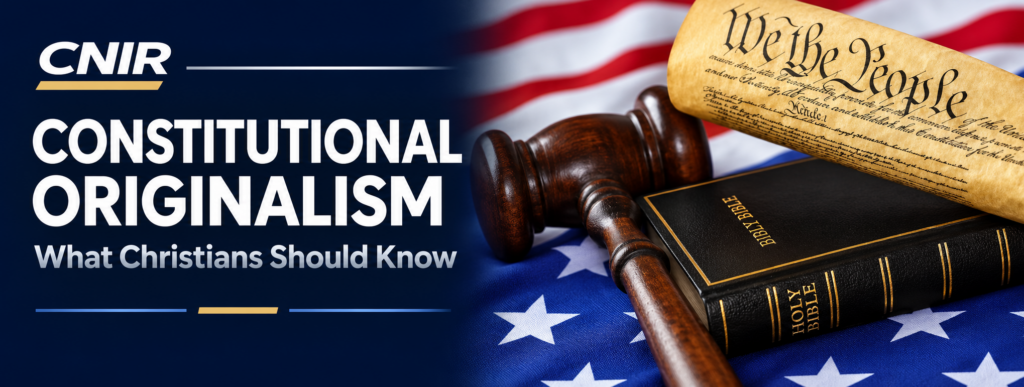
When a religious liberty dispute reaches an American court, judges may disagree about how to read the First Amendment. One approach, known as constitutional originalism, looks to the historical meaning of the Constitution’s words to help resolve disputes.
What Constitutional Originalism Means
The Congressional Research Service describes originalism as a family of approaches to constitutional interpretation. A leading version asks how the public would have understood a provision when it was adopted. For the First Amendment, ratified in 1791, that means examining how its language was understood at the time.
The amendment bars Congress from making laws respecting an establishment of religion or prohibiting its free exercise. An originalist judge might examine how Americans understood “free exercise” in 1791 and consider how that understanding applies to a dispute. Judges also draw on sources such as precedent, and they can disagree about how much weight to give historical evidence.
Where the Bible Enters the Discussion
For Christians, interpreting Scripture in its historical context offers a parallel. Romans 13:1–7 calls believers to submit to governing authorities. In Acts 5:29, the apostles put obedience to God first after authorities ordered them to stop teaching in Jesus’ name.
Those passages raise a question of conscience about when Christians must obey God over civil authorities. Originalism addresses a separate question about how judges should interpret the Constitution.
Sources
- Congressional Research Service, Modes of Constitutional Interpretation. www.congress.gov
- National Archives, The Bill of Rights. National Archives
- Romans 13:1–7 and Acts 5:27–29. www.biblegateway.com
Disclaimer
This CNIR article is for informational and educational purposes only and does not constitute legal advice. It discusses constitutional originalism and presents a biblical perspective on civil authority and Christian conscience.
Christian News & Investigative Reports (CNIR) | cnirbc.com