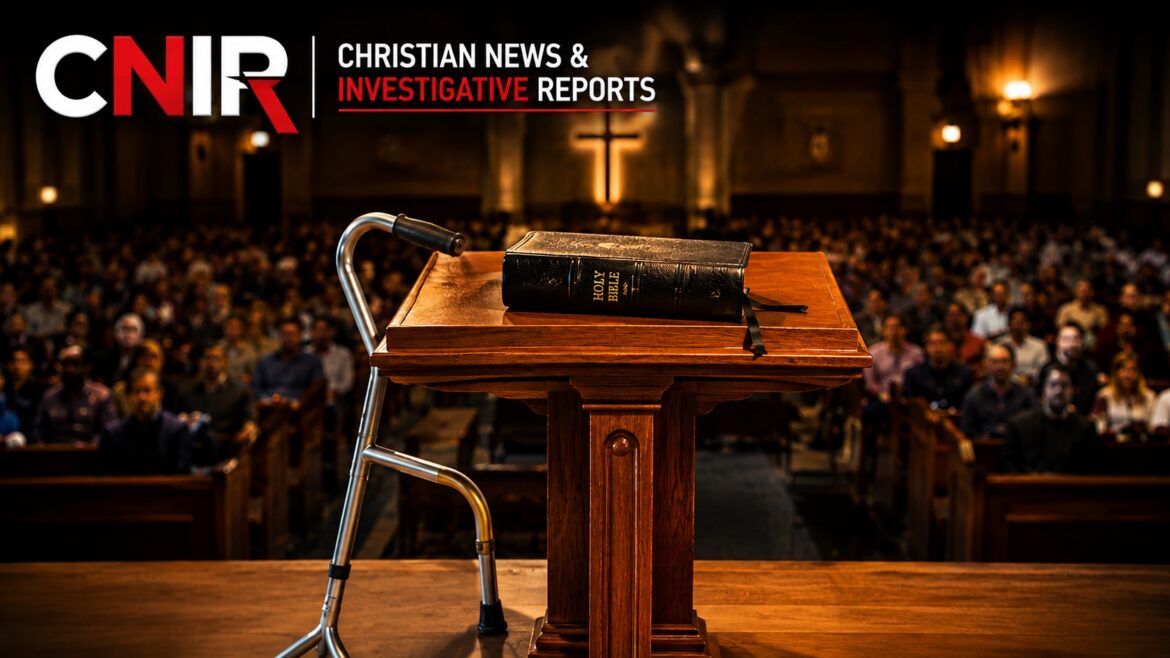
Is the Church Preparing the Next Generation?
📰 By Christian News & Investigative Reports (CNIR)
For generations, churches have honored faithful pastors who have devoted decades of their lives to preaching the Gospel, shepherding congregations, and standing firm on the Word of God. Yet an important question is quietly emerging across America—not only among church members, but among pastors themselves:
When should a pastor pass the mantle to the next generation of leaders?
It is not an easy conversation. It is also not a conversation about disrespecting older pastors. Scripture repeatedly commands believers to honor their elders (Leviticus 19:32; 1 Timothy 5:17). The question is not whether age has value. The Bible clearly teaches that it does.
The real question is whether today’s churches are intentionally preparing the next generation before a leadership crisis arrives.
📖 The Bible Never Establishes a Retirement Age
Contrary to popular opinion, the Bible never commands pastors, elders, or spiritual leaders to retire at a particular age.
In fact, many of God’s greatest servants accomplished remarkable works later in life.
- Moses was 80 years old when God called him to lead Israel out of Egypt (Exodus 7:7).
- Caleb, at 85 years old, boldly declared, “Give me this mountain” (Joshua 14:10–12, KJV).
- Abraham became the father of Isaac at 100 years old (Genesis 21:5).
- The Apostle John is believed to have ministered into advanced age while writing portions of the New Testament.
Age, therefore, is never presented in Scripture as a disqualifier for faithful ministry.
Instead, the Bible consistently emphasizes spiritual maturity, godly character, wisdom, and faithfulness.
👥 The Question Isn’t Age—It’s Effectiveness
While there is no biblical retirement age, neither does Scripture suggest that leadership should continue indefinitely without evaluating effectiveness.
Leading a local church requires more than experience.
It demands spiritual discernment, emotional resilience, physical endurance, sound doctrine, vision, and the ability to shepherd people through rapidly changing cultural challenges.
Church leadership experts often suggest asking practical questions such as:
- Is the pastor still effectively leading the congregation?
- Can he adapt ministry methods without compromising biblical truth?
- Is he physically and mentally able to carry the demands of leadership?
- Is he actively developing future leaders?
These questions focus not on birthdays but on faithful stewardship.
🔥 The Pattern Many Churches Overlook
One of the most consistent leadership principles in Scripture is succession.
God’s greatest leaders rarely ministered without preparing someone to continue the work.
Moses prepared Joshua.
Elijah prepared Elisha.
David prepared Solomon.
Paul invested deeply in Timothy.
Most importantly, Jesus spent approximately three years intentionally preparing His disciples before His ascension.
This pattern appears repeatedly throughout Scripture.
Leadership in the Bible was never simply about leading people.
It was also about preparing future leaders.
⚠️ America’s Growing Leadership Challenge
Many churches today face a difficult reality.
The founding pastor has faithfully led the ministry for decades.
The congregation loves him.
His preaching remains respected.
Yet one important question often goes unanswered:
Who comes next?
In many churches, no successor has been identified.
No younger pastors have been intentionally mentored.
No transition plan exists.
Should illness, death, or unexpected circumstances suddenly remove the senior pastor, the congregation may find itself unprepared.
This is not merely an organizational concern.
It is a discipleship concern.
🌱 Raising Leaders Is Part of the Calling
The Apostle Paul instructed Timothy,
“And the things that thou hast heard of me among many witnesses, the same commit thou to faithful men, who shall be able to teach others also.” (2 Timothy 2:2, KJV)
Notice Paul’s vision.
Four generations of ministry appear in one verse:
Paul → Timothy → Faithful Men → Others Also.
Biblical leadership was designed to multiply—not merely continue.
A healthy church should constantly be identifying, discipling, training, and releasing future shepherds.
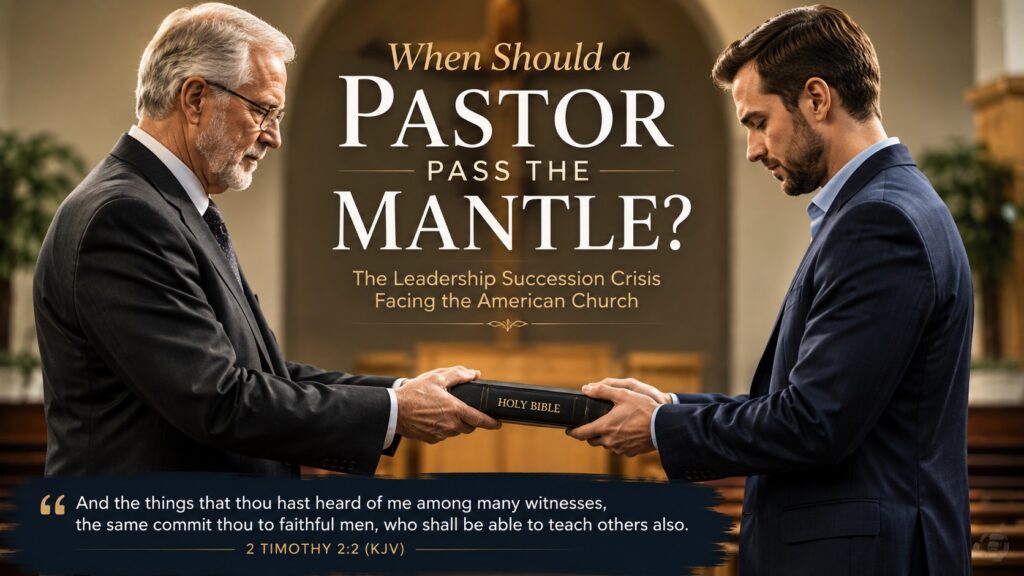
🤝 Passing the Mantle Is Not Quitting Ministry
One misconception is that stepping away from the role of senior pastor means retiring from serving Christ.
Scripture suggests otherwise.
An older pastor possesses decades of wisdom that younger ministers desperately need.
His ministry may evolve from leading the congregation every week to mentoring pastors, teaching Bible classes, counseling families, strengthening elders, writing, evangelizing, or encouraging younger leaders.
The assignment may change.
The calling does not.
In many ways, some of a pastor’s greatest ministry may occur after he passes the mantle.
🕊️ A Church Should Never Depend on One Person
Healthy churches are built upon Jesus Christ—not upon the personality of any single leader.
Every pastor, regardless of age, should periodically ask difficult but necessary questions:
- If I were unable to preach next Sunday, who could faithfully open God’s Word?
- Who am I intentionally mentoring?
- Is this ministry stronger today than when I began?
- Will this church continue to flourish after I am gone?
Those questions reflect humility, wisdom, and biblical stewardship.
✝️ Finishing Well
The Apostle Paul could confidently declare near the end of his ministry:
“I have fought a good fight, I have finished my course, I have kept the faith.” (2 Timothy 4:7, KJV)
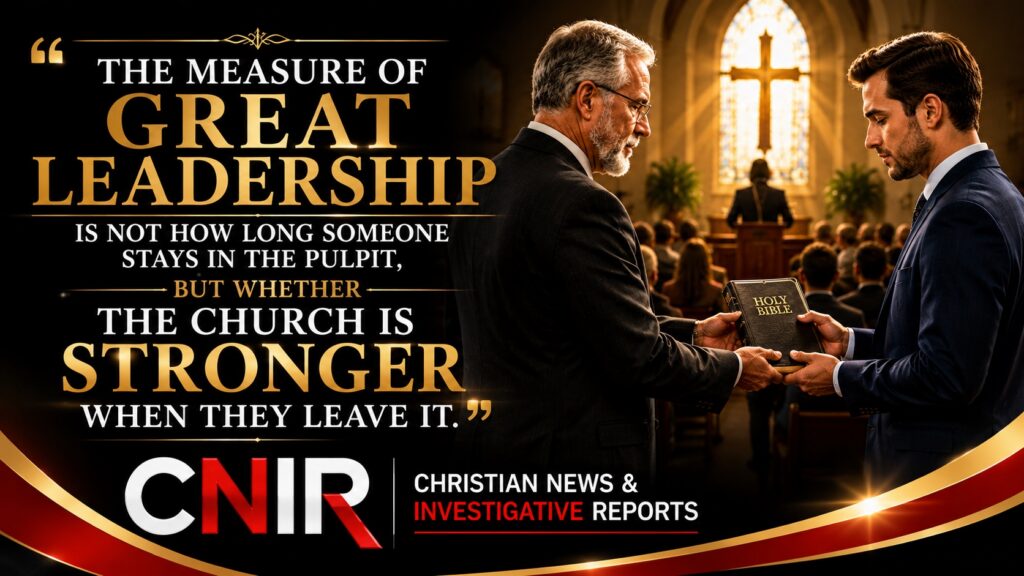
Finishing well is not measured by how long someone remains behind the pulpit.
It is measured by faithfulness to Christ and by the spiritual legacy left behind.
Perhaps the conversation churches should be having is not, “How old is too old to lead?”
Perhaps the better question is:
“Have we faithfully prepared those who will carry the Gospel after us?”
That may be one of the most important questions facing the American church today.
📌 CNIR Perspective
The Bible does not place an expiration date on pastoral ministry, nor does it suggest that age alone determines a person’s usefulness in God’s Kingdom. Instead, Scripture consistently points to a higher standard: faithful leadership that equips others for the work of ministry.
Every pastor will eventually preach his final sermon.
Every generation will one day hand the baton to another.
The churches that thrive for generations are not necessarily those with the most gifted preachers—they are the churches whose leaders intentionally raise, mentor, and release faithful successors.
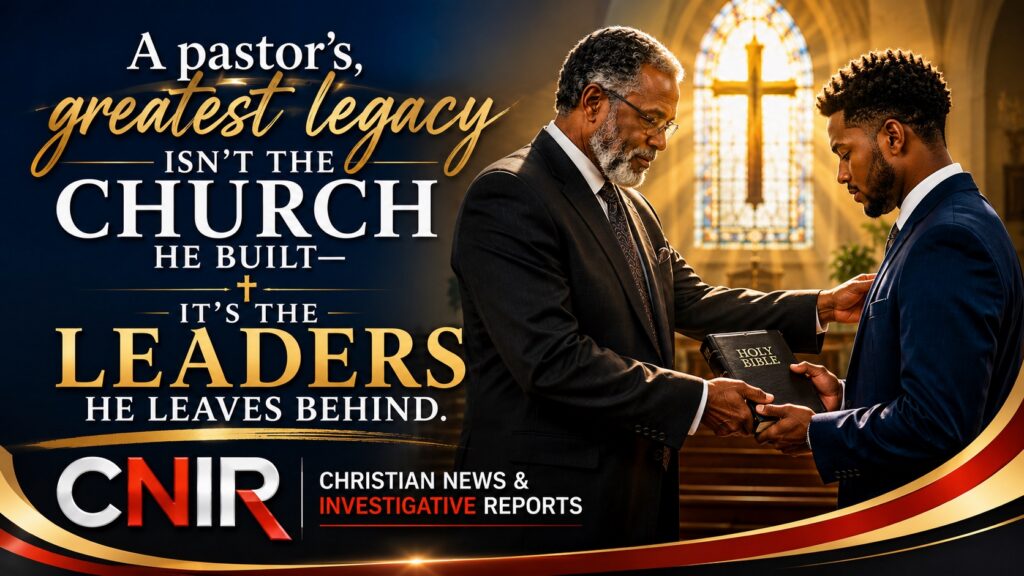
A pastor’s greatest legacy is not merely the church he built—it is the leaders he leaves behind.
Editorial Note
This article is intended to encourage biblical discussion—not to criticize any individual pastor, church, or denomination. CNIR affirms that Scripture honors faithful spiritual leaders while also emphasizing the importance of mentoring and preparing the next generation. Our hope is that this conversation inspires churches to remain biblically faithful, spiritually healthy, and ready for the future. Source: Christian News & Investigative Reports (CNIR) — cnirbc.com